
This museum makes Mesoamerica click. A private 3-hour tour with archaeologist David Huesca, known as Pakalito, guides you through the National Anthropology Museum and connects cultures to how they lived, ruled, and believed.
Two things I really like: first, the tour goes beyond the Maya and Aztecs so you get a wider sense of ancient Mexico. Second, I love the digital support and clear explanations that make symbolism and timelines easier to hold onto, especially when some labels are not in English.
One consideration: you will be on your feet inside a very large museum for much of the time, so plan for steady walking and bring comfortable shoes.
Key Highlights
A private archaeologist-led walk through the museum’s main exhibition halls
Mesoamerica explained as a changing story, not just a list of civilizations
English-friendly guidance on religion, politics, economy, architecture, and traditions
Visual iPad-style support that helps with symbolism and meaning
A pace that works for couples and families, with time for questions
Admission included, so you focus on the experience, not the logistics
Give the Anthropology Museum a closer look
- Chapultepec Castle & Anthropology Museum Tour
★ 4.5 · 1,348 reviews - Anthropology Museum Guided Tour
★ 4.5 · 1,035 reviews - Mexico City: Anthropology Museum Guided Visit
★ 4.4 · 708 reviews - Mexico City: Chapultepec Castle and Anthropology Museum Tour
★ 4.5 · 637 reviews
National Anthropology Museum, With Pakalito’s Archaeology Lens
If you only visit the museum on your own, it can feel like drinking from a fire hose. The National Anthropology Museum has so many masterpieces that your brain starts sorting on autopilot. With Pakalito, you stop guessing and start understanding.
What makes this tour different is the focus on meaning. You are not just asked to look, you are guided to read the objects: how societies shaped religion, political power, and daily life, and how those ideas show up in art and architecture. That is why people love it so much, the museum turns into a set of connected stories you can actually remember.
And yes, you will still see the famous stuff. But the real value is the angle: the tour aims to show that pre-Hispanic history in Mexico reaches far beyond the usual Maya and Aztec talking points. That broader view helps you feel grounded when you later visit sites across the country.
Price and Logistics, What You Get for $98
At $98 per person for about three hours, this tour is not the cheapest way into the museum. But the math is more reasonable than it looks, because admission is included and you get a true private guide rather than a general audio route.
You are also buying context. Museum labels often give dates or descriptions, but they rarely connect politics, belief systems, economy, and symbolism in a way that sticks. A professional archaeologist can do that kind of linking fast, and do it in English, which matters in a museum where parts of the text may not be in your language.
This is also a private experience, so you are not stuck following a group pace. If you have questions, you can ask them. If your kids need breaks, you are not managing them while listening to strangers.
Where You Meet, When to Go, and How the Timing Works
The tour starts at Museo Nacional de Antropología, Av. P.º de la Reforma s/n, Polanco, Bosque de Chapultepec I Secc, Miguel Hidalgo, 11560 Ciudad de México, CDMX, Mexico. It ends back at the same meeting point, so you can plan the rest of your day without a complicated transfer.
The museum hours shown for this experience run Tuesday to Saturday, 9:00 AM to 3:00 PM. That timing matters because you can target the quieter part of the day if you prefer easier movement through galleries.
The tour runs about three hours, and the museum is big enough that this is a smart length. It gives time to hit major themes without turning the experience into an endurance test. Still, it is indoors walking, standing, and looking closely, so moderate fitness is a good idea.
Open another museum door in the capital
- Chapultepec Castle & Anthropology Museum Tour★ 4.5 · 1,348 reviews
- Anthropology Museum Guided Tour★ 4.5 · 1,035 reviews
- EXCLUSIVE TOUR Frida Kahlo Museum – SMALL GROUPS★ 5.0 · 901 reviews
- Mexico City: Anthropology Museum Guided Visit★ 4.4 · 708 reviews
- Mexico City: Frida Kahlo Museum Entry Ticket w/Digital Guide★ 4.5 · 683 reviews
The One Stop That Actually Gets You Oriented: Museo Nacional de Antropología
This tour centers on one place, the museum itself, which is exactly what you want when you only have a half-day. The key is that you do not walk the building like a scavenger hunt. You move through the main exhibition halls with an archaeologist framing what you are seeing as part of one bigger regional story.
Pakalito explains Mesoamerica through the perspective of a young archaeologist. That framing keeps things fun, but the substance is still there: you talk about history, religion, politics, economy, architecture, and traditions. The goal is to help you connect artifacts to the people who made them, and to consider why certain styles and symbols appeared.
Beyond the usual Maya and Aztec focus
A lot of Mexico City visitors arrive with a short list of names and monuments. This tour nudges you past that. You will come away with a sense of variety across cultures and regions, and how those cultures changed over time.
That matters because it changes what you notice later. When you understand how beliefs and political systems show up in objects, you start seeing patterns instead of isolated displays. You also become less dependent on reading every label, because the guide gives you the structure first.
Understanding possible meanings, not just facts
Another reason this tour works is the approach to interpretation. You will discuss possible meanings, not just dates. For example, symbolism comes up in a way that feels practical, like a set of clues you can learn to spot.
If you like art, religion, or mythology, this part can be the highlight. If you are more of a facts person, it is still valuable because you get both timeline and context, not just one or the other.
How the Tour Prevents Museum Overload
The museum is massive. Even motivated people can end up stuck in the wrong rooms or missing the connections that make everything click. A private guide prevents that by steering you through the right halls for the story you want.
From what you can expect in practice, Pakalito’s route is designed to help you understand the museum efficiently. You get direction on where to focus, and you are not spending your time trying to decode what you should prioritize. That is the difference between seeing objects and actually learning what they represent.
There is also pacing. The tour includes time to sit when needed and time for questions. This helps a lot if you are traveling with kids or you want the adults to actually process what they are seeing instead of sprinting room to room.
And the English support matters in a concrete way. Even if you can read the labels, you may still miss the bigger connections. When the guide explains symbolism, timelines, and cultural roles in clear language, you get a mental map fast.
The Digital Support Material That Helps You Remember
One detail that keeps coming up is the use of digital visual aids, often on an iPad-style setup. That is not a gimmick. It is a memory tool.
When you are standing in front of an artifact, your brain wants a framework. Visuals can show related examples, highlight patterns, or translate complicated ideas into something you can hold in your head. The result is that the museum feels less like a lecture hall and more like a guided conversation with objects.
If you are the kind of person who loves diagrams, comparisons, or symbolism, you will likely appreciate this part. It also helps families, because it gives kids something visual to latch onto while still keeping the archaeology angle intact.
Who This Tour Fits Best
This is a strong match for anyone who wants more than a self-guided stroll. It is especially good if you are going for the first time and you want the museum to make sense, not overwhelm you.
I think it is ideal for:
- Couples who want shared takeaways and a guide who can explain clearly without talking down to you
- Families who need a pace that works across ages, with room for questions and adjustments
- History and archaeology fans who want meaning, not just facts
- People who plan to visit other sites after, because the museum context can help those later visits feel less random
If you already know a lot about Mexico’s ancient civilizations, you may still enjoy this because it pushes beyond the greatest hits and adds interpretation. If you are starting from zero, it is still approachable because the guide frames the story in a way that is understandable.
Tips for Making the Most of Your 3 Hours
First, wear comfortable shoes. The museum is not built for long periods of sitting, and you will be moving through multiple areas.
Second, come with one or two interests if you can. If you care most about religion, symbolism, architecture, or daily life, it helps to have a direction before you arrive. You can then ask smarter questions and steer the tour toward what matters most to you.
Third, consider timing your museum visit early in your Mexico City trip. Getting the themes from the museum up front makes later day trips and site visits feel connected. Even if you do not plan every detail, you will be better at recognizing ideas across sites.
Finally, remember that food and drinks are not included. If you get hungry, plan a snack before or after. The tour itself is focused on the museum, and it is easier to enjoy when you are not thinking about food the whole time.
So, Is It Worth Booking?
If you want to walk out of the museum with a clear mental story, I say yes. The combination of private pacing, admission included, and an archaeologist who focuses on meaning adds up to better value than you might expect.
This is also one of those experiences where the difference between guided and self-guided is huge. The museum’s scale can bury the context. Pakalito’s job is to build that context for you while you are standing in front of the objects, where it counts.
If you are the type who loves wandering without structure, you might still enjoy the museum alone. But if your goal is to understand what you are seeing, this private tour is one of the best ways to get it done in a reasonable amount of time.
FAQ
How long is the private tour?
It lasts about 3 hours.
Is the tour private or shared?
It is private. Only your group participates.
What language is the tour offered in?
The tour is offered in English.
Where does the tour start?
It starts at Museo Nacional de Antropología, Av. P.º de la Reforma s/n, Polanco, Bosque de Chapultepec I Secc, Miguel Hidalgo, 11560 Ciudad de México, CDMX, Mexico.
Where does the tour end?
The activity ends back at the meeting point.
What is included in the price?
It includes an archaeologist professional tour guide, a private tour, the entrance fee, and digital support material.
Are foods and drinks included?
No, foods and drinks are not included.
What are the museum hours for this experience?
The provided hours are Tuesday to Saturday, 9:00 AM to 3:00 PM.
Do I need special fitness for this tour?
Travelers should have a moderate physical fitness level.
Is confirmation and cancellation flexible?
Confirmation is received within 48 hours of booking, subject to availability. Cancellation is free up to 24 hours in advance for a full refund, and weather can affect the scheduling.
Are service animals allowed?
Yes, service animals are allowed.
If you want a museum visit where you leave with context you can actually use, this is a smart, high-value booking.
Private Routes Built Around Your Day


Museums and Galleries for the Next Afternoon



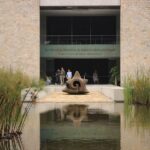


Inside the National Museum of Anthropology
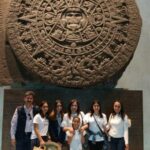
More Mexico City plans worth opening

Anthropology Museum Tours for the next day.
 ★ 4.5Chapultepec Castle & Anthropology Museum TourFrom $791,348 reviews
 ★ 4.5Anthropology Museum Guided TourFrom $391,035 reviews
 ★ 4.4Anthropology Museum Guided VisitFrom $67708 reviews
 ★ 4.5Chapultepec Castle and Anthropology Museum TourFrom $47637 reviews
 ★ 4.4Anthropology Museum Skip-the-Line TicketFrom $15502 reviews
 ★ 5.0Anthropology Museum Private Experience Walking TourFrom $78355 reviews
 ★ 5.05 Hour Tour through Chapultepec, Anthropology Museum and CastleFrom $61239 reviews
 ★ 5.0PRIVATE Tour in Chapultepec Castle and Museum of AnthropologyFrom $113144 reviews
This review also appears in