
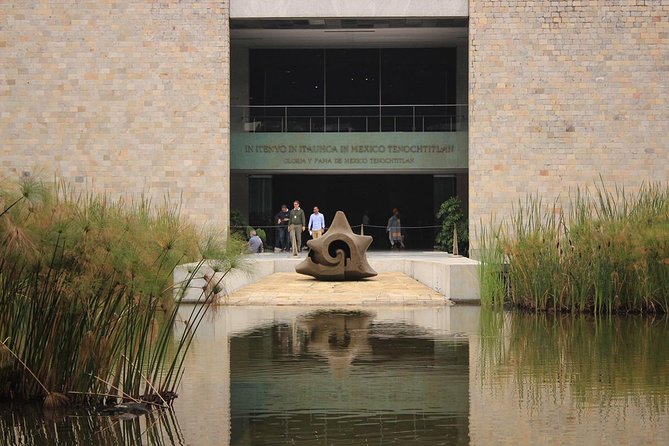
REVIEW · ANTHROPOLOGY MUSEUM TOURS
Anthropology Museum Guided Tour
The Aztec Sun makes sense with a guide. This 2.5-hour walkthrough of the National Museum of Anthropology turns huge, complicated galleries into a clear story, with admission included and guided context that saves you from wandering in circles. The one thing to plan for is that the museum is mostly Spanish signage, so your understanding depends on how smoothly your English guide explains what you’re seeing.
I like that the tour is built for a real morning flow, starting at the Museo Nacional de Antropología in Chapultepec Park (Polanco side), and then ending right back at the meeting point. You get to leave the rest of your afternoon open, and the group stays capped at 25 people, so it usually feels manageable rather than chaotic.
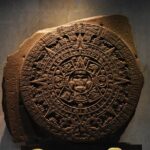
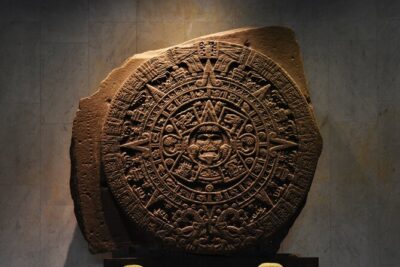
Inside, you’re not just looking at objects, you’re getting the why behind them. Expect big hits like the Stone of the Sun, giant Olmec heads, the model of Tenochtitlan, reconstructions tied to Maya tombs, and the Sacred Cenote at Chichen Itza, plus the Aztec Calendar and rotating visiting exhibits.
Key highlights you should care about
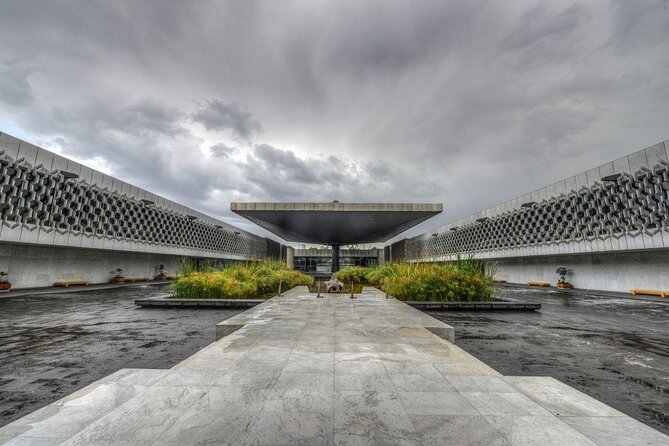
- Admission is included, so you pay one price for the guide plus entry
- A timeline you can follow, from early Mesoamerican cultures toward the Spanish colonial period
- Top artifacts are explained, including the Stone of the Sun, Olmec giant heads, and the Aztec Calendar
- Maya tomb reconstructions come with context, not just a quick glance
- Small-group size, max 25, which helps questions and pacing
- English guidance matters most here, because signage in English can be limited
Give the Anthropology Museum a closer look
- Chapultepec Castle & Anthropology Museum Tour
★ 4.5 · 1,348 reviews - Anthropology Museum Guided Tour
★ 4.5 · 1,035 reviews - Mexico City: Anthropology Museum Guided Visit
★ 4.4 · 708 reviews - Mexico City: Chapultepec Castle and Anthropology Museum Tour
★ 4.5 · 637 reviews
The National Museum of Anthropology, and why you will want help
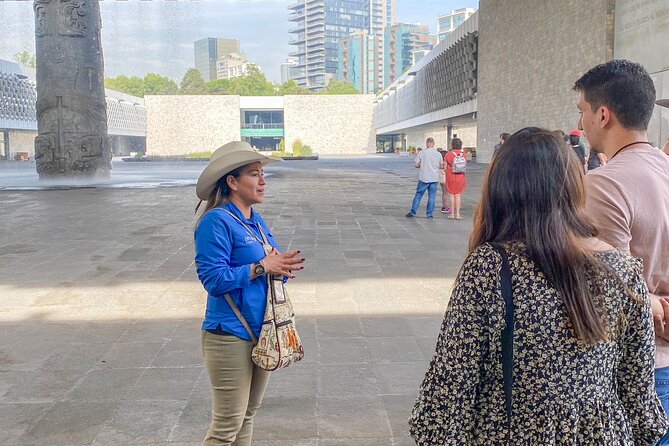
Mexico City’s National Museum of Anthropology can feel like drinking from a fire hose. The museum has scale and depth, and a lot of objects look impressive but also hard to place if you do not already know the basics.
That is where this tour earns its keep. A good guide connects the artifacts to the world that made them, so you understand what each piece was for, what it shows about power and belief, and how cultures influenced each other over time. In one tour, the guide framed the story from early regional history through the Spanish conquest, using the museum material plus photos and even drawings to make things click.
You also get something practical: when you step into a gallery with the Aztec Calendar, the Olmec heads, or the model of Tenochtitlan, you are not starting from zero. You know what to look for, what questions make sense, and how those details connect to the broader timeline.
Price and value: is $39 a smart use of your time?
$39 per person for a 2.5-hour guided visit sounds straightforward, but the value comes from what is included. This price covers museum admission plus a professional guide. That matters because the museum is not a quick stop. Without a guide, many people lose time figuring out the layout and what each room is trying to say.
Think of it as paying to buy time and clarity. A guide helps you avoid the most common museum problem, spending 45 minutes looking at one artifact and never building the bigger picture. When the tour works well, you leave with a foundation you can reuse later in Mexico City, whether you are planning other ruins, a neighborhood walk, or a follow-up museum visit.
You should also know the tour size is capped at 25. Larger groups often make it harder to ask questions or move at a pace that matches the room. When the group stays tight, the experience usually feels like a guided lesson rather than a narrated lineup.
Meeting point details that can make or break the start
The meeting point is at the Museo Nacional de Antropología, Av. P.º de la Reforma s/n, Polanco, Bosque de Chapultepec I Secc, Miguel Hidalgo, 11560 Ciudad de México, CDMX, Mexico. This is a good location because it places you at a major landmark area near public transportation options.
One rule can affect your morning rhythm: you are not allowed to enter with food, drinks, or backpacks. You are limited to a handbag. That means you should plan snacks and water around your day in a nearby spot before the tour, then travel light into the museum.
Finally, show up with a little buffer. The museum is popular, and ticket validation or security steps can take time. If you arrive late, it can disrupt your ability to catch up with the group, which is why early timing is your friend here.
Open another museum door in the capital
- Chapultepec Castle & Anthropology Museum Tour★ 4.5 · 1,348 reviews
- Anthropology Museum Guided Tour★ 4.5 · 1,035 reviews
- EXCLUSIVE TOUR Frida Kahlo Museum – SMALL GROUPS★ 5.0 · 901 reviews
- Mexico City: Anthropology Museum Guided Visit★ 4.4 · 708 reviews
- Mexico City: Frida Kahlo Museum Entry Ticket w/Digital Guide★ 4.5 · 683 reviews
Stop 1 inside the museum: how your 2.5 hours get structured
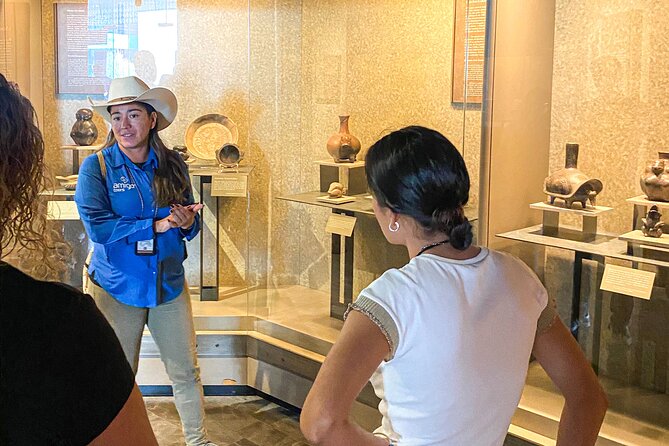
Your tour centers on one main stop: the National Museum of Anthropology. Even though it is a single location, the impact is that you move through multiple collections with a guide who is tying them into one story.
Expect the guide to:
- set the big picture first, then return to specific artifacts
- point out what the artifacts represent and how to read them
- keep you moving without trying to cram every room on earth into one visit
This is a “foundation” tour more than a “see every object” tour. That is a good thing. The museum is massive, and a guided structure helps you prioritize the most meaningful galleries so you do not leave with just photos and no context.
The tour length is about 2 hours 30 minutes. A few guides also run a bit long when the group stays engaged, and when that happens you should treat it as a plus, not a warning sign. When you hear clear explanations and you are still curious, extra time in the strongest rooms often makes the difference between a decent visit and a great one.
Tenochtitlan and the Aztec Calendar: understanding power through design
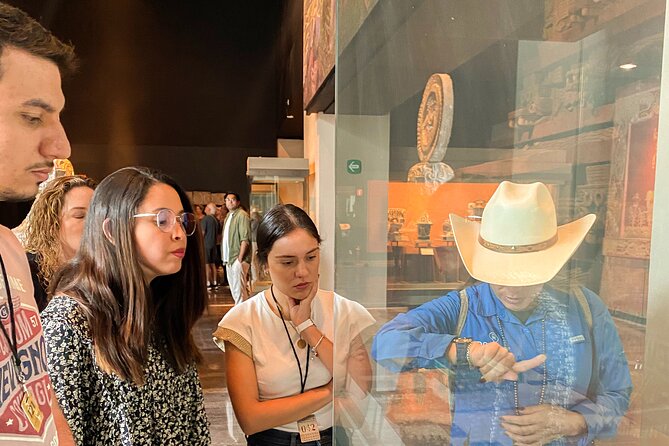
Some of the most memorable moments come from seeing symbols you already recognize from books and then learning what they were doing in real life.
The museum includes the Aztec Calendar, and it also offers a model of the former Aztec capital, Tenochtitlan, which is now under Mexico City’s central area. A model like that is not just an illustration. With a guide’s context, it becomes a geographic anchor. You start to understand how the city’s layout connected to water, agriculture, movement, and authority.
In tours led by guides who work from a clear progression, the approach often goes like this:
- big overview of the culture and the era
- what the calendar and monumental art were built to communicate
- how those ideas connect to later colonial-era changes
When you get that flow, the artifacts stop looking random. You can actually see the logic behind the design choices and the meaning behind the scale.
If English is your comfort zone, this is also where you want a guide who can explain in plain terms. Some visitors have struggled when the guide’s English was hard to follow or when audio equipment did not feel strong enough. If that is your concern, lean into an early tour time and arrive prepared to listen closely.
Olmec giant heads and the Stone of the Sun: how the myths connect to the facts
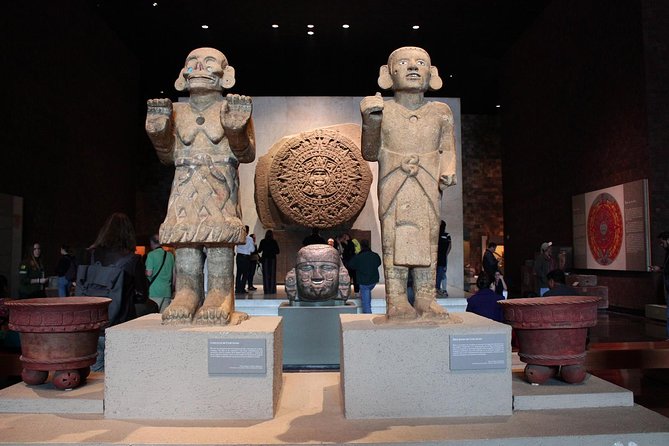
The museum’s headline objects can feel intimidating until someone explains what you are looking at.
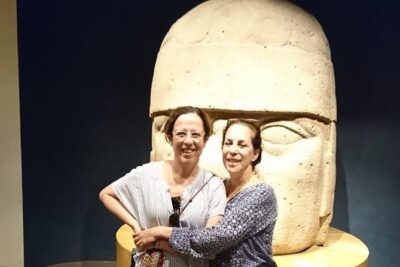
The Olmec giant heads are a perfect example. The museum collection includes giant stone heads attributed to the Olmec civilization, found in the jungles of Tabasco and Veracruz. Once you know the basic story, those faces stop being just impressive stone. They become clues to how early societies shaped identity, ritual, and long-distance cultural influence.
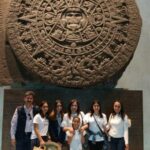
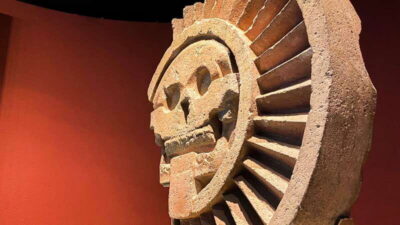
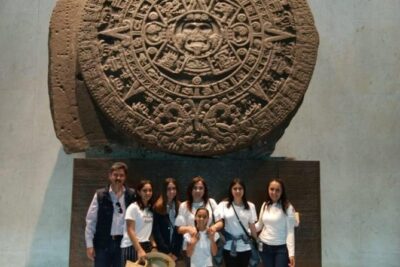
The Stone of the Sun also gets the full attention here. It is one of those objects that draws your eyes immediately, but it is not always obvious how to read it. A good guide gives you the framework so you understand how the stone functions as a visual system tied to time, belief, and cosmology.
One thing I love about tours that focus well on these monuments is the way they connect them to broader regional patterns. You are not just learning trivia. You are building mental links that help you understand why Mesoamerican cultures share themes while still being distinct.
Maya tomb reconstructions and Chichen Itza’s Sacred Cenote
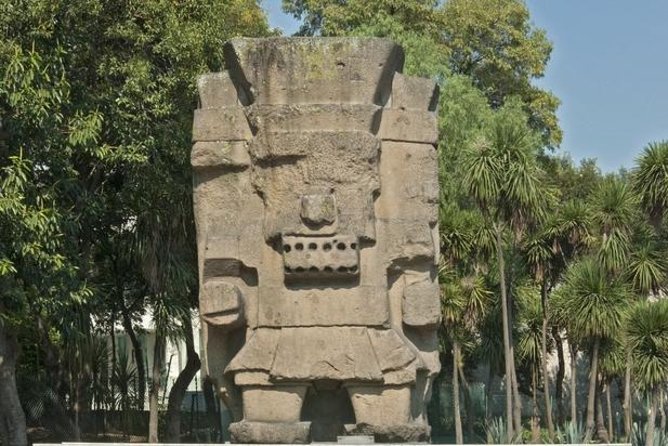
Mesoamerica is not one culture, and this museum makes that clear in how it presents different traditions. Maya-related parts of the tour can be especially effective because they show how belief and architecture intersect.
This tour includes reconstructions tied to Maya tombs, plus references to treasures recovered from the Sacred Cenote at Chichen Itza. With guidance, these elements become more than dramatic stories. You learn why something like a cenote matters, what it suggests about ritual practices, and how artifacts were shaped by the meaning people attached to them.
You should also expect some comparison work. Even without heavy charting, a good guide helps you see relationships across cultures, such as shared influences, shifting power, and evolving artistic styles across centuries.
This is also a good time to ask questions if your guide encourages them. When questions are welcomed, you can clarify dates, geography, and why certain objects are displayed the way they are.
Visiting exhibits and what you should do with your free time
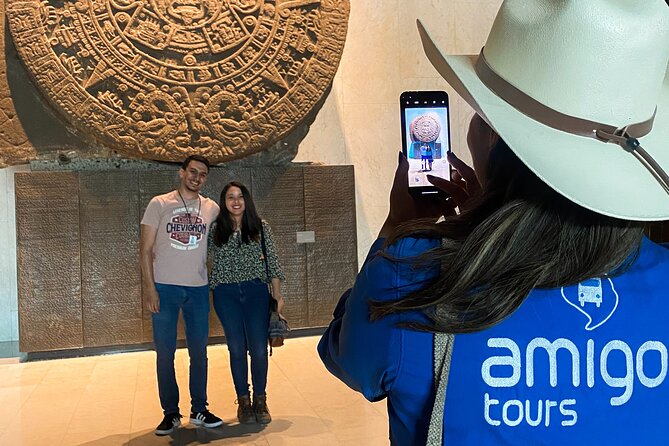
The museum hosts visiting exhibits, generally focused on other of the world’s great cultures. That means your overall visit can feel slightly different depending on what is on display during your dates.
That is one reason the tour can be a strong value even when you plan to see more than just one gallery. The guided portion gives you a foundation, and then the visiting exhibits can become a bonus layer you can enjoy with more confidence.
For your afternoon plan, keep it flexible. After this tour, you will have enough context to make smart choices later, whether that means returning to the museum for deeper reading, visiting nearby neighborhoods, or pairing it with another archaeology or history-focused stop.
If you have limited time in CDMX, doing this early is smart. You get orientation fast, and it improves every later decision you make.
English guidance: what tends to work best, and what you should watch for
This tour is offered in English, but experience quality can depend on the individual guide and how they deliver the narration.
On the positive side, many guides have been praised for combining clear explanations with entertainment and patience. Names that come up in strong examples include Alexa, Alan, Genovanna, Hector, Ligia, Gibran/Alex, Leonardo, Lili, Antonio, and Miriam. Several are specifically noted for explaining with photos, drawings, or a clear big-picture-to-details approach. One standout approach was described as starting high-level, then slowly diving deeper.
On the caution side, a few common friction points can pop up in museum tours like this:
- audio equipment may be handed out late, which can waste part of your attention window
- a guide’s English may be difficult to follow for some ears
- groups can sometimes feel larger than advertised, which reduces your ability to ask questions
- the pacing can feel inefficient when too much time is spent before explanations kick in
Your best defense is simple: show up early, be ready to listen, and do not assume the museum itself will do the teaching. This is a guide-led context tour, and the guide is the product.
Should you book this Anthropology Museum guided tour?
Book it if you want a fast, structured way to understand the big Mesoamerican story, especially if you do not read Spanish well. I think it is a strong use of time because it is not trying to cover every corner of the museum. Instead, it gives you a framework around the artifacts you would most likely miss or misread on your own.
Skip it or choose carefully if you know you need very clear, easy-to-follow English and you worry about audio quality. Also consider passing if you are sensitive to start-time issues or if you tend to get frustrated when groups shift unexpectedly.
If you book, maximize your odds:
- arrive with buffer time
- keep your bag as a handbag only
- choose an early slot so you can recover and keep enjoying the rest of your day
FAQ
How long is the Anthropology Museum guided tour?
It lasts about 2 hours 30 minutes.
What is included in the $39 price?
The price includes a professional guide and entrance to the National Museum of Anthropology.
Is the tour offered in English?
Yes, it is offered in English.
How big is the group?
The group size is capped at a maximum of 25 travelers.
Where is the meeting point?
You meet at Museo Nacional de Antropología, Av. P.º de la Reforma s/n, Polanco, Bosque de Chapultepec I Secc, Miguel Hidalgo, 11560 Ciudad de México, CDMX, Mexico.
Are food, drinks, or backpacks allowed inside?
No food or drinks are allowed, and backpacks are not allowed. Only a handbag is allowed.
What is the cancellation window for a full refund?
You can cancel up to 24 hours in advance for a full refund, based on the experience’s local time.
More Tour Reviews in Mexico City



Museums and Galleries for the Next Afternoon




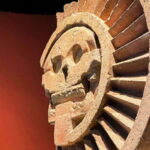
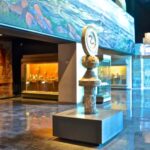
Inside the National Museum of Anthropology
More Mexico City plans worth opening


Anthropology Museum Tours for the next day.
 ★ 4.5Chapultepec Castle & Anthropology Museum TourFrom $791,348 reviews
 ★ 4.4Anthropology Museum Guided VisitFrom $67708 reviews
 ★ 4.5Chapultepec Castle and Anthropology Museum TourFrom $47637 reviews
 ★ 4.4Anthropology Museum Skip-the-Line TicketFrom $15502 reviews
 ★ 5.0Anthropology Museum Private Experience Walking TourFrom $78355 reviews
 ★ 5.05 Hour Tour through Chapultepec, Anthropology Museum and CastleFrom $61239 reviews
 ★ 5.0PRIVATE Tour in Chapultepec Castle and Museum of AnthropologyFrom $113144 reviews
 ★ 4.5Teotihuacan & Anthropology Museum, Templo Mayor & City TourFrom $137109 reviews
This review also appears in