
REVIEW · ROMA & CONDESA TOURS
Colonia Roma Musical Walking Tour
A morning walk that turns La Roma into a story. This Colonia Roma Musical Walking Tour uses 11 stops to connect Mexican cultural identity to real neighborhood streets, architecture, and everyday life. I love the way it links art and history through visible places, not just facts on a page. I also like that it keeps you moving through not-touristic corners where the design and the social history feel oddly personal.
My one watch-out is weather. The tour runs outdoors and needs good conditions, so plan a backup day if the forecast looks rough. The route also starts at one point and ends at another, so you will want to think through how you get back after the walk.
Key points
- Colonia Roma told through 11 real-world stops across architecture, housing, and cultural identity
- A 16th-century chapel connection to the origin stories tied to the Virgin of Guadalupe
- Corridos and crime press during the Mexican Revolution, tied to one of the neighborhood’s biggest streets
- Plazas that explain housing pressure and changing city planning, not just pretty squares
- Roma Norte food-history moment at a typical tortillas store, with ties to very early Zapotec history
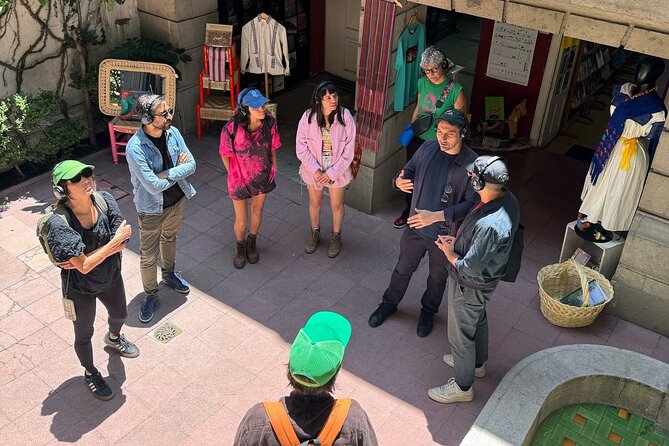
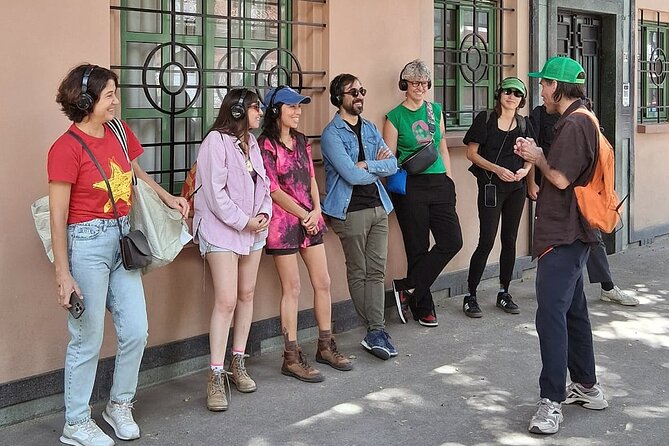
- Small group size up to 12, which makes the discussion feel more like a focused walk than a big bus tour
Linger longer between Roma and Condesa
- Colonia Roma Food Tour
★ 5.0 · 838 reviews - Narvarte At Night: Tacos, Chelas & Mezcal
★ 5.0 · 216 reviews - Michelin Taco Bike Tour: Roma Norte & Condesa /All-Inclusive.
★ 5.0 · 100 reviews - Mexico City: Roma & Condesa Private & Personalized Walking Tour
★ 5.0 · 70 reviews
Why Colonia Roma Feels Different After This Walk
Colonia Roma is one of those Mexico City neighborhoods where the buildings look confident, like someone planned for a future that included everyone. This tour makes you slow down enough to notice the details. You do not just pass landmarks. You learn why the neighborhood took shape the way it did, and how those choices show up in places you might otherwise walk right by.
I like that the focus stays on one area the whole time. The walk happens exclusively in Colonia Roma and related nearby stops, with a mix of architecture and cultural history. That keeps your mental map simple: you are seeing one neighborhood evolving, stop by stop.
And yes, the word musical is not just marketing. The tour weaves music culture into the story of politics and public life, including how corridos connect to revolutionary-era reporting. That is the kind of link you usually only find if you already know what to look for.
Starting at Pl. Romita and Reading the Neighborhood Up Close
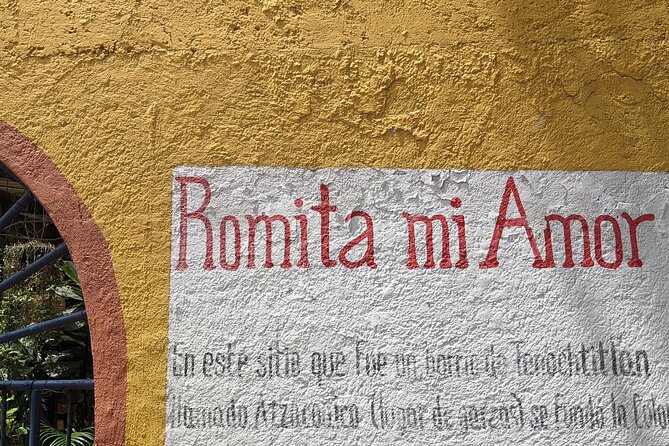
The walk begins at Capilla de San Francisco Javier de la Romita, at Pl. Romita 30, La Romita, Centro (Cuauhtémoc). The start time is 10:30 am, and the tour runs about 2 hours 15 minutes. This matters because you are on your feet long enough to really absorb the neighborhood, but not so long that the day disappears.
From the first stop, the style is clear: short stop, clear context, then back out onto the sidewalk. You will hear how Colonia Roma’s development reflects bigger Mexican cultural and historical identities. The tour’s pace keeps you from getting lost in long lectures, and it leaves room to look at facades, street layouts, and the way plazas serve daily life.
A practical tip: wear comfortable shoes. You will be moving from one mini-story to another, including several moments where you will want to stand still long enough to take in building details.
Capilla de San Francisco Javier de la Romita and the Guadalupe Story Thread
Stop one is the standout kind of history that feels close to the street. The Capilla de San Francisco Javier de la Romita dates to the 16th century. Around it, a small town grew and held onto its identity until the 20th century. That time span is the point: you get a sense of how religious and local community life can anchor a place for centuries.
The tour also uses this stop to talk about the origin of the Virgin of Guadalupe. If you care about how Mexico’s cultural stories took form, this is a strong early anchor. You are not just told a date. You are shown a setting where those stories became part of community memory.
Potential drawback: because the chapel stop is short, you need to be ready to listen and look at the same time. If you like to linger silently taking photos, you may want to give yourself a little extra time after the tour to return.
Keep exploring Mexico City at street level
- Frida Kahlo VIP [Museum Tickets Included] Walk, Markets & Churros★ 5.0 · 982 reviews
- Anthropology Museum Private Experience Walking Tour★ 5.0 · 355 reviews
- Walking Tour in Mexico City for Exploring their Cultural Heritage★ 5.0 · 245 reviews
- Walking Tour – Impressive murals in Historical Center of Mexico City★ 5.0 · 224 reviews
- Muralist Art Semi Private Walking Tour in Mexico City Downtown★ 5.0 · 188 reviews
The Everyday Objects Museum, Plus the Lamm House Idea
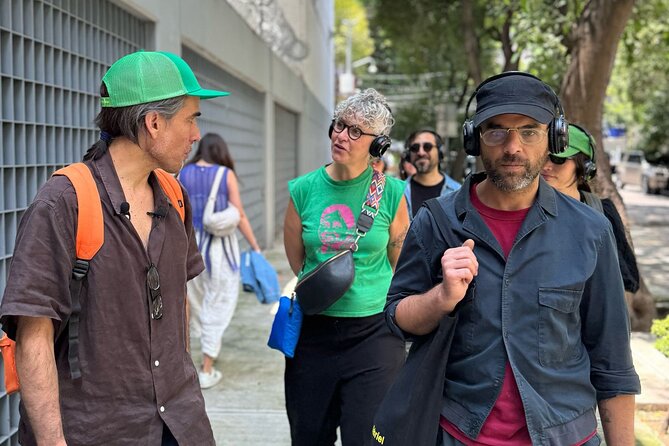
After the chapel, the tour shifts into a more playful mode. There is an amusing museum of everyday life objects from Mexican modern times. This is a smart move because it keeps the history from staying only in churches and official debates. Everyday objects show you what people used, what they valued, and what modern life looked like on the ground.
Then comes a building story with a twist. The tour points to a house that reflects how space was imagined at the time of construction. The Lamm family never actually lived here, but the home still shows a confident approach to space, even during a period when Mexico City had a serious housing need. That contrast is fascinating: architecture can project optimism even when reality is strained.
If you like your travel history grounded in human choices, these stops are where the tour feels most relatable. You see how design decisions connect to daily constraints, not only to big political events.
Avenida Álvaro Obregón: Corridos Meet Crime Press
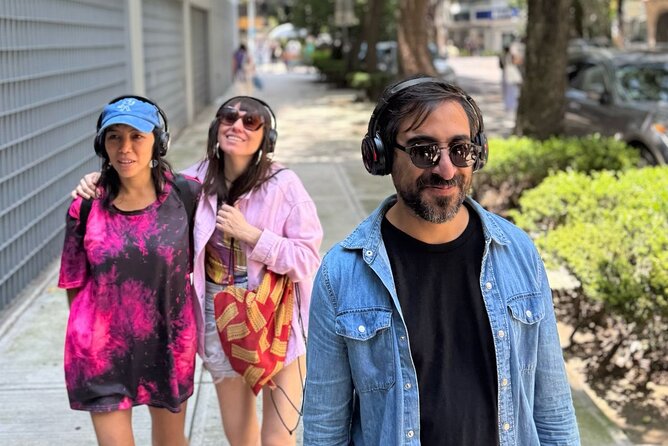
One of the tour stops is Avenida Álvaro Obregón, described as the neighborhood’s most iconic road. This matters because major streets often carry the loudest versions of culture and politics. You will use this stretch to understand the connection between corridos and crime press during the Mexican Revolution.
That link is a great example of why the tour is called musical. Corridos are narrative songs, and crime reporting is also narrative, just in print. The tour’s angle helps you see how stories circulated through different media, shaping what people believed, feared, and repeated.
Possible consideration: this part may be the most discussion-heavy. If you prefer quiet sightseeing, bring a mindset for conversation and context. The walk is designed around the spoken connections between places.
Plaza Luis Cabrera and the 1933 Architecture Debate
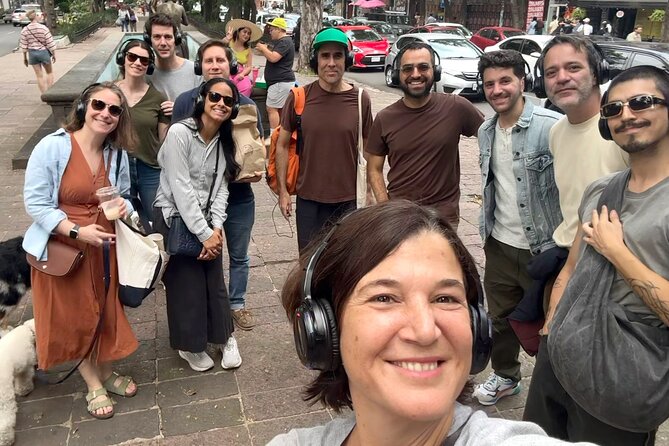
At Plaza Luis Cabrera, the tour slows down again to focus on architecture and ideology. The highlight here is a 1933 debate between conservative and modernist architects. On paper, that sounds academic. In practice, the tour frames it as aspirational thinking colliding with city growth.
Here is the key idea you should carry with you: architecture debates were not just about style. They were about what kind of Mexico City people wanted, and what kind they could realistically build. The tour ties the discussion to housing pressure as the city doubled its inhabitants every decade.
If you enjoy understanding why a building looks the way it does, this stop is for you. It gives you a lens for reading form as an argument.
Plaza Rio de Janeiro: From Residential Plans to Real Services
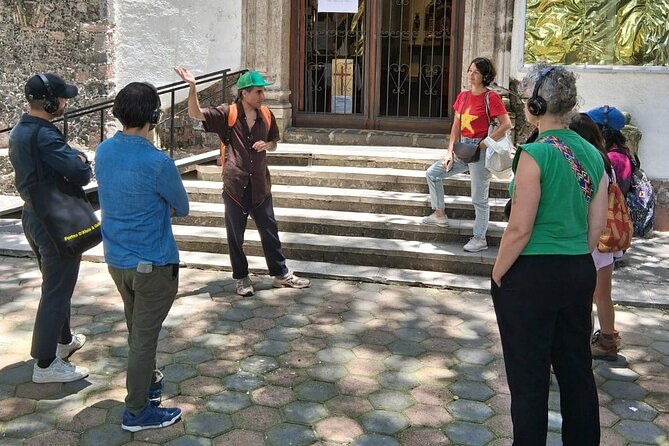
Next comes Plaza Rio de Janeiro. The story here starts with how Colonia Roma was conceived as exclusively residential, then shifts fast to the reality that planners and owners quickly realized this plan was not workable.
This plaza becomes a snapshot of change. It reflects how the neighborhood evolved toward a more autonomous setup, where basic services became part of everyday life. You can almost feel the transition between an ideal plan and the demands of living there.
This is also a nice change of pace after the debate-heavy architecture stop. It brings you back to the practical question: what did people actually need where they lived?
La Casa de Las Brujas: Eclectic Architecture and a Changing Neighborhood
At La Casa de Las Brujas, the tour tells a building origin story. Originally built to be a hotel, it later took on an apartment life. The point is bigger than one structure. The tour uses this place as evidence of how people’s idea of the neighborhood changed over time, moving from an exclusively residential identity toward a services-oriented role for the wider city.
The architecture itself is described as eclectic, which is a polite way of saying it refuses to look like just one style. That makes sense for a neighborhood that also refuses to stay one thing.
If you like visual variety, this is where your camera will get more use. Just remember the goal is not only photos, it is understanding why the shapes and choices matter in a real neighborhood.
Tortillería Premier in Roma Norte: Tortillas, the Zapotec State, and Big History in Small Places
The final themed stop heads into Roma Norte. You visit Tortillería Premier, a typical tortillas store, and the conversation gets wonderfully specific. The tour links the historical invention of tortillas to the first Zapotec state, described as being about five centuries BC.
It sounds strange until it lands: one of the most basic foods in Mexico can be connected to deep time and early states. That is the tour’s signature move. It takes something ordinary and shows you how far-reaching it can be.
This is also where the tour can feel most lively because food is practical history. You are standing in a place where people still buy and eat the product the story is talking about.
One more detail that adds to the experience: the tour is described as including less common venues like a tortilla maker stop and even newspaper stand type conversations. That kind of street-level culture helps the “musical” and “political” themes feel like they belong in the neighborhood, not in a textbook.
Getting Your Bearings at the End, Río de Janeiro Plaza (and the 1902 Plan)
The walk ends at Río de Janeiro Plaza, at Calle Durango y Orizaba, Roma Nte. The route’s end here is meaningful because this plaza is described as the neighborhood’s main plaza, already present in the first plan of 1902.
That gives you a satisfying loop for your mind. You started near an older chapel anchored by centuries of community identity. You finish in a plaza tied to an early planning vision for the area. Between those two points, you get the story of how theory becomes street life.
If you are planning post-tour dinner or coffee, consider staying nearby. The tour ends in a plaza setting, which makes it easier to transition to your next activity without needing long detours.
Price, Timing, and What Makes This Worth About $41.63
The price is $41.63 per person for about 2 hours 15 minutes, in English, with a mobile ticket. For a walking tour, that is not a bargain price, but it is also not a premium splurge. The value comes from the structure and the range of connections.
You are paying for more than “see these places.” The tour interprets them through themes: cultural identity, architecture debates, housing growth, revolution-era storytelling, and food history. That kind of storytelling can save you time. Instead of doing separate research on buildings, music culture, and food origins, the walk gives you a set of ideas you can remember while you keep exploring.
Also, each stop is marked with admission ticket free, which helps keep the experience from turning into a lineup of paid entries. For you, that means less hassle. For your money, it means you get more actual walking time plus interpretation, without the budget shrinking at the door.
Finally, the group size max is 12 travelers, which keeps the guide focused and makes it easier to hear the explanations. In a city as loud as Mexico City, that matters.
Who This Tour Fits Best
This is a strong match if you like city neighborhoods with character and you enjoy history that connects to everyday life. It also fits you if you want a walk that is not only pretty facades. The tour leans into social and political context, including revolution storytelling and housing pressures.
You might enjoy this especially if you already like any of these topics:
- Mexican cultural identity and how it shows up in public spaces
- Architecture that reflects real planning conflicts
- Music genres like corridos and the way stories travel
- Food history, especially tortillas and their deep timeline connections
- Learning through short, focused segments as you walk
If you prefer long, slow museum-style history with time to read and browse, this may feel too brisk. The tour is built for momentum and meaning, not for lingering.
Practical Tips Before You Go
Here are the small things that help this walk feel smooth.
First, check the weather. The tour requires good weather, and if it gets canceled due to poor conditions, you are offered a different date or a full refund.
Second, plan around the fixed start time of 10:30 am. Since it is an approximately 2 hour 15 minute walk, you will get the most out of your day if you do not schedule something tight right after.
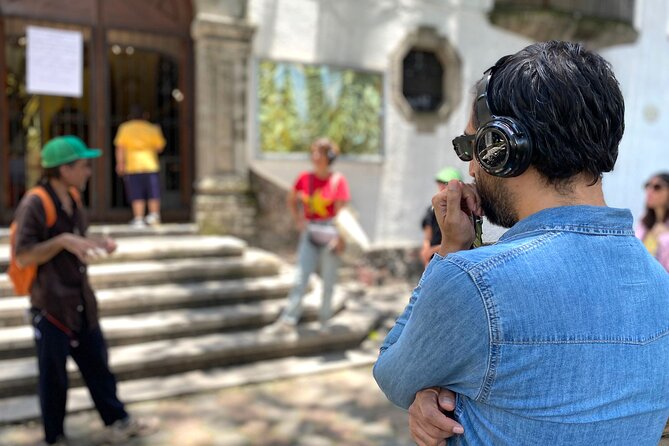
Third, bring headphones style attention even if you are not using headphones. The tour mixes architecture, political themes, and food lore. You get more if you listen actively, then look.
Fourth, set your expectations for the start and end points. It starts at Pl. Romita 30 and ends at Río de Janeiro Plaza. That is convenient for exploring, but it does mean you should plan your return route in advance.
Should You Book This Colonia Roma Musical Walking Tour?
Yes, book it if you want Colonia Roma to feel like a living argument between ideas, people, and everyday needs. The strongest reason to choose it is the way it ties together things that are usually treated separately: architecture debates, revolution-era storytelling via corridos and crime press, and even tortilla history linked to the early Zapotec state.
Book it too if you like off-the-main-path stops. The tour keeps you inside Colonia Roma and aims for locations that are less touristic, with spaces that make you look twice.
Skip it only if you hate walking, dislike discussion-based interpretation, or you cannot adapt to weather changes. Otherwise, this is a smart use of a couple of hours in Mexico City, with a guide named Gabriel Acevedo Velarde and a tight route that turns a neighborhood into a coherent story.
FAQ
What is the duration of the Colonia Roma Musical Walking Tour?
It lasts about 2 hours 15 minutes.
How much does the tour cost?
The price is $41.63 per person.
Is the tour offered in English?
Yes, the tour is offered in English.
How many stops are included?
The tour explores Colonia Roma through 11 locations.
Where does the tour start?
It starts at Capilla de San Francisco Javier de la Romita, Pl. Romita 30, La Romita, Centro, Cuauhtémoc, 06700 Ciudad de México.
Where does the tour end?
It ends at Río de Janeiro Plaza, at Calle Durango y Orizaba, 01000 Ciudad de México, Roma Nte.
Is admission included at the stops?
The stops are indicated as admission ticket free.
Is the tour limited to a small group?
Yes, the tour has a maximum of 12 travelers.
What is the cancellation policy?
You can cancel for a full refund up to 24 hours in advance of the experience start time, and cancellations due to poor weather may result in a different date or a full refund. Service animals are allowed, and the tour requires good weather.
More Tours in Mexico City

More Tour Reviews in Mexico City


More Corners of Roma and Condesa



More Mexico City plans worth opening
Roma & Condesa Tours for the next day.
 ★ 5.0Colonia Roma Food TourFrom $110838 reviews
 ★ 5.0Narvarte At Night: Tacos, Chelas & MezcalFrom $143216 reviews
 ★ 5.0Michelin Taco Bike Tour: Roma Norte & Condesa /All-Inclusive.From $101100 reviews
 ★ 5.0Roma & Condesa Private & Personalized Walking TourFrom $7770 reviews
 ★ 5.0Epic Condesa and Roma Norte Walking TourFrom $5946 reviews
 ★ 4.9Roma and Condesa Neighborhoods Walking TourFrom $5843 reviews
 ★ 5.0Cheerful Introduction Walking Tour in Roma, Condesa & JuarezFrom $5940 reviews
 ★ 5.0Mexican Fiesta Cooking Class (Roma Norte)From $11921 reviews
This review also appears in