
REVIEW · HISTORICAL TOURS
Walking Tour in Mexico City for Exploring their Cultural Heritage
Zócalo to Bellas Artes, on foot in a few hours. This walking tour strings together Mexico City’s key layers of culture, from the civic heart of the city to Aztec ruins and mural-filled stops. You move at a human pace, and you get a guide who turns landmarks into stories you can actually use.
I love how the route hits major places without feeling rushed, so you leave with a clear mental map of the Centro Histórico. I also like the focus on contrasts, Spanish-era architecture side-by-side with Aztec Tenochtitlan history and Mexico’s later mural movement.
One consideration: it is a true walking tour, and you should be comfortable walking about 3 hours total. If you have limited mobility, you may find the cobblestones and crowd levels a bit much.
Key things you’ll get from this walk
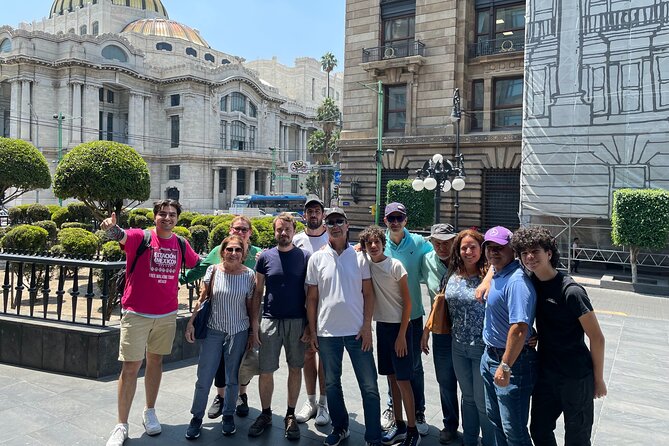
- A focused intro to Mexico City’s historic core from Zócalo through Bellas Artes
- Free-entry stops listed along the route, including Museo del Templo Mayor and Museo Nacional de Arte
- A guide-led story line, connecting politics, traditions, Aztec roots, and mural art
- Small group size (max 20) for questions and a more human pace
- An end near Palacio de Bellas Artes, a great place to continue your day
Keep exploring Mexico City at street level
- Historic Downtown Walking Tour
★ 5.0 · 1,289 reviews - Mexico City: Historic Downtown Walking Tour
★ 4.8 · 1,039 reviews - Frida Kahlo VIP [Museum Tickets Included] Walk, Markets & Churros
★ 5.0 · 982 reviews - Walking Tour of the Historic Center of Mexico City
★ 5.0 · 870 reviews
A smart “first-day” walk through Centro Histórico
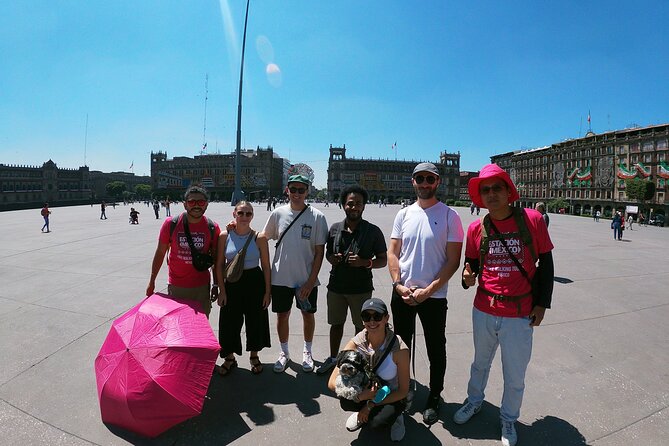
Mexico City can feel huge on your first morning. This tour helps you get your bearings fast by steering you through the places you keep hearing about, but in the order that makes sense for a walking loop.
It also keeps the experience grounded in real context. You are not just looking at buildings. You are learning why those buildings matter to daily life, politics, and identity, even centuries later.
Because the group is capped at 20, you are more likely to get real answers instead of watching from the back of a crowd. And the whole thing is priced at $25.00 per person, which is a pretty fair match for 2 to 3 hours of guided time in a prime area.
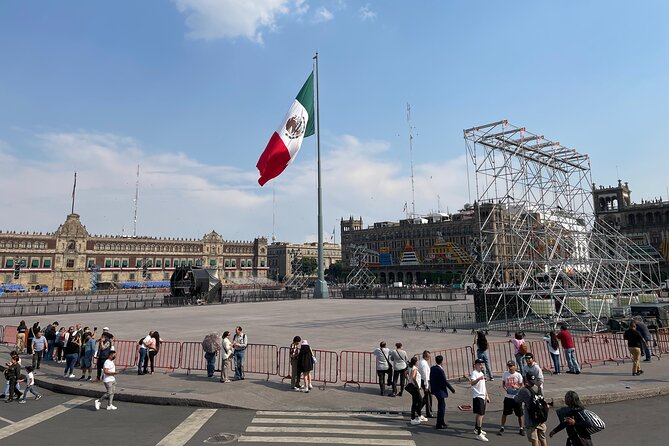
Start at Plaza de la Constitución and get your bearings at Zócalo
Your tour starts at Pza de la Constitución 463 in the Centro Histórico area, right near the energy of the city’s main square. You begin with Zócalo, and the focus is on the city’s origin story, including how civic life, political power, social movements, and traditions show up here.
That opening matters because Zócalo is not just a pretty plaza. It is the kind of place where you feel Mexico City’s rhythm. Once you understand its role, the rest of the walk clicks.
You spend about 30 minutes around this stop, and it lists the admission ticket as free. In practice, that means you can spend your energy on your guide’s explanation rather than waiting around for entry processes.
You should also expect the usual reality of big central squares, crowds, noise, and lots of people moving in every direction. Wear comfortable shoes and give yourself permission to move slower at street crossings. This is a “see and learn” route, not a race.
The Cathedral and the federal power center: Mexico City’s civic spine
After Zócalo, the walk takes you to two major symbols packed into the same historical pocket.
First comes the biggest cathedral in the continent (as described in the tour highlights). It is the kind of stop where your guide’s framing really helps. You start seeing religious architecture as part of state power and public identity, not just a place to admire stone.
Then you head to the most important office for the Federal Government in Mexico. Even if you do not study politics, that contrast between church authority and federal authority is a fast way to understand how power has been staged in public space.
This segment is one of the reasons the tour works for first timers. In a short time, you get a snapshot of who influences the city’s decisions and how that influence is displayed.
Take a wider circuit through Mexico City
- Mexico City: Teotihuacan, Tlatelolco & Guadalupe Shrine Tour★ 4.6 · 3,773 reviews
- Teotihuacan Hot Air Balloon Flight from Mexico City / Volare★ 5.0 · 3,262 reviews
- Teotihuacan Private Tour from Mexico City★ 5.0 · 1,890 reviews
- Historic Center Food Tour in Mexico City★ 5.0 · 1,263 reviews
- The best tour to Teotihuacán from Mexico City★ 5.0 · 1,236 reviews
Museo del Templo Mayor: Aztec roots under the modern city
Next is Museo del Templo Mayor, where you shift from civic symbols to ancient Tenochtitlan. You get to see the ruins of the most important temple connected to the old city, with a focus on Aztecs and Mexica culture.
You spend about 20 minutes here, and the listed admission ticket is free. That time window can feel short in a museum, but the guide’s job is to point you toward what matters most visually and historically, so you do not wander aimlessly.
What I like about this stop is the way it changes your understanding of the city above it. Mexico City’s present sits directly on top of layers that are not just decorative history. They are physical, archaeological roots.
This is also a great point in the tour for questions. Ask about how the old city worked, or how archaeologists interpret what they find. The best guides will use your questions to tighten the story.
Plaza de Santo Domingo: Spanish inheritance and the mural movement link
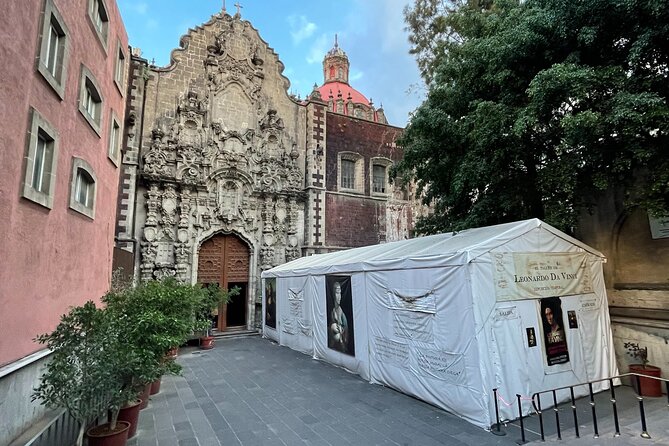
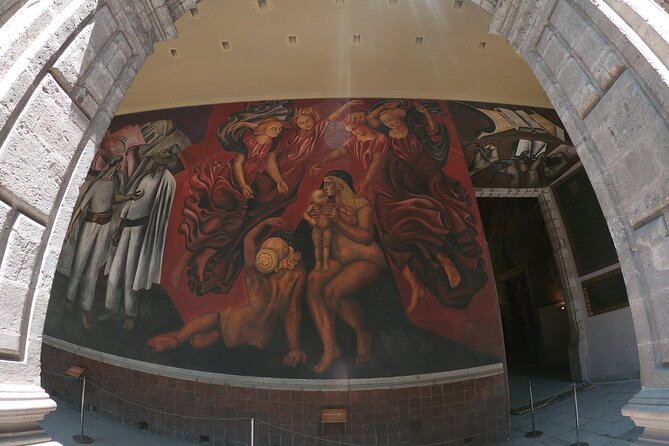
From ancient ruins, you move to Plaza de Santo Domingo, and the theme changes again. Here, the contrast is the Spanish past of Mexico and the origin of the Mexican Muralist movement.
You spend about 30 minutes, again with the admission listed as free. That stop is a helpful reminder that cultural identity in Mexico did not appear all at once. It formed through waves, with art playing an active role in defining what it means to be Mexican.
If you care about art but do not want a full museum day, this is a strong middle ground. You get the connection between place, history, and artistic ideology without turning your morning into a homework assignment.
In practical terms, this stop also helps you pace the walk. It is a good “breather” moment before the more concentrated museum time later.
Museo Nacional de Arte: 20th-century architecture meets the city
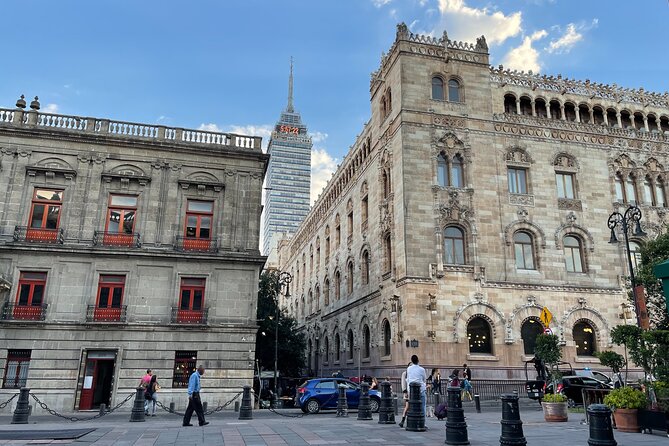
Next is Museo Nacional de Arte, with about 30 minutes on the schedule and listed free admission ticket.
The tour highlight here is the modern architecture of the 20th century taking over the city. That framing is useful because it encourages you to watch the building itself, not just what is inside.
This is where the walk becomes more than a history tour. It starts to feel like a city tour too, because you are learning how different eras literally reshape the streets around you.
You will probably notice how your guide connects this modern layer back to what you just saw. It is the kind of cause-and-effect thinking that makes landmarks stick in your memory later, when you are trying to plan the rest of your trip.
The tile-covered palace stop: a small detour that pays off
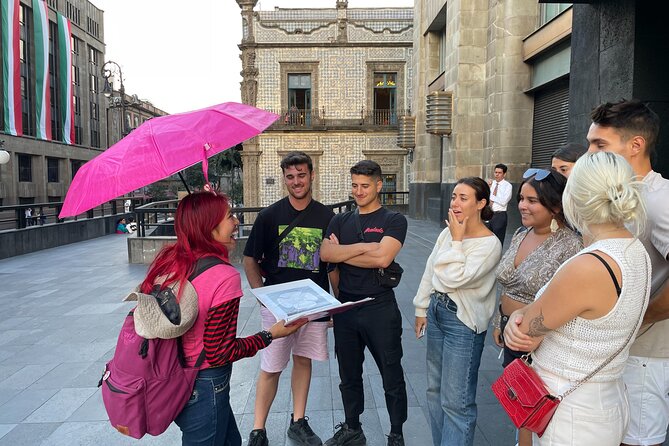
The walk includes a stop for a beautiful palace known by its tiles. Even without a long museum-style explanation, tile buildings usually win people over fast, because the visual impact is immediate.
This is also one of those stops where a guide’s enthusiasm changes the vibe. In past walks, I have noticed guides often share extra context about where the look comes from and how the building fits into the surrounding urban style.
You should treat this as a “look closely” moment. Zoom in on the patterning, the colors, and how the façade catches light as people move through the plaza and streets.
And if you like taking photos, this is a good time to do it. The tour ends with a major photo target too, but tile façades give you a different kind of visual texture.
Finish near Palacio de Bellas Artes, where murals tie it together
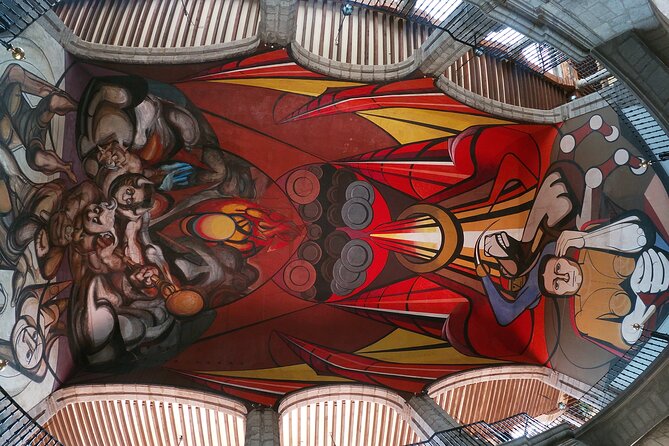
Your tour ends close to Palacio de Bellas Artes, with the finish point listed as Av. Juarez 39 in the Centro area. The guided story comes to a natural landing here, especially because the activity includes a place with murals.
This ending is smart for practical reasons. Palacio de Bellas Artes is right where you can keep going, whether you want to browse more museums, grab a meal nearby, or just keep walking along the downtown axis.
From what I have seen with good guides on this route, the Palacio de Bellas Artes segment often becomes a “put it all together” moment. You connect Aztec foundations, colonial and civic power, and then later art movements that used walls and public spaces to tell Mexico’s story.
If you are planning your day, this is a nice place to end because you are not stuck far from transit. You are also not too far from places where you can pick up snacks if you need them.
Guides can make or break the experience, and this one has standout energy
The best part of tours like this is the guide. And the guide names associated with strong feedback on this route tell you something: people are responding to personality plus clarity.
I have heard glowing notes for Sofía, including the way she shares information and stays open to questions. Carmina has been described as the best guide the group saw in a few days, with enthusiasm and strong question-answering. Jesus has a reputation for being both entertaining and fun to ask about history.
There are also guides like Diana, David, and Marco who sound particularly good at pacing and explaining art-history links in a way that makes people care. Even Ulysses Warryor gets credit for being polite and friendly while keeping things educational.
In other words, if you show up ready to ask questions, the tour is set up to reward that. You do not need to be a museum person to enjoy it, but you do get more out of it if you lean in.
Timing, walking reality, and what to wear
This tour runs about 2 to 3 hours. It is also specifically described as a walking tour, and you should be able to walk about 3 hours.
So plan for cobblestones, city sidewalks, and the occasional stop-and-go crowd moment. You will be outside for most of the time, and that means clothing that works for the weather and comfortable shoes matter more than you think.
Bring water if you run warm easily, even though food and drinks are not included. Since the tour does not provide meals, you may want a light breakfast or plan a snack break after.
Since the tour is near public transportation and the meeting area is central, you can usually fit it smoothly into a first-day plan. Start at 9:00 am, get your bearings, and then build the rest of your schedule from there.
Language and tickets: easy if you like planning ahead
The tour is offered in English, and you receive a mobile ticket. That combination is great if you do not want to deal with paper vouchers.
You also get confirmation at booking time, so you can move on with confidence once you reserve. The walking nature and small-group limit makes advance planning especially useful if you are traveling at busy times.
The average booking window is about 8 days in advance, so if you are flexible on dates, you can often find something. If your schedule is tight, book earlier to avoid last-minute choices.
Price and value: $25 for a guided historic center loop
At $25.00 per person for roughly 2 to 3 hours, this tour sits in the “good value” zone for Mexico City’s historic core.
Here is why the price feels fair. You get:
- a guided explanation for multiple major landmarks in one loop
- stops tied to both Aztec and colonial-to-modern cultural themes
- a small group (max 20), which usually means less waiting and more interaction
- some stops with free listed admission, including Museo del Templo Mayor and Museo Nacional de Arte
Could you do this alone? Sure. But the real advantage is the guide’s stitching of context. That is what turns separate attractions into a connected mental map of the city.
If you are trying to do the most “bang for your morning,” this is a strong option.
Who should book this walk, and who might skip it
This is a great fit if you:
- are a first timer in Mexico City and want a clear introduction to the historic center
- like history, art connections, and cultural context more than random sight-seeing
- want a guided route where you can ask questions and keep moving
You might consider skipping or pairing it with more time if you:
- cannot comfortably walk about 3 hours
- want a museum-heavy itinerary with lots of time inside one building
- prefer to explore fully on your own with no schedule at all
The sweet spot is a traveler who wants structure and meaning, without a full-day commitment.
Should you book this tour?
Yes, you should book it if you want a smart first-day foundation. The Zócalo to Bellas Artes flow gives you a working map of the city’s most important landmarks, and the themes connect civic life, Aztec roots, and mural-era identity in a way that feels practical.
I would book it particularly if you enjoy being walked through “why this matters,” not just “what you are looking at.” The guide-driven storytelling, the small group size, and the price point make it a reliable way to start a Mexico City trip.
If you are unsure, do this: commit to the morning. Then decide later if you want to return to any stop you loved most. This tour is the kind that helps you choose your next hours instead of guessing.
FAQ
How long is the walking tour?
It lasts about 2 to 3 hours.
What time does the tour start?
The start time is 9:00 am.
Where is the meeting point and where do we end?
You meet at Pza de la Constitución 463, Centro Histórico de la Cdad. de México. The tour ends near Av. Juarez 39, close to Palacio de Bellas Artes.
Is the tour offered in English?
Yes, it is offered in English.
Is admission free at the stops?
For several stops, the listed admission ticket is free, including Zócalo, Museo del Templo Mayor, Plaza de Santo Domingo, and Museo Nacional de Arte.
What is included in the price?
You get a tour guide for the whole experience, and you will visit a place with murals during the activity.
Is food or drinks included?
No. Food and drinks are not included.
Is there free cancellation?
Yes, free cancellation is available. You can cancel up to 24 hours in advance for a full refund. If you cancel less than 24 hours before the start time, the amount you paid will not be refunded.
Mexico City at Walking Pace





More Tours in Mexico City



More Tour Reviews in Mexico City




More Mexico City plans worth opening




Historical Tours for the next day.
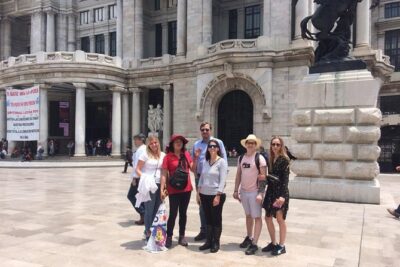 ★ 5.0Historic Downtown Walking TourFrom $261,289 reviews
 ★ 5.0Historic Center Food Tour in Mexico CityFrom $1151,263 reviews
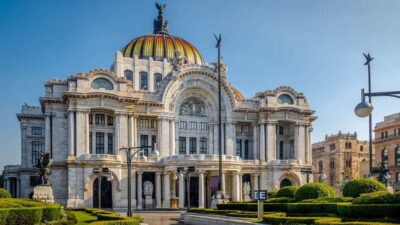 ★ 4.8Historic Downtown Walking TourFrom $261,039 reviews
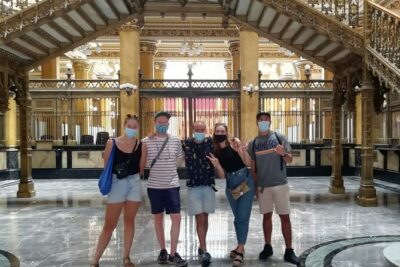 ★ 5.0Walking Tour of the Historic Center of Mexico City870 reviews
 ★ 5.0Mexico City Historical Centre Food Tour with 7 Authentic TastingsFrom $65723 reviews
 ★ 5.0Walking Tour – Impressive murals in Historical Center of Mexico CityFrom $51224 reviews
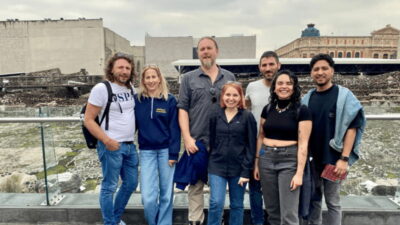 ★ 4.5Guided walking tour through the most historic parts of the city.From $30172 reviews
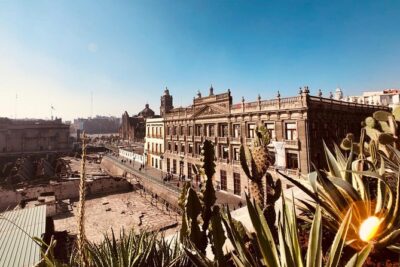 ★ 5.0Private Walking Tour Gems of the Historic Center of Mexico CityFrom $15687 reviews
This review also appears in