
REVIEW · ROMA & CONDESA TOURS
Epic Condesa and Roma Norte Walking Tour
Condesa and Roma Norte on foot feels effortless. I especially like the guide-led route, so you are not stuck with map fatigue, and the small group size that keeps the pace human. You get a walk that feels like someone is showing you how the neighborhood works, not just pointing at buildings.
My favorite part is how the tour threads Art Deco and Art Nouveau details through parks, squares, museums, and everyday streets. The only real catch is physical stamina, because it runs about 4 hours 30 minutes, and the day can feel closer to 5 hours once you factor in walking and breaks.
Key highlights that make this tour worth your time
- A guide who handles the logistics so you can focus on the architecture and the street life
- Up to 12 people, which means more questions and more back-and-forth than big-group tours
- Parks built into the route (Parque México, Parque España, and more), so you are not only staring at facades
- Lots of free stops, since every listed stop is marked admission-free
- Ricardo’s English plus storytelling style, with detours and food moments that can pop up when the group wants them
- A proper neighborhood finish at Huerto Roma Verde, where the area’s modern culture shows up in real life
Linger longer between Roma and Condesa
- Colonia Roma Food Tour
★ 5.0 · 838 reviews - Narvarte At Night: Tacos, Chelas & Mezcal
★ 5.0 · 216 reviews - Michelin Taco Bike Tour: Roma Norte & Condesa /All-Inclusive.
★ 5.0 · 100 reviews - Mexico City: Roma & Condesa Private & Personalized Walking Tour
★ 5.0 · 70 reviews
A 4.5-hour, Ricardo-led walk through Condesa and Roma Norte
This is a walking tour with a plan. You start in Hipódromo, then move into Condesa and Roma Norte, where the streets and architecture make a strong case for why Mexico City has such a fan base with architecture lovers. The tour is offered in English, lasts about 4 hours 30 minutes, and keeps group size to a maximum of 12 travelers, which matters more than you think on a city tour.
At a price of $59 per person, you are paying for something most self-guided walks do not include: interpretation. Condesa and Roma Norte can look stunning even if you do not know what to look for, but a good guide helps you see patterns quickly, like the way particular streets were designed and why certain styles feel so consistent block to block.
One more practical point: this is timed to fit an afternoon. The start time is listed as 12:00 pm, so it works well if you want something active but not an all-day grind.
Meeting at Churrería El Moro and ending at Huerto Roma Verde
The meeting point is Churrería El Moro, Av Michoacán 27, Hipódromo, Cuauhtémoc, CDMX. If you arrive early, you will be in the right mood. Even if you skip a hot drink, it is an easy landmark to orient around, and the area is well set up for public transportation.
The tour ends at Huerto Roma Verde, Jalapa 234, Centro Urbano Pdte. Juárez, Roma Sur, Cuauhtémoc. Ending at Huerto Roma Verde is a smart choice because it gives the day a modern cultural landing spot, not just another street corner. If you want to extend your time in Roma, you are already in the right neighborhood to keep wandering.
Because the tour is mobile-ticket friendly and you are told it is near public transportation, you can plan around it without stress. Still, bring water and comfortable shoes. This is not a sit-and-smile route.
Parque México sets the tone with Art Deco + real neighborhood life
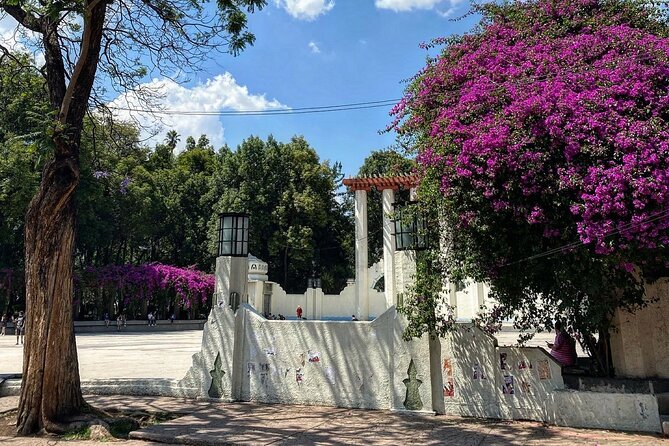
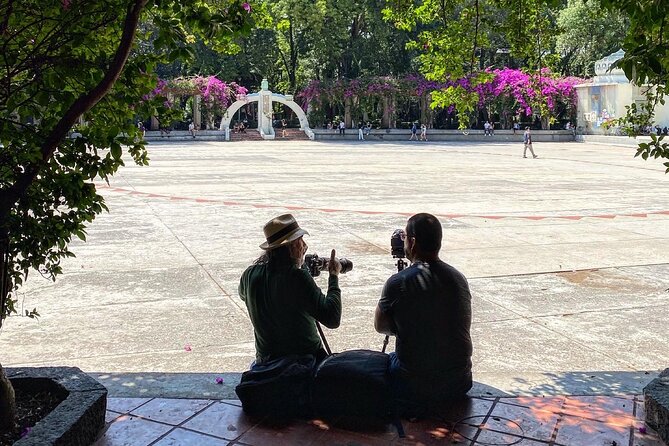
Stop 1: Parque México. This is where the neighborhood’s rhythm becomes obvious. You get lush walking paths, plus a look at the park’s Art Deco design. Parks in Mexico City are not just pretty views. They are social space, and you will feel it here even during a short visit.
What I like about starting with this park is simple: it gets your eyes calibrated. After Parque México, it is easier to spot design choices across the streets, because you already understand the neighborhood’s “green space first” attitude.
Keep exploring Mexico City at street level
- Frida Kahlo VIP [Museum Tickets Included] Walk, Markets & Churros★ 5.0 · 982 reviews
- Anthropology Museum Private Experience Walking Tour★ 5.0 · 355 reviews
- Walking Tour in Mexico City for Exploring their Cultural Heritage★ 5.0 · 245 reviews
- Walking Tour – Impressive murals in Historical Center of Mexico City★ 5.0 · 224 reviews
- Muralist Art Semi Private Walking Tour in Mexico City Downtown★ 5.0 · 188 reviews
Ámsterdam’s elliptical street plan is the architecture lesson in disguise
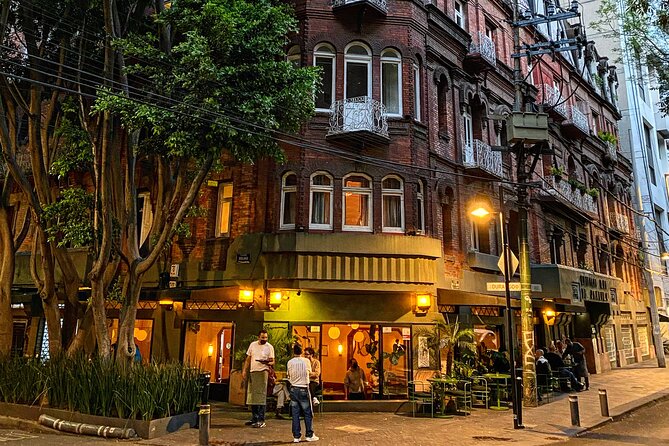
Stop 2: Ámsterdam (the street). This is not a random street stop. You are strolling along a tree-lined street that loops around what used to be a horse race track. That origin matters because it helps explain why the street pattern feels slightly unusual and why the blocks can feel so distinctive.
You will also be looking at Art Deco architecture and green spaces that reinforce the neighborhood’s identity. This is the kind of stop where the guide’s explanations make the sidewalk feel like a lesson, but without sounding like a lecture.
Parque España is a quick reset before the buildings take over
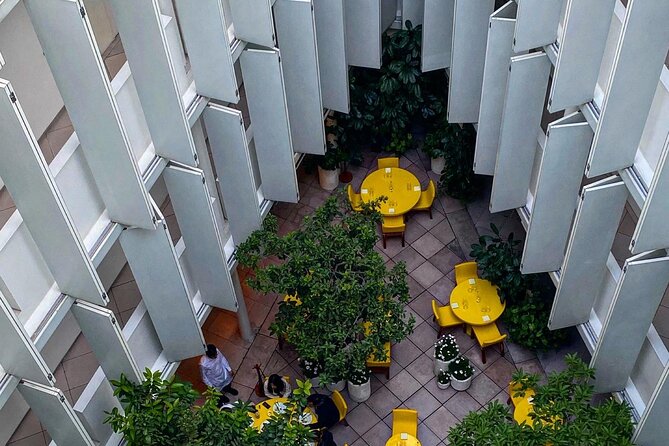
Stop 3: Parque España. Think of this as your palate cleanser between architectural moments. You get a peaceful stroll through greenery and you will be pointed toward sculptures and historic monuments.
It is only listed as about 5 minutes, but that is plenty time to notice how parks here create breathing room right inside the urban fabric.
Condesa DF and its rooftop views: design as a way of life
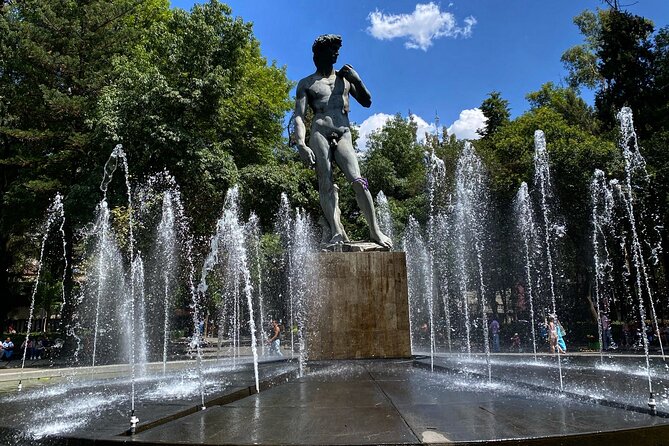
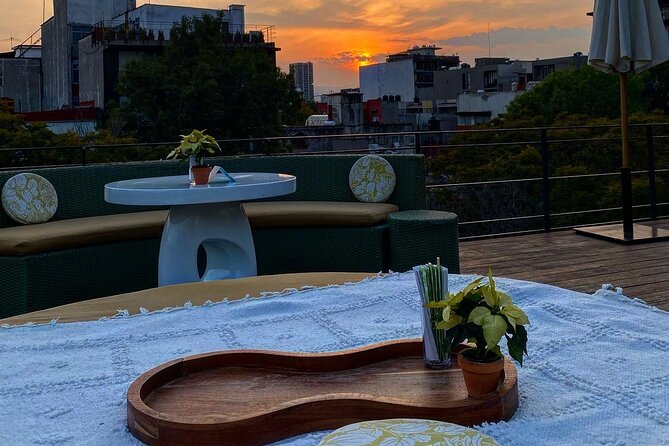
Stop 4: Condesa DF, a boutique hotel spot. This stop is short, but it is a good reminder that Condesa is not stuck in the past. You will admire the blend of modern and colonial architecture, then look toward the rooftop views in the Condesa area.
Even if you do not plan to go inside, this kind of stop trains your eye. You start seeing how architecture, light, and street layout all work together. Plus, rooftops in Condesa are often where the neighborhood’s shape becomes visible.
Fuente de Cibeles connects Mexico and Spain with a familiar landmark
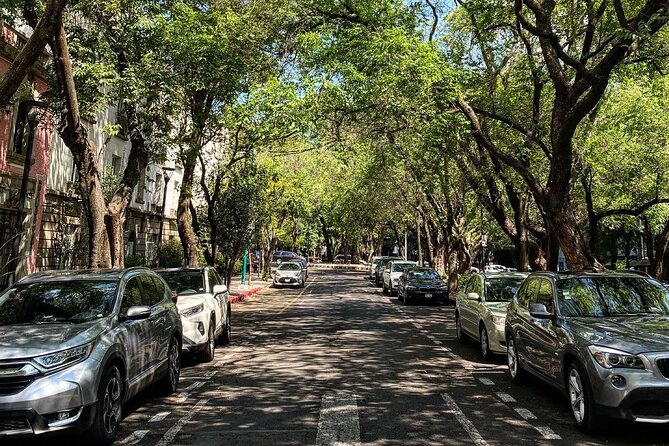
Stop 5: Fuente de Cibeles. Here you see a replica of Madrid’s famous fountain, and you also hear the meaning behind why this reference shows up in Mexico City. It is a small stop, but it adds context to how cultural symbols travel and get reinterpreted.
In practical terms, it is also a good photo spot, because the fountain gives you a clear focal point.
Casa Museo Guillermo Tovar de Teresa: art and antiques without the heavy museum day

Stop 6: Casa Museo Guillermo Tovar de Teresa. This is one of those places that can feel surprisingly intimate for a museum. You will explore a preserved house filled with art and antiques, and you will learn about the life of a prominent art historian.
The tour lists this as about 15 minutes. That is a good length if you want cultural context without losing the entire afternoon to indoor touring. If you like learning how private spaces reflect public taste, this stop will land well.
Casa Universitaria del Libro UNAM shows you culture in a historic mansion
Stop 7: Casa Universitaria del Libro UNAM. The focus here is the architecture of a historical mansion, plus temporary expositions. Even with only about 5 minutes allocated, this stop gives you a glimpse at how institutions use beautiful spaces, not just plain rooms.
If you enjoy modern Mexican culture, the UNAM connection is a helpful anchor. It signals that the neighborhood is not only about style, but also about ideas and public-facing learning.
Parroquia de la Sagrada Familia adds neo-Gothic drama
Stop 8: Parroquia de la Sagrada Familia. You are looking at neo-Gothic architecture, and you learn why it is considered one of the oldest churches in Roma Norte.
This is another quick stop that pays off. Churches like this change the visual mood of a street. Even if you just walk past most days, the guide’s context helps you notice how the design fits the neighborhood’s timeline.
Plaza Rio de Janeiro and the David replica: art in the open air
Stop 9: Plaza Rio de Janeiro. You will soak up the relaxed square atmosphere, then spot an iconic replica of Michelangelo’s David. You also see the surrounding buildings that shape how the plaza feels.
This is one of the stops where you can slow down without feeling like you are breaking the tour. It is listed at about 5 minutes, but it gives you a strong visual memory of the neighborhood.
Edificio Río de Janeiro is where eclectic architecture becomes a conversation
Stop 10: Edificio Río de Janeiro. This is described as striking eclectic architecture, and you will hear its history as one of the area’s recognizable buildings.
Eclectic does not always mean chaotic. Often it means multiple design influences that work together. That is the point here: you learn how to look at buildings as choices, not just decorations.
Casa Basalta blends art, dining, and a calm pause
Stop 11: Casa Basalta. This early 20th-century mansion is now a multi-purpose space with a MAIA Contemporary art gallery, a meditation center, and restaurants.
It is listed around 10 minutes, and that is the right amount of time to register the idea of the place. You get architecture on the outside, then the message that modern culture has room to coexist with calm and creativity.
In the most positive tours, this is also the kind of stop where people end up asking questions about what to visit next. If you like galleries and design-forward spaces, this stop sets you up nicely for independent exploring afterward.
La Romita: narrow streets, pre-Hispanic roots, and the neighborhood behind the neighborhood
Stop 12: La Romita. You will wander narrow streets and get to Plaza de la Romita, with stories about its origins as the pre-Hispanic village of Aztacalco and how it evolved over time.
This stop is a reminder that Roma and Condesa are not only about European-style architecture. You are walking through an area with deeper layers, where the street network and local identity grew through major historical shifts.
Pushkin Garden is short, but the name hints at Mexico City’s international tone
Stop 13: Pushkin Garden. It is listed at about 5 minutes, and the key detail is that it is named after the Russian poet.
This is one of those tiny stops that makes the city feel connected to the wider world. It is quick, but it adds a human detail to the neighborhood’s identity.
Avenida Álvaro Obregón mixes Art Deco street form with modern street energy
Stop 14: Avenida Álvaro Obregón. You will stroll down an iconic street known for Art Deco architecture, trendy shops, and lively nightlife.
The value here is that it turns the day from architecture-study into real-world city life. You see how people move, how storefronts and street design shape the vibe, and where locals likely spend time after work.
Casa Prunes brings Art Nouveau style plus restaurant energy
Stop 15: Casa Prunes. This is an Art Nouveau mansion that hosts an incredible restaurant and many spots you can look for if you slow down.
Art Nouveau can be easier to appreciate when you are actively walking past details, and this stop encourages that. It is also a good reminder that these neighborhoods support both culture and meals. If you are hungry at the right time, you are in the right place.
Plaza Luis Cabrera is your green-space pause with fountain focus
Stop 16: Plaza Luis Cabrera. You get a peaceful square with a large fountain and green spaces.
This stop works because it is another breather, and fountains make for easy pauses without derailing the schedule. It also gives your legs a moment to recover without the tour turning into a standstill.
El Parián is history you can browse, eat, and shop
Stop 17: El Parián. You will explore a historic passage dating back to 1926. Today it houses shops and restaurants, so it is a stop that naturally supports snack time.
This is a strong place for browsing if you like little shops and food counters. In some cases, Ricardo can also adjust the day when people want street food, so this area is the kind of location where those cravings can turn into a practical plan.
Casa Lamm Centro de Cultura adds a culture stop inside a historic building
Stop 18: Casa Lamm Centro de Cultura. This is an early 20th-century building now used as a cultural center.
You will spend about 5 minutes, so treat it like a taste of the broader scene rather than a full museum visit. Still, it is a useful stop because it signals that the neighborhood’s creative side is not just about Instagram streets. There are cultural institutions here.
Calle Orizaba gives you a final architecture scan before the garden finish
Stop 19: Calle Orizaba. You will stroll down a historic street known for early 20th-century architecture and a lively atmosphere.
This is where your brain starts spotting repeating design choices. If you want to take photos, this is often a good moment because you are near a cluster of architecture and street texture.
Huerto Roma Verde closes the loop with sustainable community energy
Stop 20: Huerto Roma Verde. You explore an urban garden and community space known for sustainable practices and a vibrant gathering atmosphere.
This is the best kind of tour ending. You start with parks and you end with a park that doubles as a community project. By the time you reach Huerto Roma Verde, you understand the neighborhood pattern, green space plus culture plus local daily life.
Also, it is a great place to decide what to do next. Want dinner nearby? Want to keep walking? You will be positioned well to continue.
Who this tour is best for (and who might want something else)
This fits best if you love architecture and want your eyes trained fast. It also works well if you care about neighborhoods more than big-ticket landmarks, because Condesa and Roma Norte give you a dense dose of design, parks, and street culture in one route.
It is also ideal if you want an English experience with a human guide. Ricardo gets high marks for being friendly and for an easy, conversation-friendly style, and that shows up in the way people describe the day: it can feel like exploring with a friend who knows the city.
The main mismatch is stamina. The tour is moderate physical fitness, and because it covers a lot of ground, you should plan for a strong walking afternoon. If you are aiming for a very easy, mostly-transport tour, this one may feel like too much on foot.
Price and value: why $59 can actually feel fair here
At $59 per person for about 4.5 hours, the price is competitive for Mexico City walking tours, especially with a max group size of 12 and a route that hits many distinct styles and settings. You are not paying just for distance. You are paying for:
- A route that connects parks, buildings, and institutions
- English commentary
- Someone to spot patterns so you do not miss them
The value gets even better because the tour lists admission ticket free for each stop. That means your money goes toward the guide and the experience, not entrance fees and line-wrangling.
A final value tip: bring a small amount of flexibility. Some tours with Ricardo include extra food moments and detours when the group wants them, like street tacos or a pastry stop. If you are the type who likes to snack while you wander, that can make the day feel like a bigger payoff than the headline price.
Should you book this Condesa and Roma Norte walking tour?
Yes, if you want a guided way to understand two of Mexico City’s most distinctive neighborhoods. Book it if your ideal afternoon includes Art Deco streets, parks you can actually walk in, and quick cultural stops that do not swallow your whole day.
Think twice if you hate walking for hours, because even with breaks, this is still a real walking route. Also, if you only want museum-heavy time, note that many stops are short, and the day is structured for street-to-street interpretation.
If you are choosing between doing it alone and doing it with a guide, pick the guide. The main reason is simple: this tour teaches you how to see. When you leave, Condesa and Roma Norte look different, and you will know what you just witnessed, not just where you walked.
FAQ
How long is the Epic Condesa and Roma Norte Walking Tour?
It runs for about 4 hours 30 minutes.
How much does the tour cost?
The price is $59.00 per person.
What language is the tour offered in?
The tour is offered in English.
How many people are in the group?
The tour has a maximum of 12 travelers.
Where does the tour start and where does it end?
It starts at Churrería El Moro (Av Michoacán 27, Hipódromo) and ends at Huerto Roma Verde (Jalapa 234, Roma Sur).
What is the start time?
The listed start time is 12:00 pm.
Do I need an admission ticket for the stops?
The tour information lists admission tickets as free for the listed stops.
What is the cancellation policy?
Free cancellation is available up to 24 hours in advance for a full refund. If you cancel less than 24 hours before the start time, the amount you paid will not be refunded.
More Tours in Mexico City




More Tour Reviews in Mexico City



More Corners of Roma and Condesa





More Mexico City plans worth opening

Roma & Condesa Tours for the next day.
 ★ 5.0Colonia Roma Food TourFrom $110838 reviews
 ★ 5.0Narvarte At Night: Tacos, Chelas & MezcalFrom $143216 reviews
 ★ 5.0Michelin Taco Bike Tour: Roma Norte & Condesa /All-Inclusive.From $101100 reviews
 ★ 5.0Roma & Condesa Private & Personalized Walking TourFrom $7770 reviews
 ★ 4.9Roma and Condesa Neighborhoods Walking TourFrom $5843 reviews
 ★ 5.0Cheerful Introduction Walking Tour in Roma, Condesa & JuarezFrom $5940 reviews
 ★ 5.0Mexican Fiesta Cooking Class (Roma Norte)From $11921 reviews
 ★ 4.5Bike tour in the Chapultepec Forest and Roma CondesaFrom $4720 reviews
This review also appears in