
REVIEW · MEXICO CITY MUSEUMS & GALLERIES
Arrivals & Survival of Jews in Mexico from 1519
Jewish history in Mexico City, street by street. This 3.5-hour walk is interesting because it connects colonial religious power to today’s surviving Jewish landmarks, with stops that range from cathedral chapels to synagogue streets. I especially like how the route spotlights both sides of early Jewish life in Mexico, including the first Sephardic temple and the first Ashkenazi synagogue.
I also like the way the tour uses real place names to build a timeline, with the guide Carlos earning praise for turning complicated history into a clear, human story. One possible drawback is that it’s a walking tour with mostly short segments and exterior viewing at several sites, so if you want lots of time inside buildings, you may wish you had more time at the end synagogue stop.
Key Highlights You Should Know Before You Go
- A tight 3.5-hour route through Central Mexico City’s most symbolic religious and Jewish-history spots
- First Sephardic and first Ashkenazi synagogues in Mexico, including Mount Sinai and Nidjei Israel area landmarks
- Justo Sierra Synagogue as the finish point, with special attention to its early Ashkenazi roots
- Inquisition-focused stops that explain how power shaped what Jews could do, trade, and practice
- Carlos as a standout guide for pacing, clarity, and answering questions
Open another museum door in the capital
- CDMX: Xochimilco, Coyoacan, Frida Kahlo Museum & Murals Tour
★ 4.4 · 3,025 reviews - Chapultepec Castle & Anthropology Museum Tour
★ 4.5 · 1,348 reviews - Frida Kahlo VIP [Museum Tickets Included] Bike, Markets & Churros
★ 5.0 · 1,072 reviews - Anthropology Museum Guided Tour
★ 4.5 · 1,035 reviews
Entering Mexico City’s Jewish Story Through Real Streets
If you picture Mexico City as just museums and big plazas, this tour nudges you to look closer. You move through the Centro Histórico where empires left marks, and where Jewish life in Mexico had to adapt to shifting rules and fear. The experience is built around the contrast between what the Spanish authorities tried to control and what Jewish communities managed to preserve.
What makes it especially engaging is the blend of place and meaning. You start with a calm, panoramic moment, then shift to sites tied to religious enforcement, and then end at synagogue spaces tied to survival and continuity. It feels less like a lecture and more like following footprints through the city.
The tour runs about 3 hours 30 minutes and keeps the group small, up to 10 travelers, which matters for questions and for the pace in tight sidewalks. It’s offered in English, includes a local guide, and you’ll use a mobile ticket. You’ll want moderate fitness, since it is a walk with multiple stops.
Meeting Point at 10:00 and a Terrace Start You’ll Actually Remember
You meet at República de Argentina 15, Centro Histórico, at 10:00 am. The meeting location is in a very central, walkable part of town and is described as being near public transportation, which helps you fit it into a day that already includes other Centro sites.
The first stop is at Librería Porrúa, where you begin with an intro chat from a terrace overlooking the ruins of the Great Aztec Temple. That opening matters. It sets up the big idea that Mexico City’s religious story is not one straight line, it’s layers on layers, each era rewriting what the next era thinks is important.
You get an early anchor for the tour’s theme, peaceful coexistence, but you also get a sense that this city has always been a crossroads. The best part of starting this way is that it calms you down before the heavier material begins.
Behind the Metropolitan Cathedral: The Chapel of the Souls and Fear of Heresy
Next you head to the Catedral Metropolitana de la Ciudad de México. The tour focuses on what many visitors miss, walking behind the cathedral to reach the Chapel of the Souls. From a vantage point you can appreciate the colonial architecture while the guide explains how religious messages were designed to enforce conformity.
This stop is about propaganda as architecture. You learn about teachings against heresy, shown from the vantage point you’re standing in, and you connect that to the idea that colonial power was built to keep Jews away. Whether you already know the basics or not, the payoff is seeing how the built environment carried those warnings.
A drawback to consider here is that this is a short segment, about 20 minutes. It gives you the core story, but it does not give you hours to absorb every detail. If you like to read closely or sketch, you might want to take extra time nearby on your own after the tour.
- Teotihuacan, Guadalupe Shrine & Tlatelolco Day Tour with Lunch★ 5.0 · 11,603 reviews
- Xochimilco, Coyoacan and Frida Kahlo with Optional Lunch★ 4.5 · 7,320 reviews
- Teotihuacan pyramids morning or afternoon without tourist traps★ 5.0 · 6,186 reviews
- Teotihuacan Early Access Guided Tour with optional Lunch★ 4.5 · 6,138 reviews
- Mexico City: Teotihuacan, Tlatelolco & Guadalupe Shrine Tour★ 4.6 · 3,773 reviews
Plaza de Santo Domingo: Trade, Surveillance, and the El Camino Real Connection
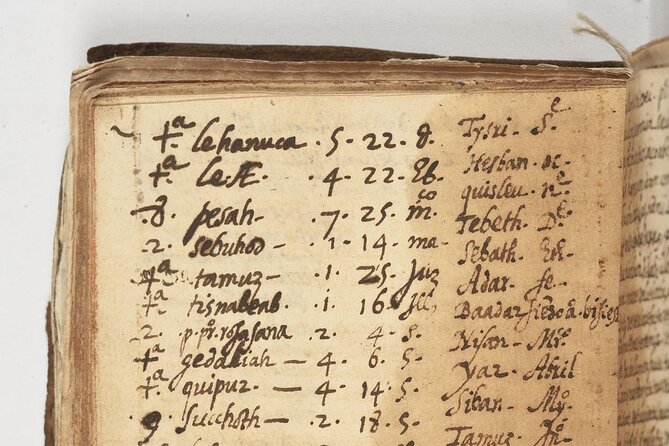
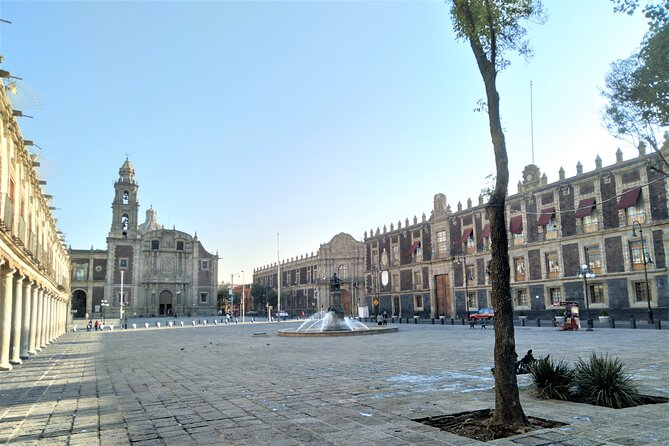
At Plaza de Santo Domingo, you shift from religious control to daily life. This is the main trading marketplace from the 16th to 19th centuries, and the tour explains what it meant for Jews in hiding to come and trade while being watched.
The story here hinges on two things:
1) Jews had to keep moving through commerce to survive.
2) Authorities tried to control them through observation and punishment.
You also spend time at the palace area to decipher anti-Semitic hidden messages, and you relate those messages to what you see on the Santo Domingo church. Then you connect it to the Camino Real, described as a safe haven for Jewish traveling traders.
This is one of the most valuable parts of the route because it turns history into behavior. Instead of just naming rulers, you see how restrictions shaped movement, work, and communication. It also helps you understand why religious life in Mexico City had to be strategic.
It’s only about 20 minutes, so bring your curiosity. If you want deeper context, ask the guide what you should read next, especially about how traders moved through Spanish-controlled routes.
Antiguo Palacio de la Santa Inquisición: The Weight of the Perpetual Prison
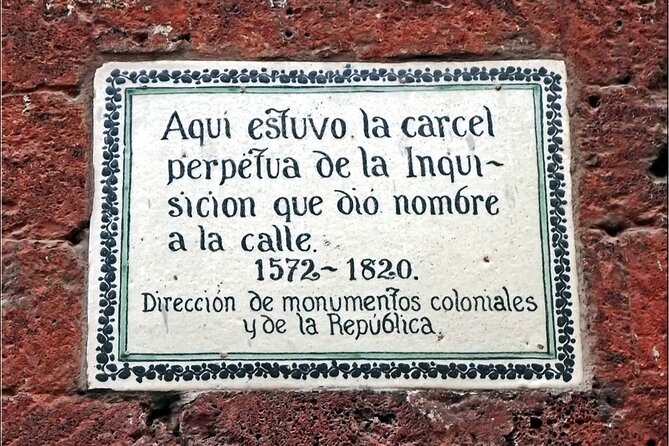
From there you pass by the Antiguo Palacio de la Santa Inquisición. This is another 20-minute stop, but it carries a heavy theme. You see the administration building and the living quarters right next to the Perpetual Prison, and the guide ties that setting to torture and sentencing to death.
You’ll likely feel the mismatch between the everyday street setting and what it once contained. That’s the point of this kind of walk, it interrupts the usual tourist gaze and makes you confront what those streets once held.
Because the tour is time-limited, you don’t linger long on each grim detail. Still, you leave with a clearer sense that religious persecution was not abstract, it was housed, staffed, and enforced in real spaces.
San Ildefonso and the Rivera-Kahlo Meeting: Sephardic and Ashkenazim in the Same Block
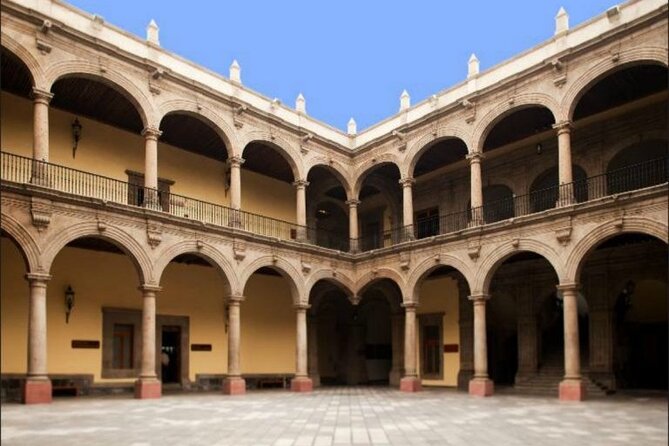
At Antiguo Colegio de San Ildefonso, the tour adds a modern-human layer. The stop is about 15 minutes, and you mainly see it from the outside while the guide explains a link between Diego Rivera and Frida Kahlo.
Here’s what the tour connects:
- Diego Rivera is described as being of Sephardic origin.
- Frida Kahlo is described as being of Ashkenazim origin.
- Their paths crossed in the place you’re visiting.
Then the tour expands beyond them, into 20th-century political history. You learn how the Mexican anti-Fascist movement supported cancellation of the first and only ever anti-Semitic national convention, and you connect that to the reception of Lev Davidovich Bronstein, known as Leon Trotsky, as a refugee.
This stop is not about synagogue architecture, it’s about what happens when a country chooses (or refuses) to treat Jewish life as disposable. It also keeps the tour from ending as a story trapped in the past.
If you are hoping for a purely Jewish-history experience, note that this is where the tour becomes broader Mexican history. It’s still connected, but your expectations should be flexible.
Plaza Loreto: Mount Sinai and Nidjei Israel in the Same Neighborhood
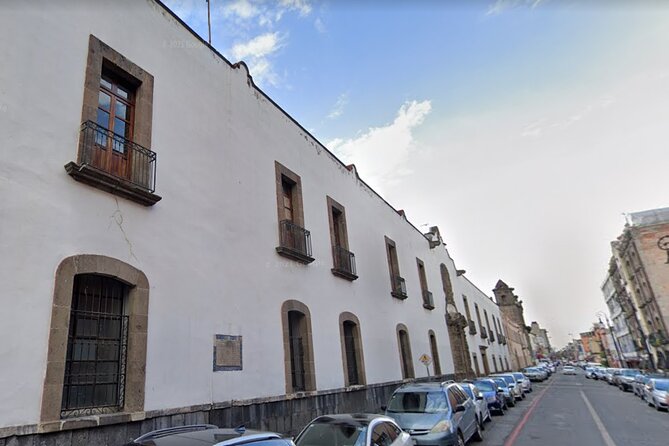
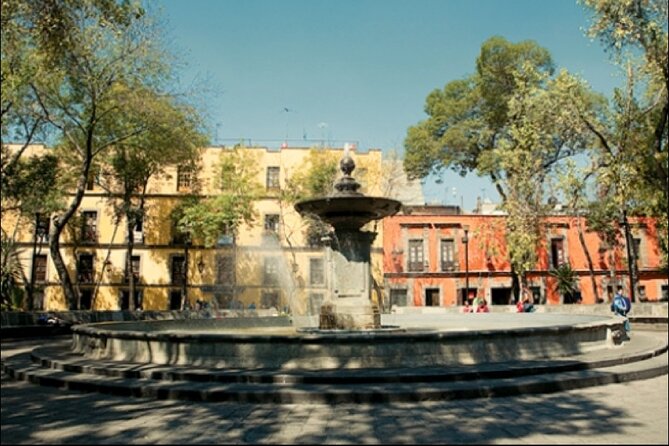
Next is Plaza Loreto. This area is special because the tour points out the first purpose-built synagogues nearby, tying the walk to the physical survival of community spaces.
You pass:
- the first Sephardic synagogue, Mount Sinai
- and the neighboring first Ashkenazi synagogue, Nidjei Israel
Then the experience leads you toward its finishing section. The stop is about 15 minutes, which means it works best as a quick orientation moment. You see the idea of “same neighborhood, different Jewish traditions” in a way that you can later revisit if you want.
For first-time visitors to Jewish Mexico City, this is one of the quickest ways to understand that Sephardic and Ashkenazi history were not just categories in a book. They were communities with buildings, schedules, and neighborhoods, even after centuries of disruption.
Justo Sierra Synagogue: The Decommissioned Ashkenazi Shul as a Final Note
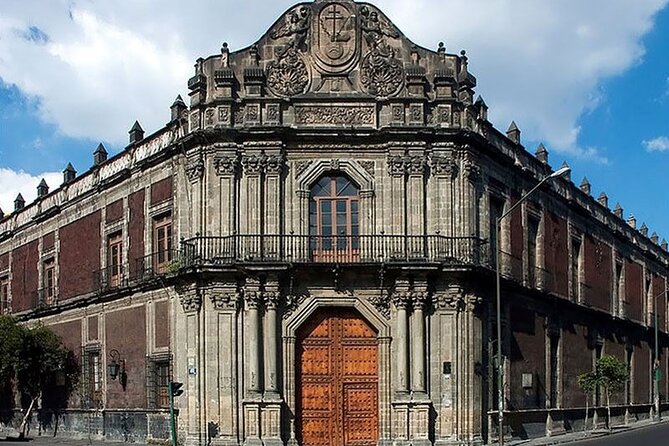
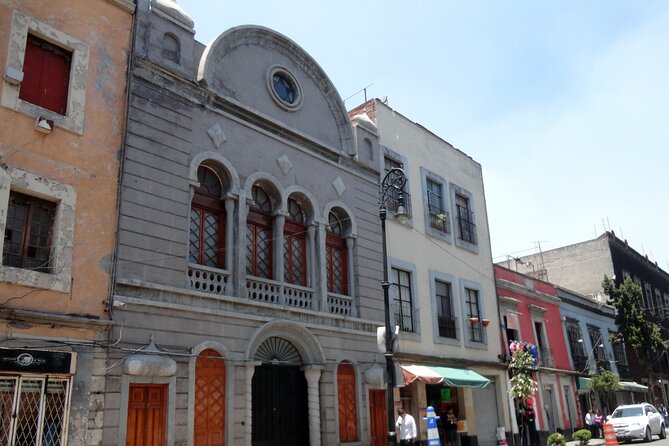
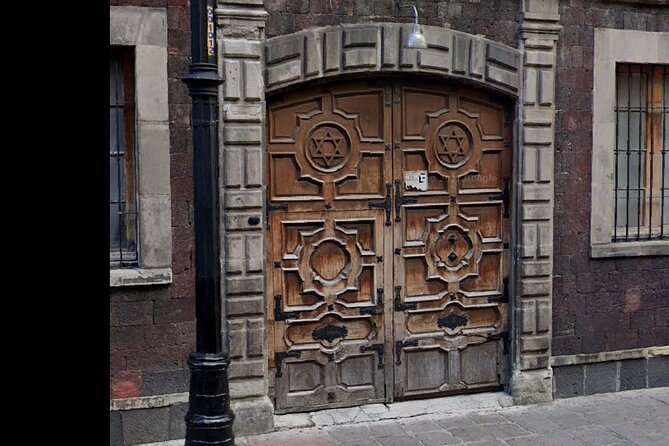
The tour culminates at Justo Sierra Synagogue, the decommissioned and first Ashkenazi shul in Mexico. This final visit takes about 20 minutes and is a major reason many people feel the tour is worth it.
Ending here does two smart things:
- It gives your emotional arc a landing point, not a random street corner.
- It ties everything you heard about control, fear, trading, and survival back to a place of worship.
If you care about the difference between “history of persecution” and “history of continuity,” the ending matters. The tour doesn’t treat Jewish life as a tragedy only. It treats it as a story that kept building even under pressure.
Some people also like that the tour ends near Loreto Park, right by the finish area on the Justo Sierra Street side, which makes it easy to continue your day in the Centro Histórico.
Price and Value: Is $99 Worth 3.5 Hours?
At $99 per person for roughly 3 hours 30 minutes, this tour sits in the mid-range category for a specialized historical walk. The value equation improves because:
- many of the stop entrances are described as free or waived/included through agreed access
- you get a local guide for the full time
- and the small group size means you get more of the story, not just a route stamp
If your goal is to replace a generic Centro Histórico walk with something that teaches Jewish Mexico City in context, this is a good fit. You’re paying for interpretation, not just for standing near old buildings.
Still, keep your expectations realistic. A few short stops are outside or viewed quickly. Also, one possible mismatch is that the tour covers a wide sweep of Mexican history alongside Jewish history. If you want a deep, citation-heavy Jewish-only program, you may wish you had more time per stop. If you want an effective orientation plus meaningful landmarks, you’ll probably feel satisfied.
The Most Praised Part: Carlos and the Way the Story Flows
A lot of the strongest feedback centers on the guide, especially Carlos. The praise is consistent in a few ways: he explains clearly, answers questions, and keeps a timeline that feels both vivid and organized. People also mention his pacing and his ability to blend Mexican history with Jewish history without turning either into a footnote.
You can use that as a practical tip. Come with at least one question ready, like how the tour connects Spanish Inquisition policies to the trading routes, or how Sephardic and Ashkenazi community life differed in this city. A good guide will meet you there.
Carlos also comes across as personally invested in the story. That helps when you’re dealing with persecution and survival themes, because the tone stays focused on understanding rather than shock.
Quick Practical Tips for Your Day in Centro Histórico
Here’s how to set yourself up for an easy, low-stress experience.
- Wear comfortable shoes. The tour is not described as a long hike, but it is still a city walk with multiple stops.
- Bring a phone with battery. You’ll use a mobile ticket, and you may want to refer to notes you take.
- Arrive a few minutes early. The meeting point is specific, and you start at 10:00 am.
- Use the small group size to ask follow-ups. You’ll get more value if you treat it as a conversation, not a slideshow.
- If you like references, ask. One critique you might relate to is a wish for more suggested readings. You can fix that by requesting book or article recommendations as the tour goes on.
Who Should Book This Tour, and Who Might Want Another Style?
This tour fits best if you want:
- a focused Jewish history walking tour in Mexico City
- real-world stops tied to the Spanish Inquisition
- and a route that ends at synagogue landmarks like Justo Sierra Synagogue
It also works well for couples, solo travelers, and families with teens who like history presented in story form. The small group helps, especially if you want your questions answered instead of shouted over.
You might want a different option if you strongly prefer:
- lots of time inside multiple buildings
- or a very academic, sources-first approach
Even then, you’ll likely still appreciate the route for the way it places Jewish history into the streets you can still see and revisit.
Should You Book This Jewish History Walk?
If you’re in Mexico City and you want a meaningful alternative to a basic Centro Histórico tour, I’d strongly consider it. The reason is simple: for $99, you get a guided, small-group walk that hits the landmarks that matter, from cathedral-adjacent religious messaging to Inquisition spaces and then to synagogue history in the Plaza Loreto area and at Justo Sierra.
Also, because the tour is described as being booked about 30 days in advance on average, you’ll have the best choice of dates if you book early rather than waiting.
FAQ
How long is the tour?
The tour lasts about 3 hours 30 minutes.
Where does the tour start and where do you end?
It starts at República de Argentina 15 in Mexico City’s Centro Histórico. It ends in front of Loreto Park on the Justo Sierra Street (south) side, at Justo Sierra 71.
What time does the tour begin?
The listed start time is 10:00 am.
Is the tour in English?
Yes, it is offered in English.
What is the group size limit?
The tour has a maximum of 10 travelers.
Is there free cancellation?
Yes. You can cancel up to 24 hours in advance of the experience start time for a full refund.
More Tour Reviews in Mexico City


Museums and Galleries for the Next Afternoon




More Mexico City plans worth opening


Mexico City Museums & Galleries for the next day.
 ★ 4.4Xochimilco, Coyoacan, Frida Kahlo Museum & Murals TourFrom $893,025 reviews
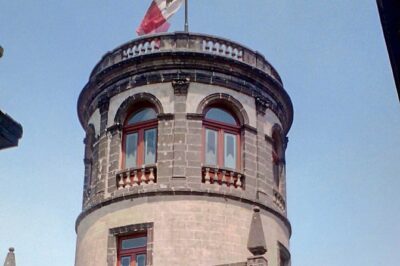 ★ 4.5Chapultepec Castle & Anthropology Museum TourFrom $791,348 reviews
 ★ 5.0Frida Kahlo VIP [Museum Tickets Included] Bike, Markets & ChurrosFrom $831,072 reviews
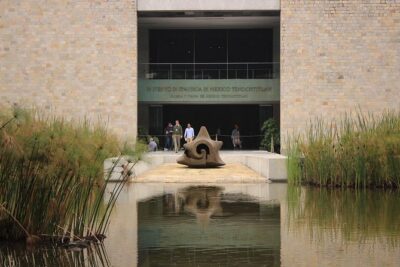 ★ 4.5Anthropology Museum Guided TourFrom $391,035 reviews
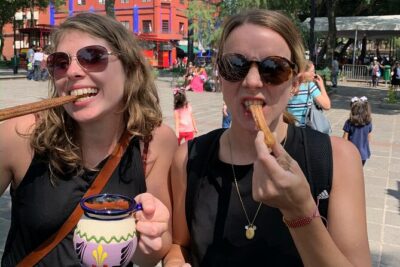 ★ 5.0Frida Kahlo VIP [Museum Tickets Included] Walk, Markets & ChurrosFrom $83982 reviews
 ★ 5.0EXCLUSIVE TOUR Frida Kahlo Museum – SMALL GROUPSFrom $86901 reviews
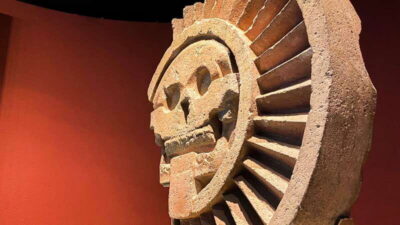 ★ 4.4Anthropology Museum Guided VisitFrom $67708 reviews
 ★ 4.5Frida Kahlo Museum Entry Ticket w/Digital GuideFrom $34683 reviews
This review also appears in