
REVIEW · HISTORIC CENTER WALKING TOURS
Private Walking Tour Gems of the Historic Center of Mexico City
Mexico City starts in the dirt. This private Centro Histórico walk strings together Aztec roots, Zócalo politics, and big-architecture stops with a certified bilingual guide, plus Palacio de Bellas Artes entry for the murals.
I especially like the way the route gives you a clear, step-by-step overview without museum-hopping all day, and the guide keeps things moving at a human pace with a complimentary coffee break on Madero Street. One possible drawback: key interiors are off-limits or not included, like the Templo Mayor museum ticket (exterior only) and you cannot enter the National Palace.
Key highlights to expect
- Private guide, private pacing: You set the rhythm, and your guide can pause for shade or a breather
- Templo Mayor exterior first: You get the Aztec sacred center context without paying extra for the museum
- Cathedral interior plus a special-access gamble: You may catch the Sacristy or see the organ up close
- Included Palacio Postal courtyard entry: Stained glass is built into the plan, not a side quest
- Bellas Artes murals as the payoff: About 50 minutes indoors across key floors
- Coffee break on Madero: Small, but it helps you keep energy for the final stretch
Take another turn around the Zocalo
- Historic Downtown Walking Tour
★ 5.0 · 1,289 reviews - Mexico City: Historic Downtown Walking Tour
★ 4.8 · 1,039 reviews - Walking Tour of the Historic Center of Mexico City
★ 5.0 · 870 reviews - Mexico City Historical Centre Food Tour with 7 Authentic Tastings
★ 5.0 · 723 reviews
A 4-hour private stroll through CDMX’s official memory lane
This is a classic Centro Histórico route, built for orientation. You start near the Zócalo and end at Palacio de Bellas Artes, so by the time you’re done, you can mentally place where Mexico City’s different eras live in the same neighborhood.
The tour is private, with a certified bilingual guide and a fixed length of about four hours. That matters because you are not stuck waiting for a big group to shuffle forward at every stop. It’s also practical that you get a coffee or tea break during the Madero Avenue stretch, since the walk is long enough that small breaks keep the day enjoyable.
It’s also fair to say this is a “see, understand, connect” kind of tour more than a “slow and linger in every room” kind of tour. If your top goal is extreme depth inside museums, you might still need separate tickets later. But if your goal is to leave with the city’s story in your head, this structure works.
Price and value: what $156 covers in the Centro
At $156 per person, the best way to judge value is not the total number, it’s what the price buys you: a private guide plus several entrances that are specifically included.
You get free admission at most stops, including the Zócalo, the Metropolitan Cathedral, Madero Avenue walking time, the Iturbide Palace exterior, the Professed Church, House of Tiles, San Francisco convent remains, and Plaza Tolsa. Two paid items are part of the deal: entry to the Palacio Postal courtyard is included, and Palacio de Bellas Artes is included with time to explore key floors and the murals.
What you do not get is a full museum experience at every site. The Templo Mayor stop is exterior-only, and the National Palace is view-only. So you are paying for guided interpretation and access to specific indoor highlights, not for unlimited indoor entry everywhere.
And because it’s private, the guide’s explanations are actually part of the value. You don’t just walk past buildings, you learn what to look for, what changed over time, and why these places still matter.
Templo Mayor exterior views, then the Zócalo axis of power
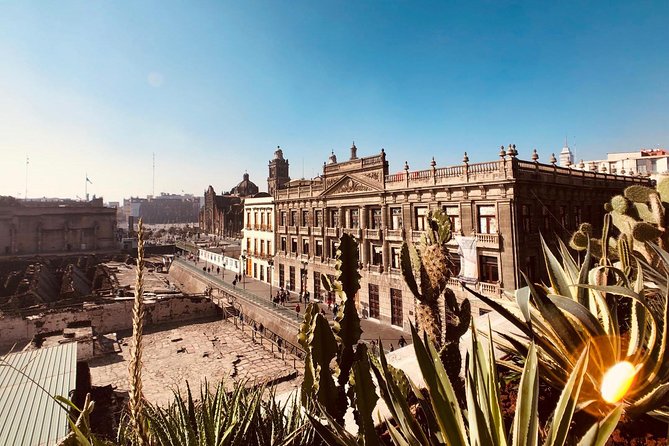
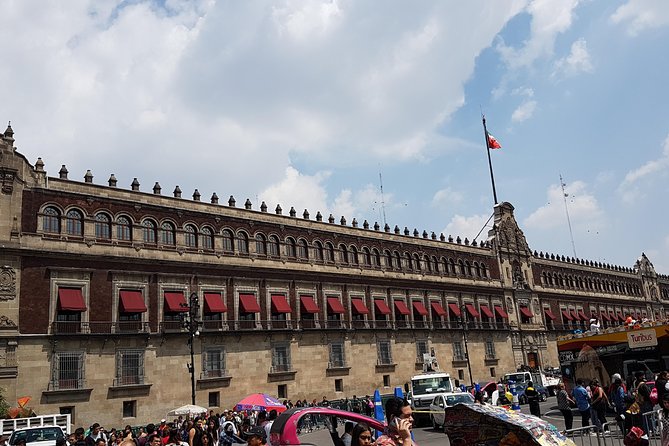
You begin at the archaeological site of Mexico-Tenochtitlan, with a panoramic look at the imposing Templo Mayor ruins. This is the origin point, the sacred center concept that helps make sense of why Aztec Mexico City was built the way it was. You do not go into the Templo Mayor Museum on this outing, but you do get the context from the outside, where the ruins still communicate scale and importance.
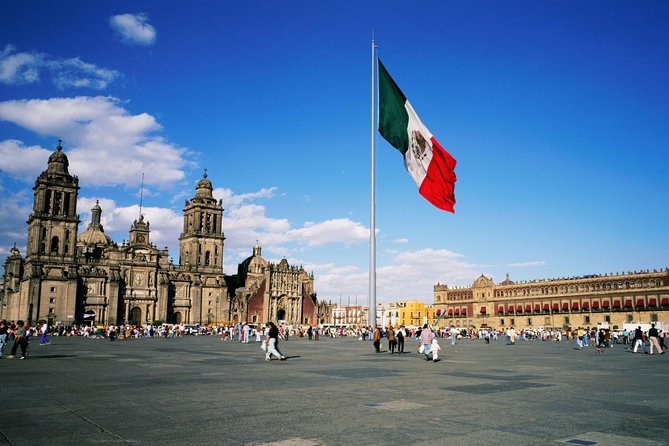
Then you move to the Plaza de la Constitución, the famous Zócalo. This square is huge, and it’s also a living timeline. You’ll learn how colonial power settled around the same ground, how independence-era moments played out here, and how modern public life still runs through the same space.
The advantage of doing Templo Mayor first is that the Zócalo stops being just a pretty plaza. It becomes a map. Once you understand the “center” idea, the architecture around the square feels less random and more intentional.
Timing here is short, about 20 minutes at each of these early anchors. The goal is to set the frame fast, then use the rest of the walk to add details without dragging the day.
Keep exploring Mexico City at street level
- Frida Kahlo VIP [Museum Tickets Included] Walk, Markets & Churros★ 5.0 · 982 reviews
- Anthropology Museum Private Experience Walking Tour★ 5.0 · 355 reviews
- Walking Tour in Mexico City for Exploring their Cultural Heritage★ 5.0 · 245 reviews
- Walking Tour – Impressive murals in Historical Center of Mexico City★ 5.0 · 224 reviews
- Muralist Art Semi Private Walking Tour in Mexico City Downtown★ 5.0 · 188 reviews
National Palace panoramas, plus the interior you cannot enter
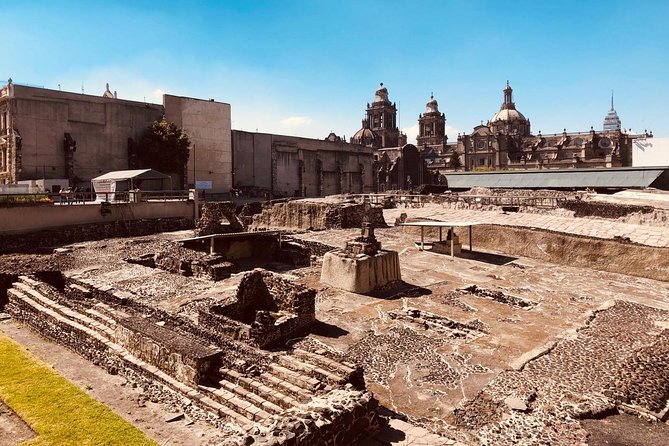
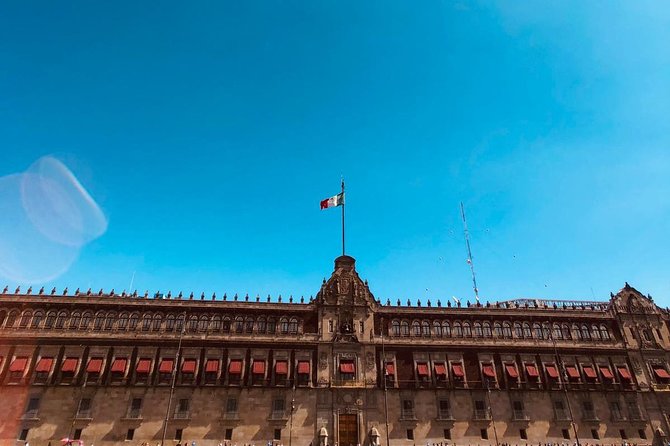
From the Zócalo area you get a panoramic view of the National Palace. The story is political as well as historical, because the building sits on the former palace ground connected to Moctezuma and later seats of government. Seeing it from the plaza gives you the right perspective, especially because you are already oriented by then.
Here’s the key consideration: you will not be able to visit the interior of the National Palace. It’s a view stop, not a inside stop.
That might sound limiting, but it can still work well if you treat this as part of the city-reading exercise. The palace’s role is in its position and symbolism, not only in rooms you can tour. Plus, since the tour mixes free-and-included access, the schedule generally holds together well even with this restriction.
If you are someone who desperately needs “inside access” everywhere, plan to complement this tour with one or two separate ticketed museum visits later in your trip. If you’re happy with views and guided interpretation, you’ll likely feel it’s the right trade.
Metropolitan Cathedral: styles you can spot, plus optional Sacristy or organ
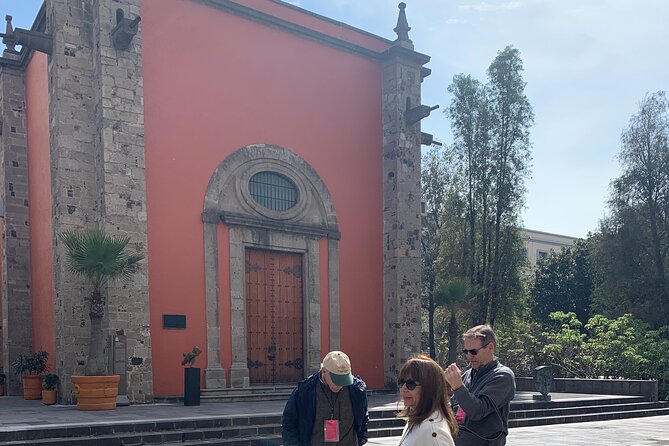
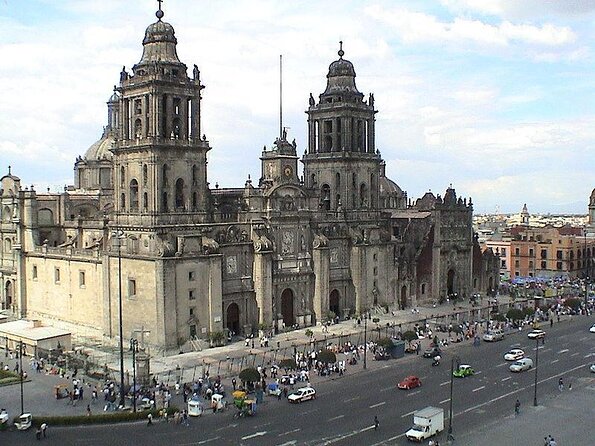
Next comes the Metropolitan Cathedral of Mexico City, and this stop is where the tour shifts from exterior stories to interior architecture. As you approach, you’ll notice the blend of styles described for the building, and once you’re inside, the chapels become the main show.
The cathedral admission is free as part of the tour. Depending on timing and accessibility, you may also get access to the Sacristy, often compared to the Mexican Sistine Chapel, or you may be able to see the church organ up close. That “depending on access” part is important, because it means this is a flexible win, not a guaranteed interior bonus.
I like how this stop is timed around 20 minutes. In a four-hour walk, it gives you enough time to feel the cathedral’s scale and the chapel variety without turning the day into a single long room session. If you are the type who loves architecture details, this is one of the stops where your guide’s eye for what to notice can really change your experience.
Also, because you’re inside, it can be a helpful break from sun and walking. Even if your feet want a pause, your brain will still be busy.
Madero Street and the Baroque belt: Iturbide Palace, La Profesa, and quick art stops
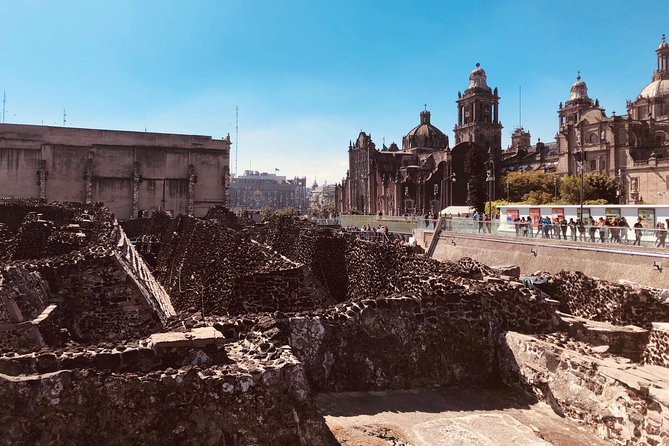
After the cathedral, you transition onto Francisco I. Madero Avenue, which is one of Mexico City’s best pedestrian corridors. This is where the pace can feel like a walk with context, not just a sprint between sights. Your guide can pause for refreshing breaks, and you get a complimentary coffee or tea here to keep energy steady for the final quarter of the tour.
The itinerary then threads a line of Baroque-era highlights with short stops. At Museo Antiguo Palacio de Iturbide, you get a brief explanation of the exterior architecture and the influence of Mexican Baroque style. Iturbide Palace is the kind of building you can miss if you’re only snapping photos, but with guidance, you start seeing details as signals, not decoration.
Next is La Profesa, the temple of San Felipe Neri, known for its Baroque altarpiece and sacred art collection. This stop is short, around 10 minutes, but it’s built to give you a taste of why religious art in this area carries layers of meaning.
Then you reach Casa de los Azulejos, the House of Tiles. The stop includes time to explain its history and, when possible, to appreciate the interior murals and architecture. Again, this is “chance” access, not a guaranteed long interior visit, but the guide’s timing choices can make it worthwhile.
This is also where the tour’s flexibility shows. If your interests lean strongly toward architecture or religious art, your guide can often spend slightly more time on what you care about, since the stop sequence still stays manageable.
House of Tiles to San Francisco: the convent remains you shouldn’t skip
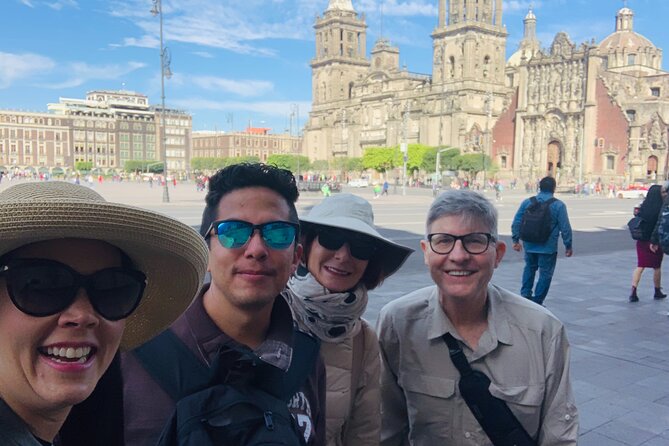
Across the street area, you get to admire the remains connected to the Former Convent of San Francisco, including the Chapel of Aranzazú within the preserved structure. This is not always the kind of stop people plan for on their first day, mostly because it isn’t as instantly famous as the cathedral or Zócalo.
But it helps the story. You see how religious power and land use worked in the colonial era, and you get another view of the city’s layering, with architecture pieces that still sit inside modern blocks.
From here you move to Plaza Tolsa and a stop to see the Mining Palace building exterior. It’s a strategic pause before the tour’s two big indoor finales. The “why” is simple: it keeps your momentum while giving your eyes a breather before the stained glass and mural-heavy endings.
These quick exterior moments might feel small on paper, but in a walk this long, tiny contextual stops keep everything connected. Without them, the day can feel like a pile of sights. With them, it becomes a readable route.
Palacio Postal’s stained glass courtyard: a quiet win in the middle
Then you hit Palacio Postal, and this is one of the included indoor highlights. Your time here is short, about 10 minutes, but entry to the interior courtyard is included, with stained glass that can genuinely surprise you in person.
Why this stop works is that it gives you contrast. Up to this point, you’ve had ruins, plazas, cathedral interiors, and Baroque churches. Palacio Postal adds a different mood, with a refined look and the kind of light and color that makes photos worth the stop.
Because it’s an included entrance, you’re not juggling tickets mid-route. You can just follow your guide, look up, and take a few slow seconds before the final destination.
If you are the type who loves “one big interior moment,” this courtyard is a strong mid-tour anchor. It also sets you up emotionally for Palacio de Bellas Artes, where you’ll spend longer and go deeper into mural art.
Palacio de Bellas Artes murals: the finale that explains the whole city
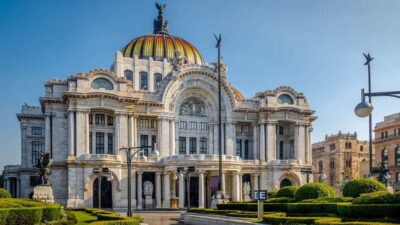
Your tour culminates at Palacio de Bellas Artes, the early 20th-century cultural centerpiece. Admission is included, and you’ll explore the lobby area first, focusing on the building’s detailed architecture and luxurious decor.
Then you head up to the second and third floors to see some of the most important murals of the 20th century by major Mexican artists. This is the payoff section, about 50 minutes total.
This final stop is more than a museum visit. It’s the visual translation of the ideas your guide has been building all afternoon: Aztec origins, colonial power, religious art, and modern identity all living side by side. When the murals finally appear, the city’s narrative clicks into place.
Practical note: this is the point where you’ll likely want to slow down and actually look. Don’t just walk past the artwork while your feet are tired. Use the guide’s cues to notice what’s happening in the paintings, how figures, symbols, and history connect.
If you’ve had a long travel day, this ending can still feel like a treat, because you’re indoors and you can sit or pause in a controlled environment. You leave with a memory that’s visual, not just informational.
How to choose your best version of this tour
The best fit for this experience is someone who wants a fast but meaningful orientation to Mexico City’s Centro Histórico. It’s also a solid option if you care about architecture and art, especially Mexican mural work, and you like learning what you’re seeing rather than simply getting a checklist of stops.
It can also be a great “start smart” tour for first-timers. Once you know the Zócalo centerline and you’ve seen the cathedral and Bellas Artes, you’ll navigate later outings with more confidence.
One smart move is to bring your preferences into the day. Tell your guide what you want more of, and what you want less of. Since it’s private and the itinerary is described as flexible, that matters. You can also ask for pacing adjustments if you need shade or time to rest, and guides often account for comfort during the walk.
One caution I’d plan for: downtown access can change on days of major demonstrations. If you check news for your tour date and you’re flexible about timing, you’ll stay calmer if barricades or crowds affect entry near central landmarks.
Should you book this private Centro Histórico walking tour?
Book it if you want one afternoon that turns the Centro into a story you can carry around. The private format, the bilingual guide, the built-in coffee break, and the included finales at Palacio Postal and Palacio de Bellas Artes make it a strong value, especially for the price.
I would skip it or pair it differently if you need guaranteed interior access everywhere, because a couple of major sites are view-only or not included. But if you’re okay with exterior context, short interior visits, and guided interpretation, this tour is one of the easiest ways to get your bearings fast.
If you can, reserve early. Days fill, and the average booking time is about a month in advance. And if you care about the guide’s style, you might ask during booking about who will lead your departure. Past guides named Alejo, Hermes, Isaias, Hilary, Alicia Herrera, Silvia, Julio, Fabio, Ari, Francisco, and Hector have all been part of the experience for different groups.
FAQ
Is this tour private or shared?
It is private, meaning only your group participates. You’ll have a certified bilingual guide for the experience.
Is admission included for Bellas Artes?
Yes. Entry to Palacio de Bellas Artes is included, and the tour includes time exploring the lobby area and the second and third floors for murals.
Do I need to buy a ticket for Templo Mayor?
The tour focuses on the exterior archaeological site of Templo Mayor, and the museum visit is not included. The exterior admission ticket is not included.
Can we go inside the National Palace?
No. The tour notes that you will not be able to visit the interior of the National Palace, only view it from the Zócalo area.
What sites are free to enter as part of the tour?
The tour lists free admission for stops including the Zócalo, the Metropolitan Cathedral, Madero Street, Iturbide Palace exterior, La Profesa, House of Tiles, San Francisco convent remains, and Plaza Tolsa.
What if the weather is bad?
This experience requires good weather. If it’s canceled due to poor weather, you’ll be offered a different date or a full refund.
What’s the cancellation rule?
You can cancel for a full refund up to 24 hours in advance. If you cancel less than 24 hours before the experience starts, the amount paid is not refunded.
More Tours in Mexico City




More Tour Reviews in Mexico City




More Streets Around the Centro Historico





More Mexico City plans worth opening



Historic Center Walking Tours for the next day.
 ★ 5.0Historic Downtown Walking TourFrom $261,289 reviews
 ★ 5.0Historic Center Food Tour in Mexico CityFrom $1151,263 reviews
 ★ 4.8Historic Downtown Walking TourFrom $261,039 reviews
 ★ 5.0Walking Tour of the Historic Center of Mexico City870 reviews
 ★ 5.0Mexico City Historical Centre Food Tour with 7 Authentic TastingsFrom $65723 reviews
 ★ 4.9Authentic Downtown Food TourFrom $115260 reviews
 ★ 5.0Culinary Secrets of the Centro HistóricoFrom $140257 reviews
 ★ 5.0Walking Tour – Impressive murals in Historical Center of Mexico CityFrom $51224 reviews
This review also appears in