
REVIEW · MEXICO CITY STREET FOOD TOURS
Tortilla Class and Workshop in Mexico
Corn tortillas start with a lesson. This Tortilla Class in Mexico City turns the nixtamal story into something you can actually taste, starting with a short talk on why Mexican corn matters and how heirloom strains are disappearing. I really liked the way the class pairs that lecture with metate grinding and fresh comal-cooked tortillas.
I also like the salsa part, because making it with a molcajete means you control the texture, not just the flavor. In the hands-on session with Clara, you even compare tortillas made from the metate ground corn, masa from a mill, and Maseca harina, so the difference feels real.
A possible drawback: you only get about 1 hour 30 minutes, and it is active, so it is not a sit-back-and-watch show. If you want a big sightseeing-heavy evening, you may find the time tight and the focus very hands-on.
Key highlights worth clocking
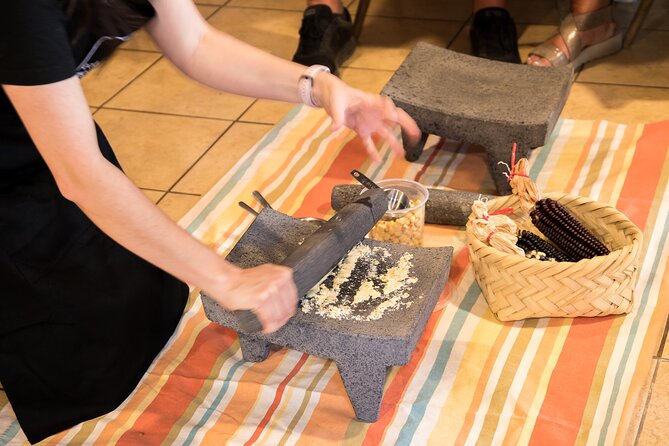
- Metate grinding with heirloom corn: You work the volcanic-rock grinding stone and feel how masa starts.
- Comal cooking, tortilla by tortilla: You cook fresh tortillas, not reheated leftovers.
- Nixtamal is explained early: The process gets clear before you start mixing and cooking.
- Salsa made in a molcajete: You taste the results of texture and seasoning control.
- Small group size: The class maxes at 8 travelers, so you get real attention.
- A smart tortilla comparison: You taste versions made from heirloom corn, mill masa, and Maseca harina.
Keep the taco stops coming
- Historic Center Food Tour in Mexico City
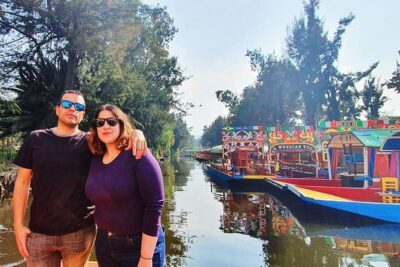
★ 5.0 · 1,263 reviews - Xochimilco Barco Fiesta Tentacion 18+ with Open Bar and Tacos
★ 5.0 · 1,209 reviews - Lucha Libre Tickets & Tacos & Beer & Mezcal – BEST NIGHT EVER!
★ 5.0 · 1,077 reviews - Polanco Food Tour: The Bestselling Food Adventure in Mexico City
★ 5.0 · 881 reviews
Why Mexican corn and nixtamal matter (and why it tastes better)
Corn is everywhere in Mexico City, but not all corn is the same. This class treats corn like the main character, with a short, engaging lecture on why Mexican corn matters today and how heirloom corn strains are disappearing. The point is not fear or guilt. It is simple, practical context for why tortillas can taste flat when the process gets skipped or shortcuts take over.
Then you get the key idea behind nixtamal. Nixtamal is the transformation that changes how corn behaves. In most tortilla supply chains, that step can be reduced, industrialized, or lost in translation. Here, you learn the process so you understand what you are tasting when the tortilla hits the comal.
For me, the biggest takeaway is that the tortilla is not just flatbread. It is an edible recipe, controlled by chemistry and hands. Once you know that, it gets easier to judge tortillas anywhere, even at home when you see labels and different types of masa.
The tools you will actually use: metate, comal, molcajete
This experience is built around three iconic tools, and each one teaches you a different part of the tortilla workflow.
First comes the metate, a volcanic-rock grinding stone. You grind your own heirloom corn on it, which is where the process turns from lecture into something you can feel in your arms and hands. You stop thinking of tortillas as a product and start seeing them as something you build.
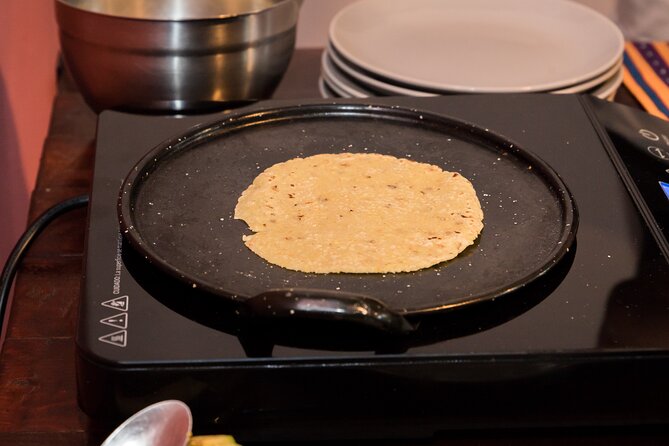
Next is the comal, the griddle used to cook tortillas. You cook fresh tortillas right there, not after the fact. That matters because tortilla timing is quick and specific, and you learn what good heat does to dough and aroma.
Finally, you make salsa in a molcajete. This is not just about making salsa. It is about learning how texture changes flavor. Grinding and crushing with the stone changes the way herbs, chilies, and aromatics release. You end up with salsa you can adjust by feel, which is the kind of skill that sticks.
The 1 hour 30 minutes flow, from lecture to quesadilla
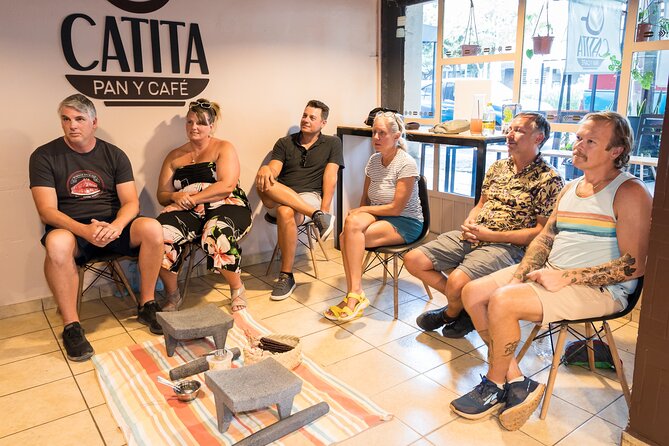
The class is short by design, about 1 hour 30 minutes, and it moves in a tight sequence. Start at 5:00 pm at Catita Pan y Café on C. Dr. José María Vértiz 997 in Narvarte Poniente, Benito Juárez. You also end back at the same meeting point.
Here is how the time tends to unfold:
- You begin with a short lecture about corn, heirloom varieties, and the need for nixtamal.
- You learn the nixtamal process conceptually, then you move into the hands-on part.
- You grind heirloom corn on the metate and make tortilla dough.
- You cook tortillas fresh on the comal.
- You turn your tortilla work into a quesadilla, using fresh Oaxaca cheese.
- You finish by making salsa in a molcajete, then you eat what you made.
The pace is energetic, and that is the point. You learn faster when you can connect an idea to the food in front of you.
Make something during the next few hours
- Mexican Cooking Class with Food Market Visit in Mexico City★ 5.0 · 506 reviews
- Essence of Mexico: Authentic Mexican Cooking Class & Market Tour★ 5.0 · 289 reviews
- Mexican Cooking Class & Cocktails in Mexico City★ 5.0 · 134 reviews
- Private Mexican Cooking Class with Gastronomic Historian, Lucia★ 5.0 · 110 reviews
- Mexican Churros Master Class★ 5.0 · 91 reviews
The first lecture: corn lessons that stay practical
The lecture is not just history talk. It is tied to outcomes you can taste. You learn why Mexican corn matters, including the worry that heirloom corn strains are disappearing. Then you connect that to nixtamal, the essential step that makes corn suitable for tortillas in the way people expect.
A smart bonus is that you are not left guessing. The class pushes you toward understanding what good tortilla-making looks like and how to spot higher quality preparation, especially if you are used to buying generic corn tortillas.
Grinding heirloom corn on the metate, then making dough
Grinding is the part many people remember, and for good reason. You are working with heirloom corn, and the metate grind changes the physical nature of the corn before it ever becomes tortillas.
What I like about this approach is that it forces you to slow down just enough to notice steps. You learn how masa comes together. You also learn why shortcuts can affect the final tortilla, because you see how labor becomes structure and flavor.
This is also where the small group matters. With a maximum of 8 travelers, you are not stuck waiting behind a line. The culinary expert local guide and the way instructors like Clara explain things help you keep up.
If you are doing this with kids, it tends to land well too, because grinding feels like a craft. One family-friendly perk from the experience is that children can take part without feeling like they are just watching.
Cooking on the comal: learning timing, not just technique
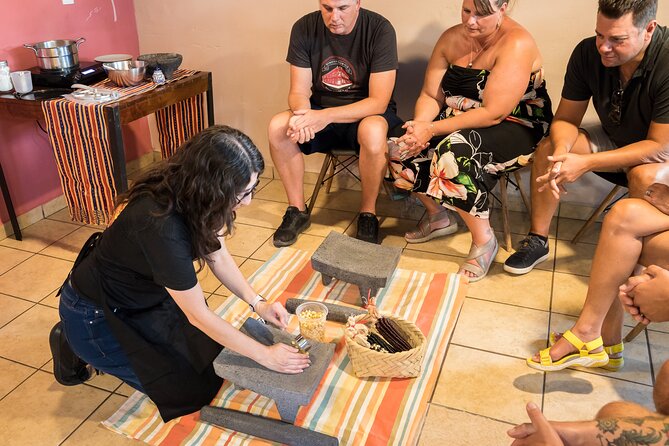
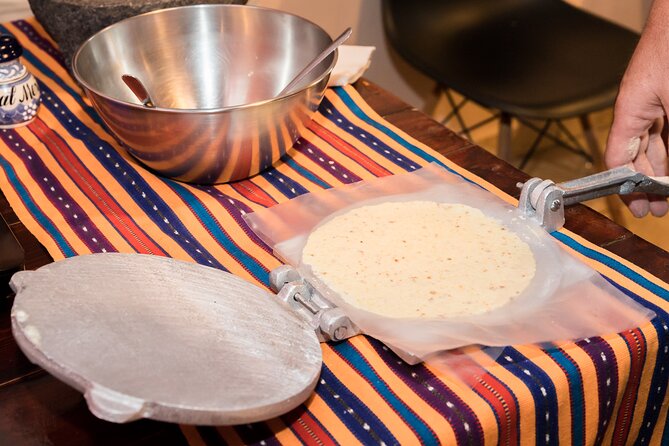
Once the dough is formed, you cook tortillas on the comal. This is the moment the class turns from learning to eating.
Cooking tortillas on the comal teaches timing and heat control in a way a cookbook never can. You see how tortillas respond as they cook. You also smell the difference between fresh tortillas and tortillas that come from a shelf.
This is where your earlier nixtamal lesson pays off. When the dough behaves right, the tortilla has a better taste and texture. You stop thinking of tortillas as interchangeable.
After that, you take your tortilla and transform it into a quesadilla. The included snack is the quesadilla you make, built with fresh Oaxaca cheese and salsa made with the molcajete.
Salsa in a molcajete: why texture changes the whole bite
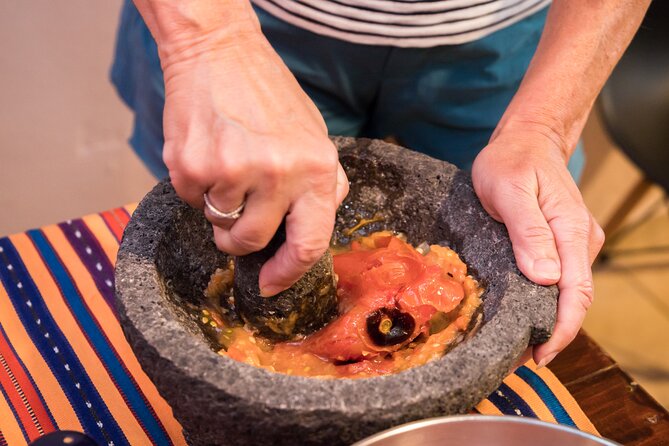
Most people think of salsa as a topping. Here, it becomes part of the learning.
You make your own salsa in a molcajete, which means you crush and grind ingredients until you get a texture you like. This makes salsa feel like food engineering. You can taste how different grinding affects chili heat, herb brightness, and how well flavors cling to tortilla and cheese.
The practical win is that you learn a method you can repeat. Even if you never own a molcajete, the idea of crushing and not just mixing is the same.
And because your quesadilla uses fresh Oaxaca cheese paired with your own salsa, you taste the whole chain, not just one ingredient.
The smart comparison: metate corn vs mill masa vs Maseca harina
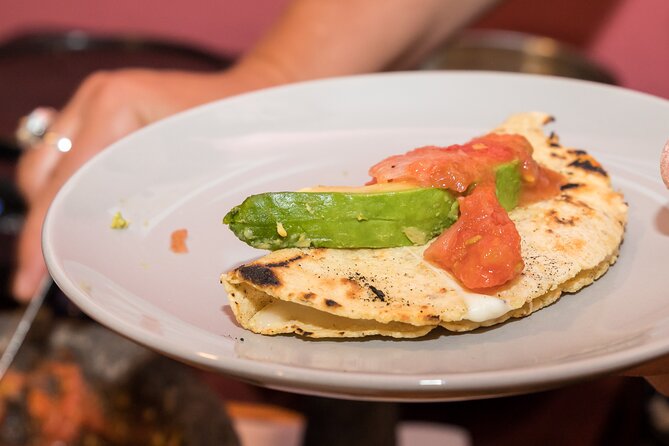
One of the most highly praised aspects of the class is the tasting comparison. Instead of treating tortillas like one fixed product, the experience shows you how results change with different masa inputs.
You compare:
- tortillas made from the corn you grind on the metate
- tortillas made from masa from a mill
- tortillas made using Maseca harina
That comparison is where the lesson becomes personal. You can identify what you like and why. You also learn why “corn tortillas” can mean different things depending on preparation.
This is why people leave saying they will never buy generic corn tortillas the same way again. Not because they suddenly become food critics. Because the class gives them a clear reference point for taste and texture.
If you cook at home, this comparison helps you make better choices. It also gives you questions to ask next time you buy tortillas in Mexico City or elsewhere.
Price and what you are paying for at $95.31
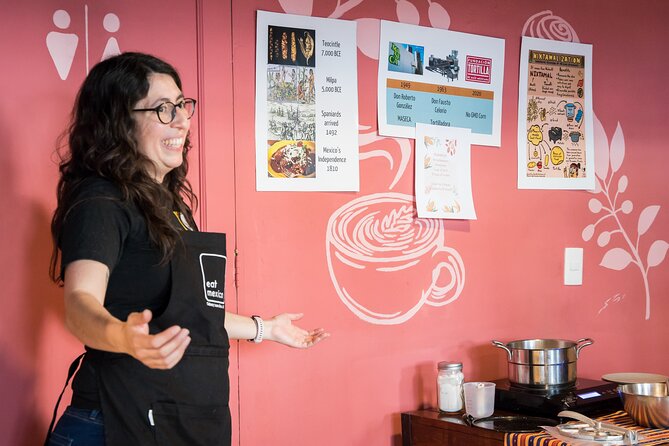
At $95.31 per person, this is not the cheapest meal option in Mexico City. But you are paying for something specific: a small group class with hands-on instruction, culinary expert guidance, and the ingredients and tools used to make your food from start to finish.
You get more than a snack. You learn a process (nixtamal), you use traditional tools (metate, comal, molcajete), and you eat the results (quesadilla with fresh Oaxaca cheese and your salsa). With a maximum of 8 travelers, the instruction feels personal rather than rushed.
There is also a value-of-time factor. The class is about 1 hour 30 minutes, starts at 5:00 pm, and ends back at the meeting point. You can fit it into your evening without building a whole day around it.
Finally, demand seems real. It is booked on average 47 days in advance. If you like this kind of food experience, it is worth reserving sooner rather than later.
Who should book this tortilla workshop (and who might not)
This class is a great fit if you:
- like hands-on cooking more than watching
- want to understand nixtamal and what it does
- enjoy Mexico City food culture beyond tacos-on-the-go
- cook at home and want a practical reference point for tortilla quality
- are traveling with kids who enjoy crafts, because grinding and cooking can be fun at the right pace
You might consider skipping if you:
- want a long, multi-stop tour with big sightseeing blocks
- prefer tasting only and little to no participation
- are only looking for a casual bite with no interest in why tortillas differ
A fair expectation helps. This is not a lecture-only class and it is not a workshop where you do everything alone. It is a guided, active session built around learning by making.
Practical details that help your evening go smoothly
The experience is offered in English, and it ends back at the meeting point. It also has a mobile ticket, which is a small thing but saves hassle.
Meeting at Catita Pan y Café makes it easier to find a stable landmark before you start. Since it is near public transportation, you can plan around taxis and rideshares if you want, but you should not feel forced into one option.
One more timing tip: because it starts at 5:00 pm, it works well as an early dinner or late afternoon anchor. If your plan is an all-night food crawl, this could be a perfect kickoff or a reset depending on your appetite.
Should you book the Tortilla Class and Workshop?
If you want a Mexico City food experience with real craft, clear context, and results you eat while the lesson is fresh, book it. The combination of a nixtamal lecture, guided metate grinding, fresh comal cooking, and salsa made in a molcajete turns corn into a story you understand with your hands.
The strongest reason to go is the learning-to-taste connection, especially the comparison that helps you see why heirloom-ground tortillas feel and taste different from store-bought versions. If you enjoy cooking and want to bring that knowledge home, this is the kind of class that changes your choices.
FAQ
How long is the Tortilla Class and Workshop?
It lasts about 1 hour 30 minutes.
What is included in the class price?
You get the snacks from the quesadilla you make and a culinary expert local guide.
Is it offered in English?
Yes, it is offered in English.
Where does the experience start?
The meeting point is Catita Pan y Café, C. Dr. José María Vértiz 997, Narvarte Poniente, Benito Juárez, 03020 Ciudad de México, CDMX, Mexico.
How many people are in the group?
The class has a maximum of 8 travelers.
Can I cancel for a full refund?
Yes, you can cancel up to 24 hours in advance for a full refund. If you cancel less than 24 hours before the start time, the amount you paid is not refunded.
Make Something in Mexico City
More Tour Reviews in Mexico City


Tacos Worth Another Stop




More Mexico City plans worth opening

Mexico City Street Food Tours for the next day.
 ★ 5.0Historic Center Food Tour in Mexico CityFrom $1151,263 reviews
 ★ 5.0Xochimilco Barco Fiesta Tentacion 18+ with Open Bar and TacosFrom $591,209 reviews
 ★ 5.0Lucha Libre Tickets & Tacos & Beer & Mezcal – BEST NIGHT EVER!From $841,077 reviews
 ★ 5.0Polanco Food Tour: The Bestselling Food Adventure in Mexico CityFrom $109881 reviews
 ★ 5.0Colonia Roma Food TourFrom $110838 reviews
 ★ 5.0Mexico City Historical Centre Food Tour with 7 Authentic TastingsFrom $65723 reviews
 ★ 5.0Local Foodie Adventure in Mexico: +10 dishes with Sherpa ToursFrom $85338 reviews
 ★ 5.0Street Food Tour with Friends326 reviews
This review also appears in