
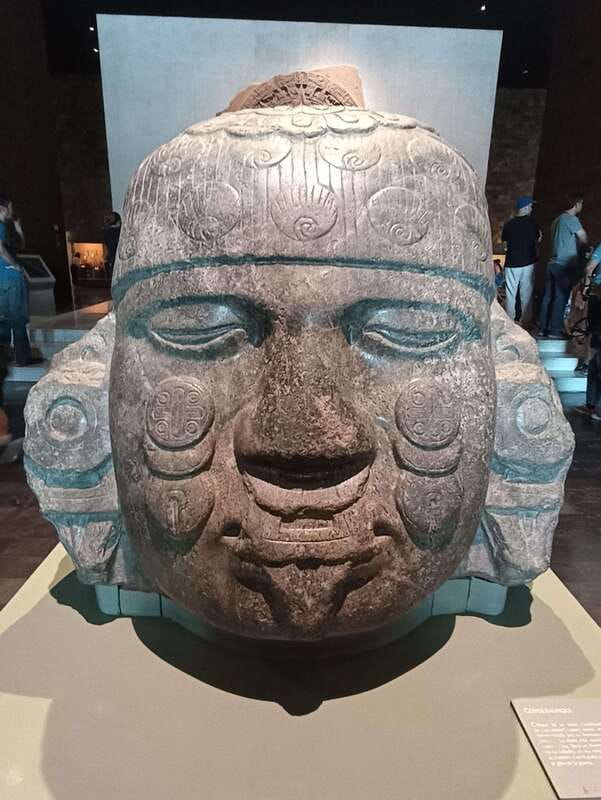
REVIEW · TEMPLO MAYOR & AZTEC TOURS
Mexico City: Historical walking tour of Tenochtitlan
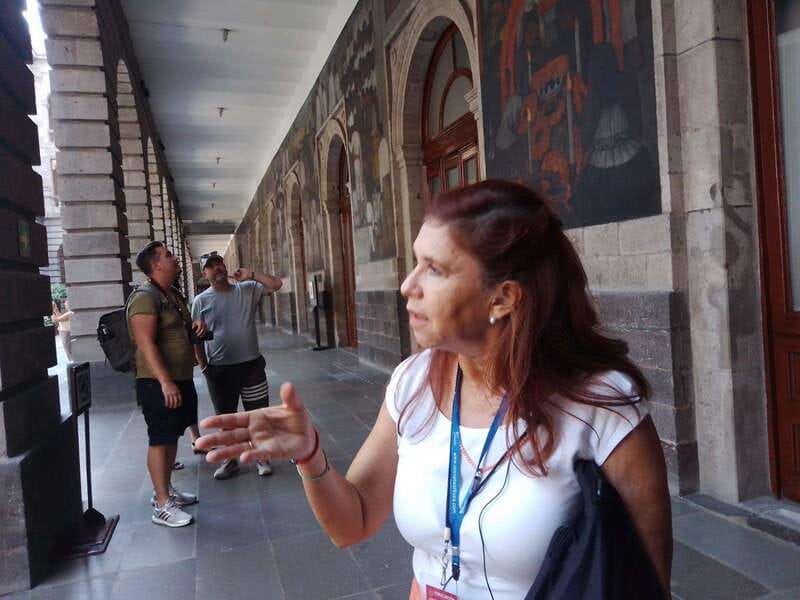
Tenochtitlan is still under your feet in CDMX. This small-group morning tour, led by Prof. Cristina Ríos (PhD), turns the Centro Histórico into a clear story line from Mexica city to Spanish rule and beyond. I especially love how she connects what you see, from Templo Mayor views to colonial-era façades and major art, to the people and power behind it.
My second big win is the pacing and format. You walk smart distances, you get audio gear when needed, and you have time to ask questions without the tour feeling like a hurried script. One thing to consider: it is a 3-hour walking tour with lots of sights, so comfy shoes matter, and there is no included food, though sweets at Dulcería Celaya are optional.
Key things to know before you go
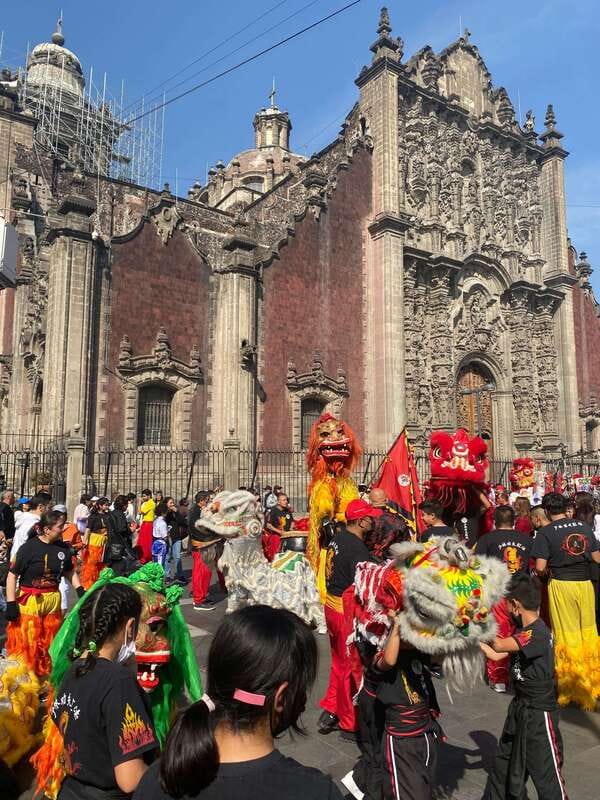
- Prof. Cristina Ríos, PhD, leads in English or Spanish, with plenty of time for questions as you go.
- Templo Mayor is viewed from the outside, so you get orientation fast without ticket friction.
- You’ll connect Aztec, conquest, and early independence landmarks instead of treating them as random stops.
- Casa de los Azulejos includes inside time for José Clemente Orozco’s mural, explained in detail.
- Earphones and audio support are included when groups are larger, so you can hear even in noisy spots.
- The route can include off-the-main-path moments, like stops linked to Cortés, depending on the day.
Follow another thread through Mexica history
- Taxco, Cuernavaca & Pre-Hispanic Mine optional visit
★ 4.5 · 597 reviews - Mexico City: Taxco & Cuernavaca Tour with Pre-Hispanic Mine
★ 4.6 · 271 reviews - Xochimilco, Coyoacan, Aztec Stadium & UNAM
★ 4.0 · 232 reviews - Teotihuacan & Anthropology Museum, Templo Mayor & City Tour
★ 4.5 · 109 reviews
Why Tenochtitlan still matters on a walk today
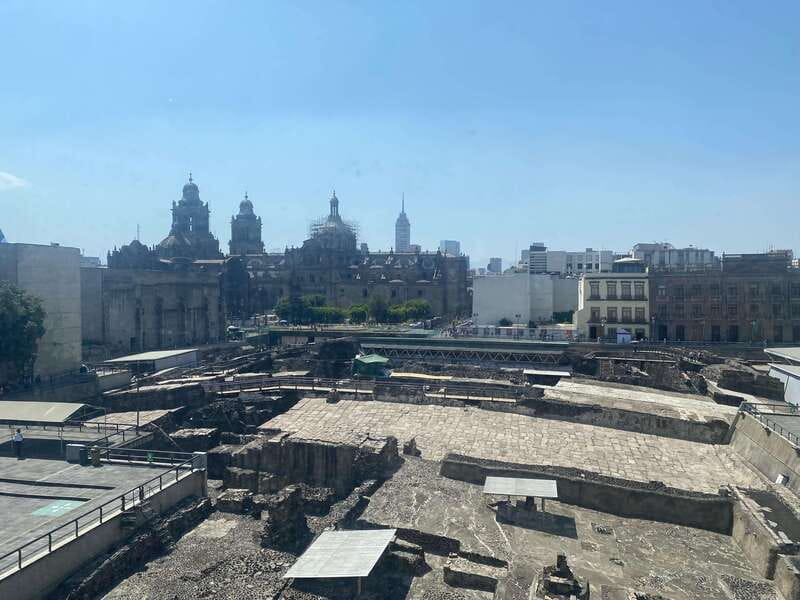
If you’ve ever stared at Mexico City landmarks and thought, Wait, how did this become that, this tour is built for you. The whole point is to show how Tenochtitlan, the Mexica capital, shapes the layout and layers of the city that replaced it. You’re not just collecting photos. You’re learning why certain buildings ended up where they did, and what the Spanish conquest kept, changed, or built over.
I like that the guide frames each stop as a shift in control and culture. You start with the Mexica city’s core in view, then move through the colonial story, and finish in the 20th-century style of a city reinventing itself. By the time you reach the end near Palacio de Bellas Artes, the Centro Histórico feels less confusing and more logical, like a map you finally understand.
Price and value: what $43 buys you in 3 hours
At $43 per person for a 3-hour walking tour, the value comes from what is included, not just the time. You get a specialized guide with detailed explanations, plus audio support (earphones and equipment) when the group is larger than 7. That matters in Mexico City, where street noise and crowds can make a self-guided walk feel like reading blurry signage.
Also, you’re paying for interpretation. You’re not touring a single museum with a guided lecture room setup. Instead, you’re getting context at multiple landmarks, including architecture, art, and the political story connecting the Aztecs, Spanish colonization, and later Mexican independence. If you like history you can see, this is a strong use of your first morning in CDMX.
Food is not included, and tickets are not included. That means you should budget a little extra if you want to try the optional sweets at Dulcería Celaya. Still, the tour price covers the biggest challenge for many visitors: turning “impressive buildings” into a coherent narrative.
Meeting point at Centro Cultural España, then Templo Mayor from the outside
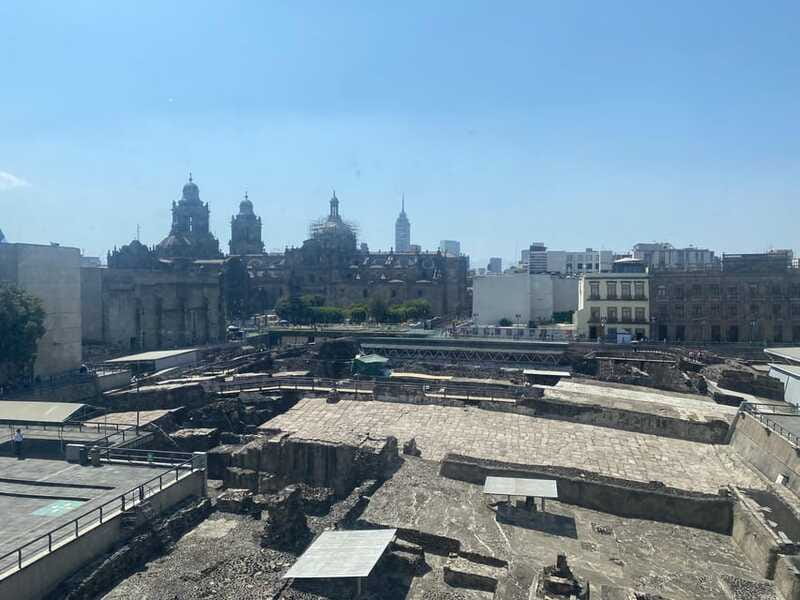
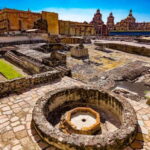
You start at the entrance of Centro Cultural España en México, Guatemala #18. From there, the tour quickly sets you up with the Templo Mayor area, using the models and outside views at the Templo Mayor museum entrance. The key here is that you do not need to buy museum tickets just to begin understanding the site’s importance.
In practice, this outside orientation is a smart move. It helps you picture the Mexica layout before you see major colonial landmarks nearby. Even if you know a little already, a clear beginning reduces the mental clutter that can happen when you jump straight into cathedrals and palaces without context.
One small drawback: since the Templo Mayor museum is not entered, you’ll be relying on the guide’s explanation plus your own observations from outside. If you want to spend extra time inside the museum galleries on your own, plan for that after the tour, because you’ll likely want to.
Keep exploring Mexico City at street level
- Frida Kahlo VIP [Museum Tickets Included] Walk, Markets & Churros★ 5.0 · 982 reviews
- Anthropology Museum Private Experience Walking Tour★ 5.0 · 355 reviews
- Walking Tour in Mexico City for Exploring their Cultural Heritage★ 5.0 · 245 reviews
- Walking Tour – Impressive murals in Historical Center of Mexico City★ 5.0 · 224 reviews
- Muralist Art Semi Private Walking Tour in Mexico City Downtown★ 5.0 · 188 reviews
Cathedral area, Animas del Purgatorio, and the Calmecac connection
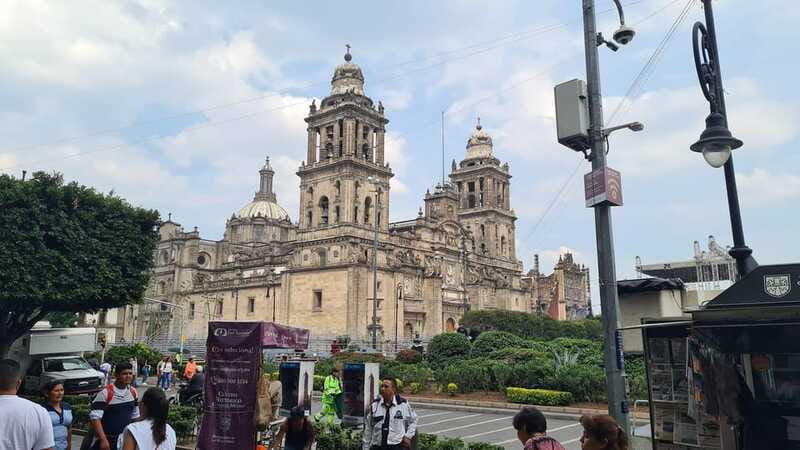
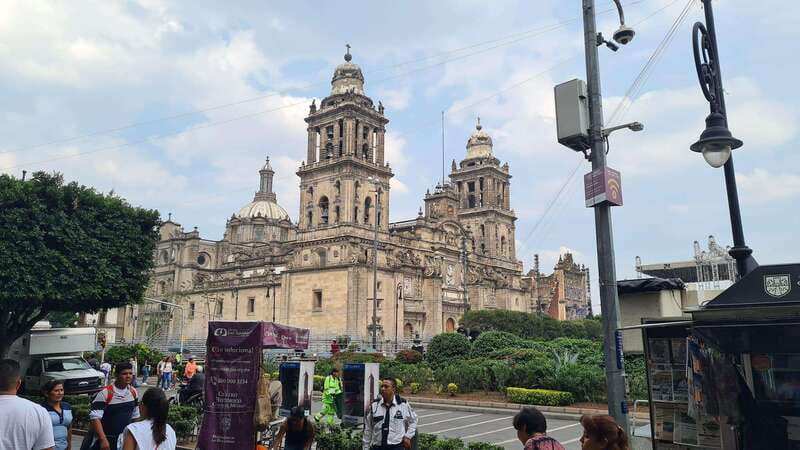
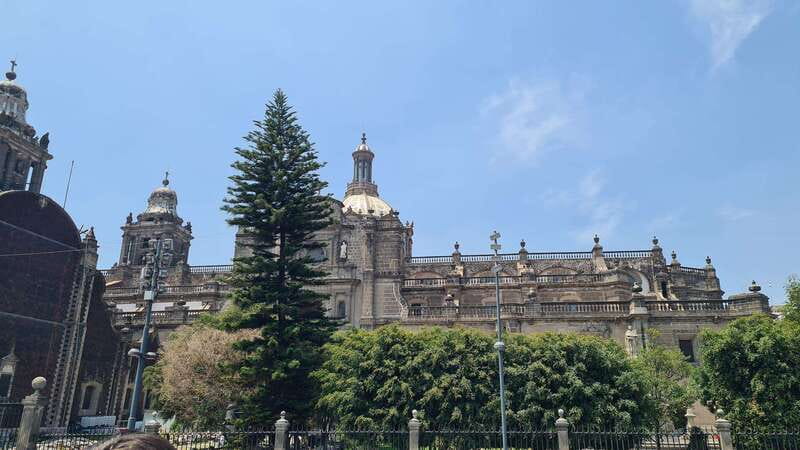
Next comes the Catedral Metropolitana de México zone, with guided time that focuses on meaning, not just architecture. The cathedral area is a place where you can easily miss the bigger story if you’re just walking past. The guide helps you look at the site with the right questions: What replaced what, what stayed symbolic, and what was adapted to fit Spanish power.
From there, the route includes stops behind the cathedral tied to Animas del Purgatorio and the Calmecac site museum within Centro Cultural España. This is one of those parts where the details actually help your understanding. The Calmecac connection is especially useful if you want to go beyond the headline version of history and understand how education, religion, and culture were reorganized after conquest.
Also pay attention to your footing and your patience around this area. The Centro Histórico can get crowded fast, especially in the morning. That’s where the audio equipment helps most, because the guide is still expected to explain fine points while you’re shoulder-to-shoulder with the city.
Cortés’s lodgings and old houses: where the power story gets specific
Then the tour turns toward the colonial shift, with a stop at Cortés’s lodgings at the old Axayacatl Palace area, often connected to the old houses of Moctezuma. This is one of the most fascinating stops for many visitors because it makes the conquest feel less abstract. Instead of learning names and dates, you’re learning why certain spaces became key in the new order.
If you like history that connects people to buildings, this segment is where the tour starts clicking. The guide talks about the change in authority and the ways Spanish leaders inserted themselves into existing symbolic space. You also get better context for later stops that show how the city’s elite and institutions matured over time.
One practical note: this section is also a reminder that Mexico City history is layered. You may see impressive colonial-era structures, but the guide keeps tying them back to the earlier city beneath and around them. That habit helps you notice details you’d otherwise walk past.
Iturbide Palace (Banamex Cultural Center) and San Francisco’s façade
From the Cortés connection, you move into the era of Mexican political identity forming in new ways. The route includes Iturbide Palace, with time at the Banamex Cultural Center. The value here is seeing how the city’s monumental buildings reflect the mindset of their era, including the shift from colonial rule toward the language of national identity.
Then you head to the Church of San Francisco, focusing on the façade. Façades are the front door to a lot of meaning in Mexico City. Even when you are not stepping inside a church, a good guide can help you read the materials, proportions, and design choices like clues.
If you’re the type who likes architecture as a form of storytelling, you’ll enjoy how this portion keeps linking design decisions to the broader historical arc you just learned. If you are mostly there for photos, you might find it slightly heavy on explanations, but the tone stays accessible.
Casa de los Azulejos and José Clemente Orozco’s mural
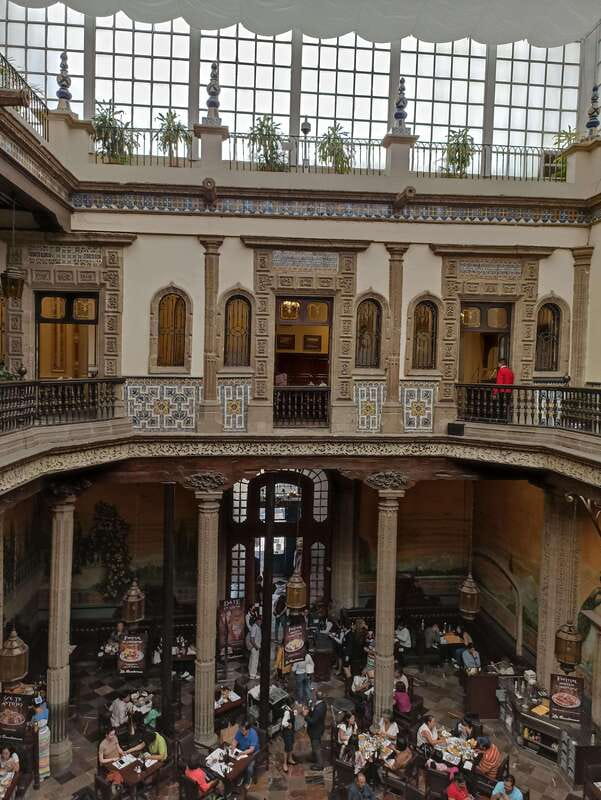
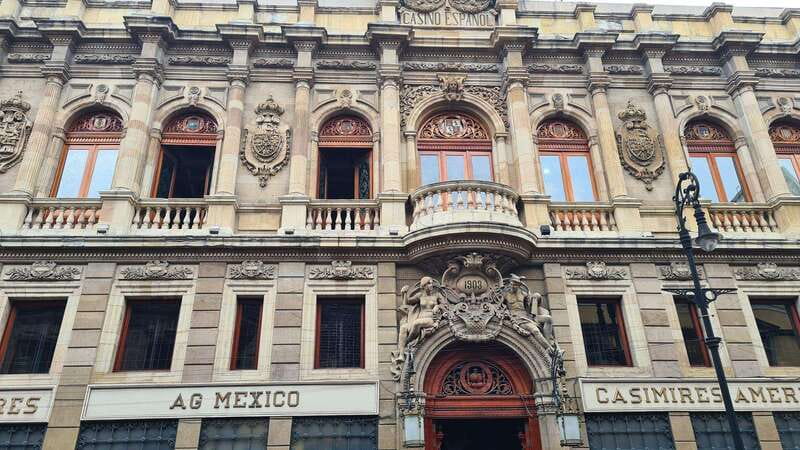
Casa de los Azulejos is a fan favorite, and for good reason. You get outside time plus inside time for the José Clemente Orozco mural, with a detailed explanation. This is the moment when the tour blends history and art in a way that feels practical. You see the building, you understand why it looks the way it does, and then you connect it to a major artistic voice.
This is also one of the stops where the guided approach pays off most. Tiles and murals can look purely decorative if you don’t know what to look for. With the explanation in place, the artwork becomes part of your bigger story about Mexico City’s identity shifting across centuries.
Another bonus from the overall experience: the guide’s Q and A style. If you ask follow-ups during this segment, you’re likely to get direct answers, not vague “it’s important” comments. That is a big reason the tour earns such high ratings.
Palacio de Bellas Artes finish: plan your next hour
The tour ends near Palacio de Bellas Artes. You’ll also pass the Palace of Fine Arts area during the walk, but the main finish is where you can regroup, grab a drink, and plan your next stop without rushing.
I like that ending here is convenient. You can keep exploring in multiple directions after your 3 hours. And if you want to go deeper on your own, the guide’s explanations act like a set of mental breadcrumbs. You’ll know where to look and why you’re looking there.
Also, if sweets are your thing, this is a good tour to pair with a little treat afterward. The optional stop at Dulcería Celaya fits naturally into a morning walk because it doesn’t require an extra full detour.
Who should book this tour, and who should skip it
This tour is a great fit if you want an organized way to learn Mexico City’s Centro Histórico as one connected story. It is ideal for adults and older teens who enjoy architecture, art, and history with clear context you can actually use while walking.
It is not recommended for children under 10. The route is built around historical explanations, and it is also lots of walking through busy streets where staying engaged is not always easy for younger kids.
If you love asking questions, you’ll likely have a great time. One pattern from the experience is that the guide stays receptive, even when questions get specific. That turns the tour into a conversation instead of a one-way lecture.
Finally, if you are trying to see too much in one day, keep this tour as an anchor. It works best as a day-1 or day-2 activity, when you still need bearings and a framework.
Should you book? My practical take
Book it if you want your first look at Tenochtitlan and the surrounding colonial center to make sense fast. The strong points are the combination of a PhD-level guide, small group size, and the way the route links architecture and art to the bigger historical story, including details tied to Cortés and the Aztec legacy.
Skip it or pair it differently if you only want a light sightseeing stroll with minimal talking, or if you mainly want museum time. Since Templo Mayor viewing is from the outside and tickets are not included, you’ll get orientation more than full museum immersion.
If you like the idea of finishing near Palacio de Bellas Artes with your brain already sorted into “who built what, when, and why,” this tour is a smart bet.
FAQ
How much does the Mexico City historical walking tour cost?
The tour costs $43 per person.
How long is the tour?
The duration is 3 hours.
Where is the meeting point?
You meet at the entrance of Centro Cultural España en México (Spanish Cultural Center), Guatemala #18.
Do you enter the Templo Mayor Museum?
No. The tour includes a guided view of the Templo Mayor area from the outside using the models and viewing points at the museum entrance.
What languages are available?
The tour guide offers live narration in English and Spanish.
Are earphones included?
Yes. Earphones and audio equipment are included, and they are used when the group is larger than 7 people.
Is food included, and is Dulcería Celaya part of the tour?
Food and drinks are not included. There is an optional chance to try traditional Mexican sweets at Dulcería Celaya.
What should I bring for the morning walk?
Bring comfortable shoes and a sun hat. Sunscreen and sunglasses are recommended.
Is the tour wheelchair accessible, and is it suitable for children?
The tour is wheelchair accessible. It is not suitable for children under 10.
More Tours in Mexico City


More Tour Reviews in Mexico City



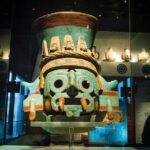
Tenochtitlan Beneath the Modern City



More Mexico City plans worth opening



Templo Mayor & Aztec Tours for the next day.
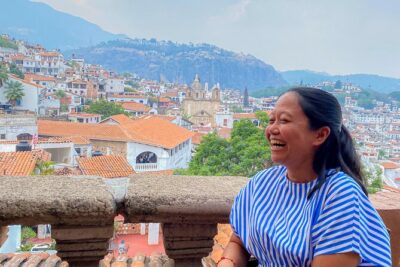 ★ 4.5Taxco, Cuernavaca & Pre-Hispanic Mine optional visitFrom $29597 reviews
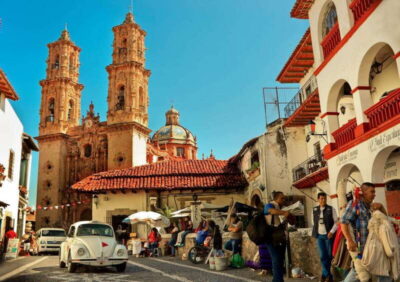 ★ 4.6Taxco & Cuernavaca Tour with Pre-Hispanic MineFrom $29271 reviews
 ★ 4.0Xochimilco, Coyoacan, Aztec Stadium & UNAMFrom $52232 reviews
 ★ 4.5Teotihuacan & Anthropology Museum, Templo Mayor & City TourFrom $137109 reviews
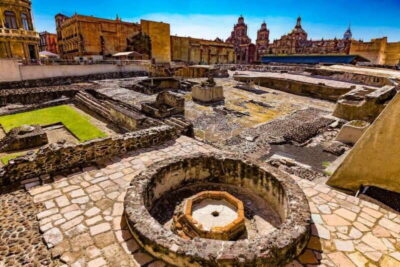 ★ 4.2Templo Mayor Skip-the-Line Entry TicketFrom $2996 reviews
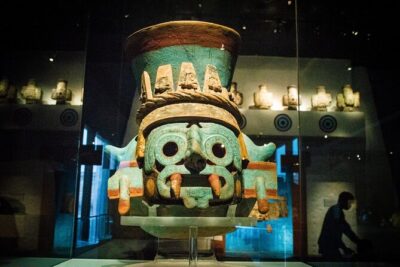 ★ 5.0Exclusive tour to Templo Mayor in CDMXFrom $6583 reviews
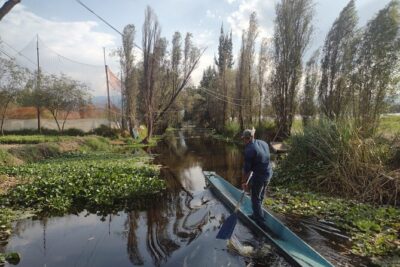 ★ 5.0Pre-Hispanic Xochimilco, local food included and ajolotario.From $20741 reviews
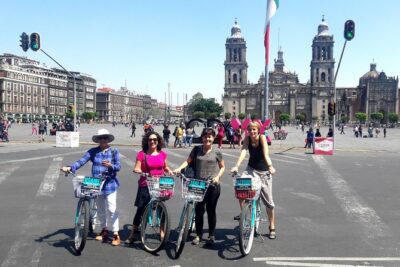 ★ 5.0Aztec Tlan – Heritage Bike Tour CDMXFrom $7826 reviews
This review also appears in