
REVIEW · HISTORIC CENTER WALKING TOURS
Historic center walking tour through time and space
Four centuries in three hours sounds wild, but this walk makes it real. I love the tight, time-machine pacing that links Tenochtitlan to 20th-century Mexico City in one loop, and I love the architecture-focused storytelling that keeps big landmarks understandable. One drawback to keep in mind: it is a fast-moving route, so if you crave long museum time, you will need to plan extra visits after.
Plan on about 3 hours of mostly walking in the Centro Histórico. For about $39.45 per person, you get an English guide, a mobile ticket, and a small inclusion like a soda or pop water bottle, plus free entry at most stops on the route. The tour ends at the Museum of Popular Art, so you can keep going without a long transfer.
Key highlights you’ll feel right away
- A route built for orientation from Aztec remains to the city’s modern cultural icons
- Most stops are free entry, so your money goes toward the guide and the walking plan
- Historian-style explanations that focus on architecture, damage, and why places look the way they do
- Instagram-ready stops like the Palacio Postal and the tiled facade of the House of Tiles
- A natural walking rhythm with quick square stops and a real pause in Alameda Central
- A guide experience that gets praise, including named guides like Ricardo and Joss in the past
Take another turn around the Zocalo
- Historic Downtown Walking Tour
★ 5.0 · 1,289 reviews - Mexico City: Historic Downtown Walking Tour
★ 4.8 · 1,039 reviews - Walking Tour of the Historic Center of Mexico City
★ 5.0 · 870 reviews - Mexico City Historical Centre Food Tour with 7 Authentic Tastings
★ 5.0 · 723 reviews
Entering The Templo Mayor Museum, Where Tenochtitlan Starts
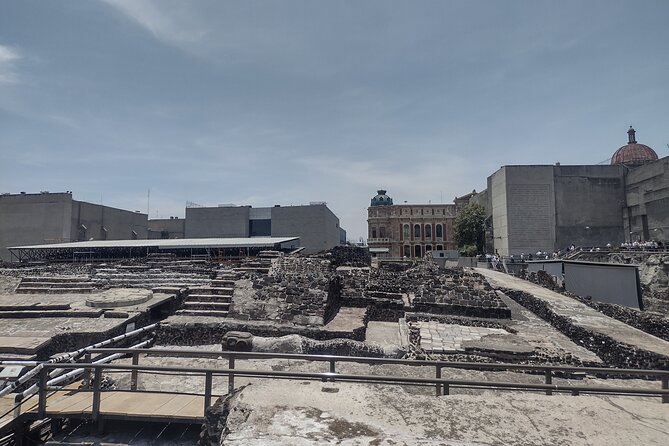
You kick off at Museo del Templo Mayor, in the Centro Histórico, and the mood shifts fast. You are starting in the 14th century mindset, with the ruins tied to Tenochtitlan, the great Mexica capital. Even in a short visit, it gives you a framework for everything else you’ll see later.
This stop works because it explains the city as layers, not as a single timeline. You begin with the Aztec core, then later you walk into Spanish-era power, and finally into newer Mexico City cultural landmarks.
With only about 15 minutes, you should decide early what you want most. If your brain loves details, look for key ruin features and how they relate to the larger story you are hearing. If you are more visual, focus on the spatial layout and what you can immediately recognize.
Catedral Metropolitana: Big Church, Bigger Story of Change
Next is Catedral Metropolitana de la Ciudad de México, and this is where the tour earns its name “through time and space.” You get a look at one of Mexico’s major ecclesiastical constructions, but the point is not just its size. The guide talks about the damage it has suffered over time, and that detail changes how you read the building.
Instead of seeing a church as a frozen monument, you start seeing it as a structure that has been tested and repaired. That matters in Mexico City, where buildings and neighborhoods have had to adapt again and again.
You only have about 10 minutes here, so aim for high-level observations. Notice the overall architecture and the areas that look different from one another. Then listen for the “why,” because the story is what makes a quick stop feel worth your time.
Zócalo, The Center That Still Sets the City’s Mood
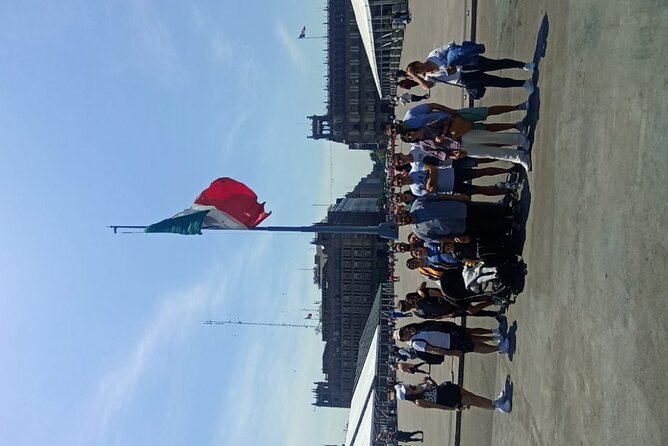
Then you step into Zócalo, the most important square in Mexico City. This is the kind of stop that sounds too simple on paper, but it is useful because it teaches you how the city organizes itself around a central public space.
In practice, Zócalo acts like the tour’s pause button. You get a quick reset after the heavier history, and you can orient your bearings for what comes next. You also get a sense of why so many major institutions cluster around this area.
Expect about 5 minutes. For this one, do not hunt for a perfect photo. Instead, look around and lock in the geometry of the square, because the city will make more sense as you continue.
Keep exploring Mexico City at street level
- Frida Kahlo VIP [Museum Tickets Included] Walk, Markets & Churros★ 5.0 · 982 reviews
- Anthropology Museum Private Experience Walking Tour★ 5.0 · 355 reviews
- Walking Tour in Mexico City for Exploring their Cultural Heritage★ 5.0 · 245 reviews
- Walking Tour – Impressive murals in Historical Center of Mexico City★ 5.0 · 224 reviews
- Muralist Art Semi Private Walking Tour in Mexico City Downtown★ 5.0 · 188 reviews
San Francisco Atrio: Early Footprint in Mexico City
El Atrio del Templo de San Francisco is next, and it has a straightforward appeal: it is tied to the first church in Mexico City. With around 15 minutes, you are not there to linger in a deep museum mode. You are there to register the early presence and understand what that means culturally.
This stop is valuable because it bridges the gap between the Spanish-era authority you saw at the cathedral and the later, more decorative, wealth-driven architecture you will see soon. The atrio creates a sense of the street-level experience of early colonial life, not just the grand interior monuments.
A good way to get value here is to listen for how the guide frames the church’s placement and the era it represents. If you only skim visually, you might miss the “first steps” angle that makes this stop different.
House of Tiles: Moorish Detail on a 16th-Century Palace
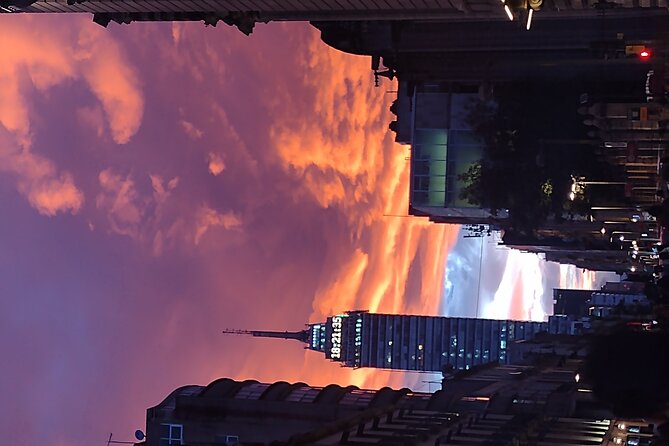
Now you hit one of the most visually striking moments: the House of Tiles. It is a 16th-century palace known for its Moorish decoration, and it is the kind of facade that grabs you even if you are tired from walking.
You get about 20 minutes, which is just enough time to really look. The tiles create patterns that feel both intricate and intentional. When a guide points out what to focus on, the whole thing stops being “pretty walls” and becomes “here is why it looks like this.”
What to watch for: the repetition of motifs and the way the facade reads from different angles. If you are the type who loves architecture, this is the stop where you will want your camera ready. If you prefer a calmer pace, still give it the full time, because this is one of the few places on the route where seeing more angles actually improves the story.
Museo Nacional De Arte: A Beautiful 20th-Century Building With Context
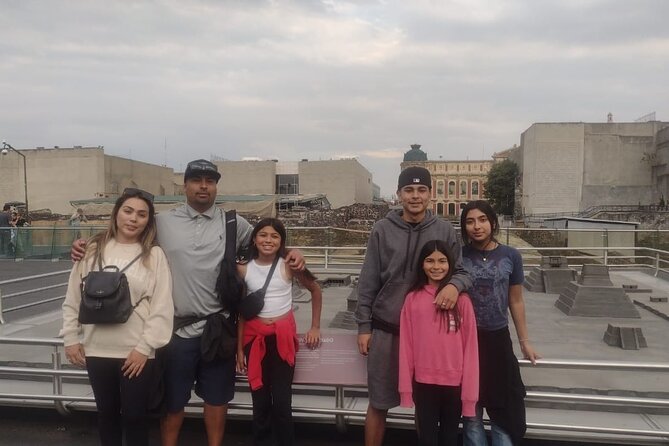
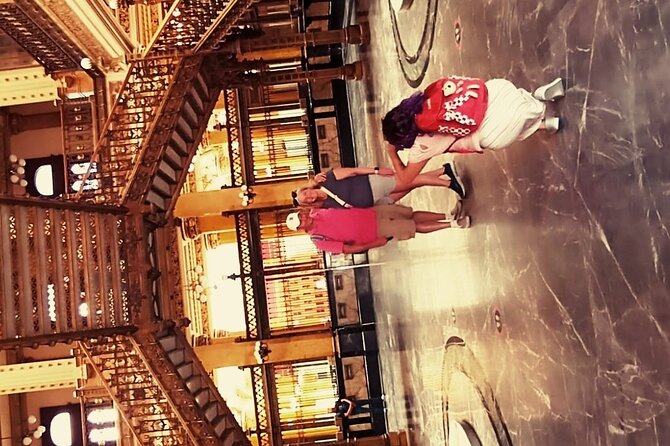
Next is Museo Nacional de Arte, and it is a smart pivot. The building itself is described as beautiful and built in the 20th century, and the tour focuses on the lobby and the building’s history. This is not about trying to conquer every gallery in one sweep.
With around 15 minutes, you are getting orientation again. You learn how cultural institutions and their architecture reflect changing ideas about Mexico City. The lobby is often the most efficient place to grasp a building’s character without committing to a longer museum visit.
If you want more, you will likely feel tempted to step back in later on your own. For the tour, though, the value is in the framing, not in covering every collection.
Palacio de Mineria Exterior: Mining Wealth, Then and Now
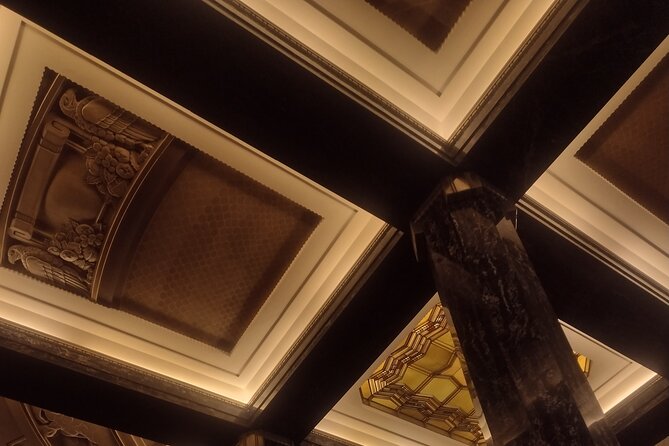
Palacio de Mineria is a quick exterior stop, about 10 minutes, but it still earns its place. You learn history in connection with the Old Mining Palace, and you get a feel for how economic power shaped the city’s built environment.
This is a good break after more decorative architecture. You can shift from “look at the details” to “read the city.” The guide’s explanation helps you connect why certain buildings appear where they do and what they signaled at the time.
Since you are not going inside during this specific stop, you can keep expectations realistic. The goal is to understand the building’s role and recognize it in photos later, not to treat it like a full entry site.
Palacio Postal: The Fifth House of the Post Office
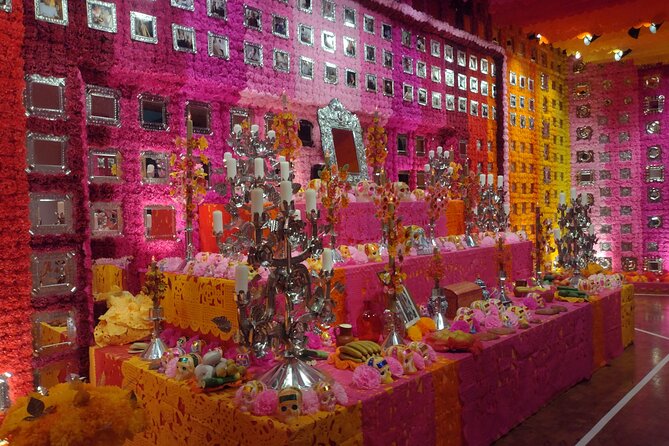
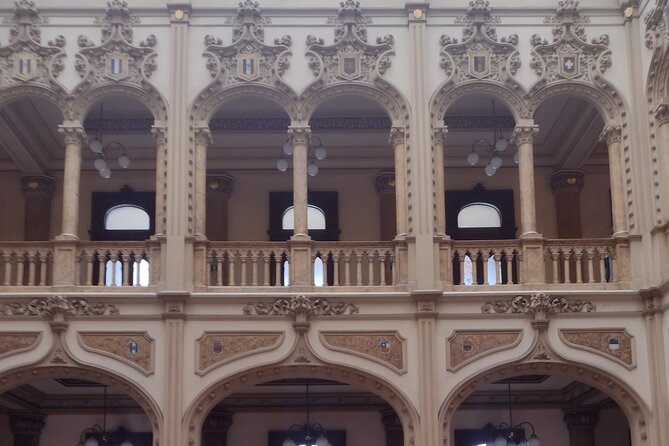
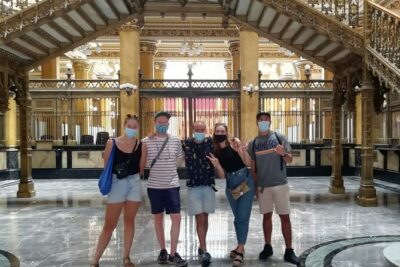
Then comes one of the most photo-friendly moments on the walk: Palacio Postal, the Palacio de Correos, described as the Fifth House of the Post Office. It has that instant wow factor, and the tour gives you about 15 minutes to see it and learn.
This stop is valuable because it mixes civic function with design. A postal building might sound boring, but it becomes a story about communications and modernization. It also makes a nice contrast after the more formal cultural palaces you will see next.
Also, yes, it is very Instagrammable. But use the photos as a tool, not a mission. Let the guide connect what you see to why it matters.
Palacio de Bellas Artes: Outside Views Plus Lobby Details
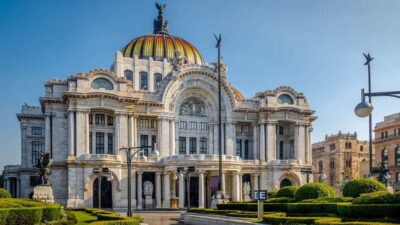
Palacio de Bellas Artes is your big cultural hit. You get about 25 minutes, including outside views and a look at the lobby, with a historian guide telling you about the palace’s history.
This is a “slow enough” stop on the route, which matters. The outside gives you the monument scale, and the lobby gives you the human scale. When you have time in both, you start understanding the palace as more than a postcard.
Practical tip: if you want photos, take some quickly outside, then save your attention for the lobby while you listen. The lobby look becomes more meaningful when you are hearing what the guide highlights.
Alameda Central: A Real Pause With Legends
Alameda Central is the largest park in the city center, and it gives you a breather. The tour keeps it to around 15 minutes, but it is long enough to reset your pace and enjoy a little more breathing room.
This stop also adds a softer layer through history and legends. It is a change of tempo from architecture and stone monuments. In my view, this is one of the most “you can feel it” moments because a park lets your mind stop sprinting.
If you tend to get restless on tours, use Alameda as your mental reset. Take a few slow steps, look around, and let what you learned about surrounding buildings sink in.
Museo de Arte Popular: Art Deco Entrance and an Optional Ticket
The tour ends at the Museum of Popular Art, with about 15 minutes focused on the entrance. You get to appreciate the building’s Art Deco architecture and see important expressions of the city’s popular art, but the tour itself ends here if you choose to visit the museum.
Admission is not included, so think of this as a tasting. You can decide on the spot whether you want to pay for deeper entry. This setup is honestly a smart choice, because not everyone wants to turn a walk into a full museum day.
Since the tour finishes at Revillagigedo 11, it is convenient for keeping exploring the area afterward, and you avoid the awkward end-of-tour commute.
Price and value: Why $39.45 can feel fair here
At $39.45 per person for about 3 hours, this walking tour is priced in a way that matches its structure. You are paying mainly for expert guidance, time efficiency, and the route that stitches together major sites without you having to plan a complex circuit.
What makes the value better is that many of the stops are listed as free entry, and you also get a soda or pop water bottle. That reduces hidden costs that can pop up when you add ticket after ticket on your own.
One more value point: this is described as a private tour/activity, meaning only your group participates. That often makes the flow calmer, especially when the guide is explaining architecture and history and you want to ask questions without competing for attention.
Who this tour suits best (and who should think twice)
This tour is ideal if you want a first-time-friendly historic center orientation and you like explanations that connect buildings to bigger meaning. It also works well if you enjoy photography but do not want to spend your whole day chasing perfect shots.
It is also a good fit for couples, friends, and solo travelers who prefer structure. The route moves steadily, and you see a lot of top landmarks within a short window.
Think twice if you hate walking or if you want lots of time inside museums. With many stops clocking 10 to 15 minutes, you will get the highlights, not the marathon. Plan one or two follow-up visits on your own if there is a particular site you want to linger in.
Quick logistics that help you enjoy it
The tour is offered in English, and you get a mobile ticket. It starts at Templo Mayor Museum, Seminario 8, Centro Histórico de la Ciudad de México and ends at the Museum of Popular Art, Revillagigedo 11.
It is near public transportation and service animals are allowed. Most travelers can participate, but keep in mind this is a walking-heavy historic center route, so wear comfortable shoes and expect uneven, busy sidewalks.
Because it is a popular walk, it is typically booked about 10 days in advance on average. If your schedule is fixed, booking early helps you lock in a time.
Should you book this historic center walk?
Yes, I think you should book it if you want a compact, well-explained way to understand Mexico City’s layers fast. The biggest strength is the guide style: the walk is structured around how places look, how they changed over time, and why the city is arranged the way it is. Names like Ricardo and Joss show up in past guide mentions, and the recurring theme is clear, detailed storytelling that makes the landmarks click.
Skip it only if you want a slow museum day. This is a “see, understand, move on” experience, not a “spend hours in one building” plan.
FAQ
How long is the walking tour?
The tour lasts about 3 hours (approximately).
Where does the tour start?
It starts at Templo Mayor Museum, Seminario 8, Centro Histórico de la Ciudad de México, Centro, Cuauhtémoc, 06060.
Where does the tour end?
It ends at the Museum of Popular Art, Revillagigedo 11, Colonia Centro, Centro, Cuauhtémoc, 06050.
What is the price per person?
The price is $39.45 per person.
Is the tour offered in English?
Yes, it is offered in English.
What is included in the tour?
Included is a soda or pop water bottle.
Are the attractions included in the tour free?
The sites listed in the route show admission tickets as free, but the Museum of Popular Art admission is not included.
How much time is spent at the Museo de Arte Popular?
You spend about 15 minutes at the entrance, and the tour ends there if you choose to visit the museum.
Is the tour private?
Yes. It is described as private, with only your group participating.
What is the cancellation policy?
You can cancel for a full refund up to 24 hours in advance of the experience’s start time.
What are the operating hours mentioned for the experience?
The hours shown run Monday through Sunday from 10:00 AM to 8:00 PM.
More Tours in Mexico City




More Tour Reviews in Mexico City




More Streets Around the Centro Historico





More Mexico City plans worth opening



Historic Center Walking Tours for the next day.
 ★ 5.0Historic Downtown Walking TourFrom $261,289 reviews
 ★ 5.0Historic Center Food Tour in Mexico CityFrom $1151,263 reviews
 ★ 4.8Historic Downtown Walking TourFrom $261,039 reviews
 ★ 5.0Walking Tour of the Historic Center of Mexico City870 reviews
 ★ 5.0Mexico City Historical Centre Food Tour with 7 Authentic TastingsFrom $65723 reviews
 ★ 4.9Authentic Downtown Food TourFrom $115260 reviews
 ★ 5.0Culinary Secrets of the Centro HistóricoFrom $140257 reviews
 ★ 5.0Walking Tour – Impressive murals in Historical Center of Mexico CityFrom $51224 reviews
This review also appears in