
REVIEW · DAY OF THE DEAD TOURS
Day of the Dead Tour in Mixquic from Mexico City
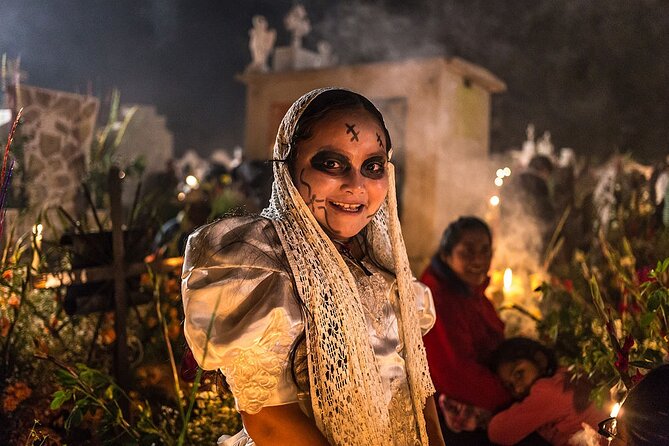
Mixquic makes Día de Muertos feel painfully real. This 8 to 9 hour small-group tour takes you from Mexico City into the village of San Andrés Mixquic for ofrendas and the famous Alumbrada night lighting of the cemetery on November 2. I like that the day is structured enough to help you move through a packed celebration without missing what matters.
Two things I especially liked: first, the included meal of pan de muerto and atole gives you a proper taste of the season instead of just sightseeing. Second, the tour leans hard on on-the-ground understanding, including etiquette at the church area and cemetery rituals around candles and copal. One thing to keep in mind is that Mixquic is crowded during the busiest days, so the experience is best when you stay flexible and follow your guide’s checkpoints.
Key highlights at a glance
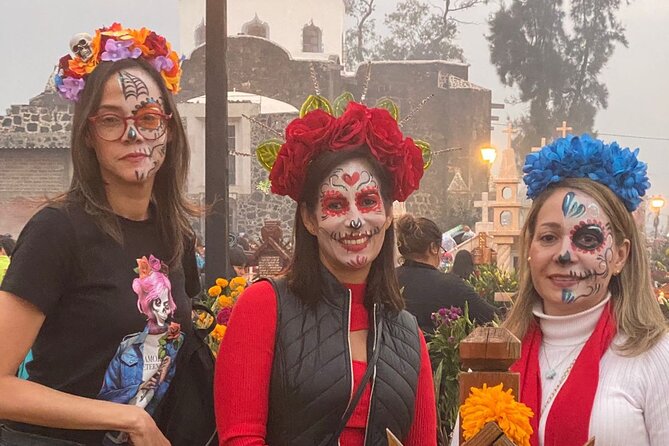
- Alumbrada on November 2: cemetery lighting with thousands of candles and copal incense
- San Andrés Mixquic focus: decorated streets plus the Church of San Andrés Apóstol area
- A real pace, not a rushed checklist: walking tour time plus guided context before you fan out
- Food included: pan de muerto and atole to keep you fueled during the long day
- Meet-up clarity matters: small-group tours meet at Lunario, not your hotel
Step deeper into marigold season
- Mexico City: Day of the Dead Guided Tour
★ 3.4 · 97 reviews - Day of the Dead Tour in Mexico City
★ 3.5 · 78 reviews - Day of the Dead Tour in San Andres Míxquic From Mexico City
★ 3.7 · 52 reviews - Special Pre-Hispanic Day of the Dead Tour
★ 5.0 · 16 reviews
Why Mixquic for Día de Muertos feels different
Mixquic is special because it is a working village tradition, not just a themed show. On the evening of November 2, the cemetery surrounding the Church of San Andrés Apóstol turns into a candlelit scene, driven by families honoring departed souls. If you want Día de Muertos at full intensity, that timing is the headline event.
What makes this tour worth your time is the way it frames what you’re seeing. You’re not just pointed at candles and asked to wander. You get context for how families connect with ancestors through offerings, arranged items, and ritual care in and around the cemetery.
You should also know the vibe can change fast depending on crowd density. The streets and cemetery area can become extremely busy, and your group movement may slow down. I’d treat this as a cultural day with ritual moments, not a theme park where you can zip from spot to spot.
Getting there from Mexico City, and why the 2:00 pm start matters
The tour starts at 2:00 pm at Lunario in Polanco (Av. P.º de la Reforma 50, Polanco V Secc, Miguel Hidalgo). From there, you transfer to Mixquic, and travel time can shift with traffic. Plan for a schedule that is more human than exact, because Mexico City traffic is a real factor.
That afternoon start is smart. It gives you time to arrive before the densest late-night movement, while still positioning you to experience the Alumbrada timing on November 2. It also means you’re not burning your whole day sitting on a bus, which matters when the celebration can run long.
For the small-group format, pickup from your hotel is not included. You meet your group at Lunario, and the tour ends back at the meeting point. If you are traveling with private logistics needs, the private option is set up for pickup at your accommodation or a place of your choice.
The first leg in Mixquic: streets, church, and proper etiquette
Once you arrive in San Andrés Mixquic, the day shifts into walking mode. You’ll spend time exploring decorated streets and visiting the historic Church of San Andrés Apóstol area. This is the part where you benefit most from having a guide who can explain what you’re looking at and why it’s arranged the way it is.
One of the best-known pacing choices here is that the tour provides guided context early, then lets you venture out. In practical terms, that helps you learn the basic etiquette before you get swept into the crowd flow. It also makes it easier to understand what is happening at family offerings and why certain areas carry more meaning.
I also like that the itinerary is built around learning how offerings work in real life. Instead of seeing ofrendas like decorations on a wall, you see them as part of family remembrance, tied to candles, careful placement, and cemetery rituals.
Take a wider circuit through Mexico City
- Mexico City: Teotihuacan, Tlatelolco & Guadalupe Shrine Tour★ 4.6 · 3,773 reviews
- Teotihuacan Hot Air Balloon Flight from Mexico City / Volare★ 5.0 · 3,262 reviews
- Teotihuacan Private Tour from Mexico City★ 5.0 · 1,890 reviews
- Historic Center Food Tour in Mexico City★ 5.0 · 1,263 reviews
- The best tour to Teotihuacán from Mexico City★ 5.0 · 1,236 reviews
A note on crowds you cannot control
Even with a great guide, Mixquic on Día de Muertos can feel overwhelming. Crowds can be so dense that moving as a tight group is difficult. If you come expecting constant, uninterrupted group touring, you may feel disappointed. If you come ready to slow down and follow checkpoint instructions, you’ll get more out of the day.
Ofertas, candles, and what the tour is really teaching you
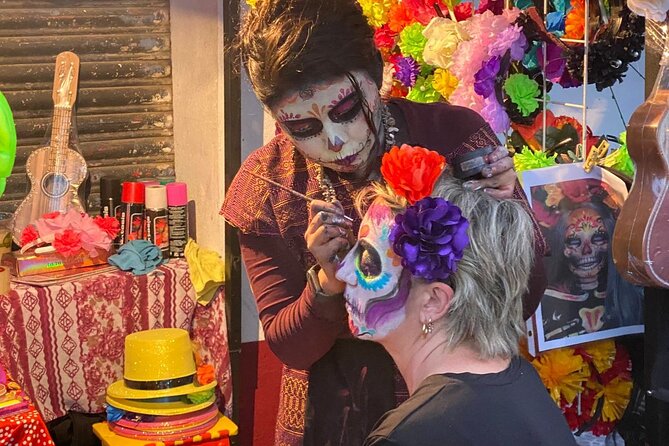
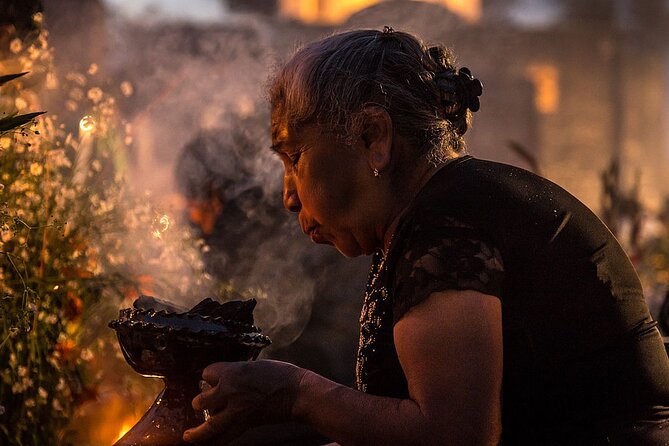
The heart of Día de Muertos in Mixquic is the relationship between the living and the departed, shown through offerings and the ritual presence of candles and copal incense. The tour’s focus on how families honor ancestors through carefully arranged items matters because it changes how you look.
Here’s the difference I want you to notice: when you understand the purpose of the offerings, you stop treating it like a photo stop and start treating it like a respectful moment. That shift makes the atmosphere feel more grounded and less chaotic, even when you are shoulder-to-shoulder with other visitors.
You also get time to see how the church area and cemetery connect to the broader rhythm of the festival. The “Alumbrada” is specifically on November 2, when the cemetery is lit with thousands of candles. The tour description emphasizes copal incense too, which adds an important sensory layer beyond just the visual.
Alumbrada night: the moment people talk about
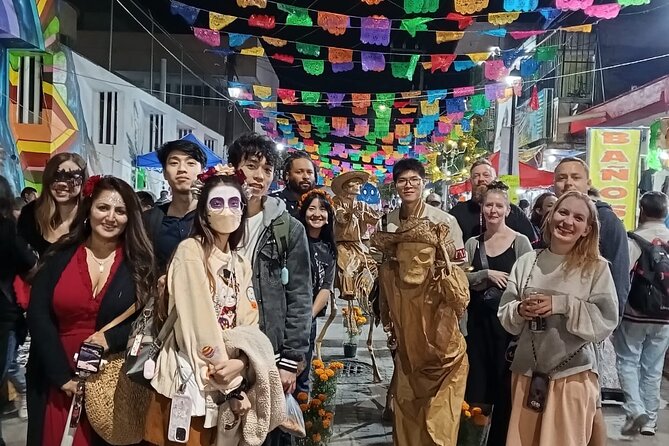
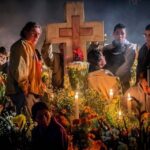
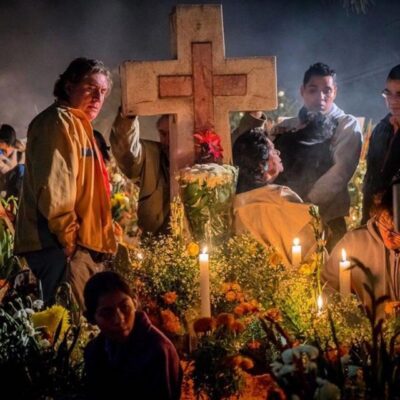
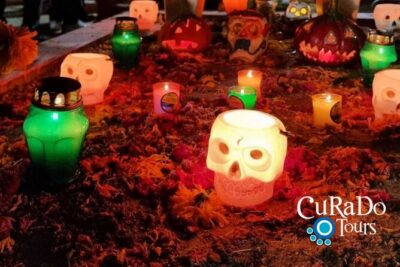
The Alumbrada is the standout event: on November 2, the cemetery surrounding the church is illuminated with thousands of candles, with copal incense in the air. This is where the tour’s planning pays off, because you are there for the moment the village goes into its fullest ritual mode.
This is also where you should set expectations. Candlelit cemeteries in a crowded village are not calm. You may find it harder to enter or exit certain areas smoothly, especially later in the evening, because crowds swell and movement slows. That can make some people feel like they are paying mostly for transportation rather than a guided experience.
My advice is to anchor yourself to the guide’s structure. When crowds tighten up, the value of the tour becomes less about walking continuously and more about getting the context and arriving at the right checkpoints at the right time.
The included meal: pan de muerto and atole (and why it helps)
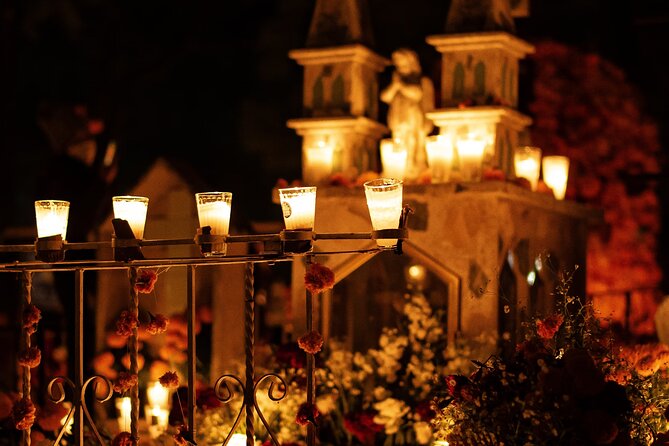
You get meals included as typical Día de Muertos fare: pan de muerto and atole. That matters more than it sounds, because you are out for most of the afternoon and evening. Having food included cuts down on your need to hunt for snacks while you are dealing with crowds.
Also, tasting the food helps you connect to the season. Pan de muerto is part of the tradition around the celebration, and atole is a comforting pairing when the day runs long. If you are the type who wants cultural experiences that go beyond photos, this small detail makes the tour feel more complete.
The pacing of the day is important here too. You don’t want to show up hungry and then spend the most meaningful moments distracted by finding something to eat. Included snacks are one less variable, especially in a holiday crush.
Price and value: what $99 actually buys you
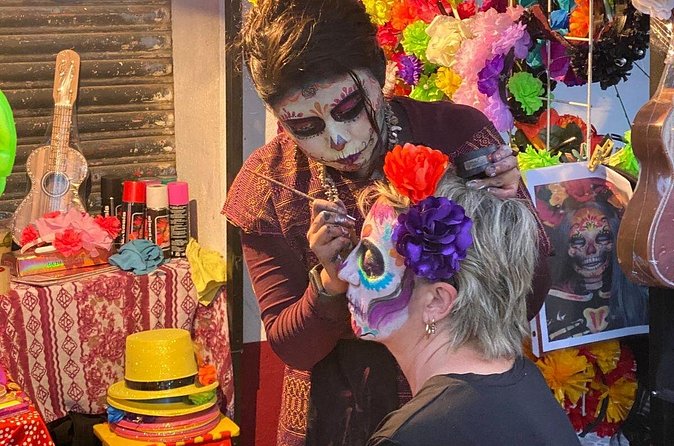
At $99 per person, you are paying for a full package: a multilingual local guide, round-trip transportation from Mexico City, a walking tour in Mixquic, and the included meal. Admission tickets are listed as free at the stops, which helps keep the total cost straightforward.
Is it a bargain? It depends on what you value. If you care about learning the meaning behind ofrendas, navigating the celebration intelligently, and not worrying about logistics for a long day, the price starts to make sense. You’re paying for time, interpretation, and transport coordination.
If what you really want is maximum freedom to move at your own speed, the dense crowds can limit that anyway. For some people, the day can feel like they paid mostly for a ride because the crowd situation makes a traditional, smooth “tour” harder. If you are comparing options, it’s worth thinking about whether you want guided context more than you want flexible wandering.
Guide quality matters, and you can feel it
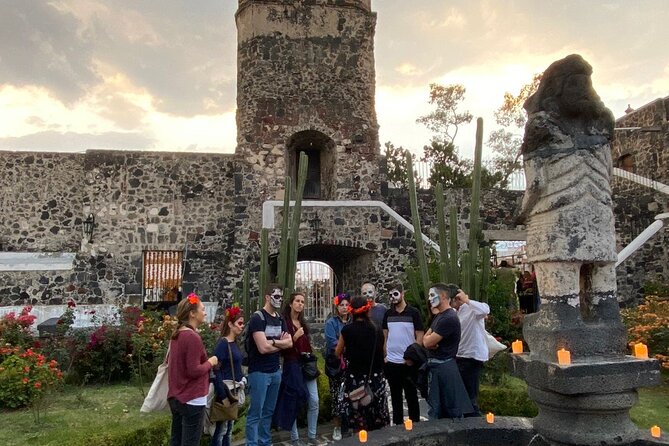
The tour is run with a multilingual local guide, and the difference between an okay guide and a strong guide shows up immediately on a crowded holiday. In particular, a guide named Adriana is described as kind and communicative, and also as someone who truly knew what to do with a group while keeping people at meeting points.
That kind of leadership matters because Mixquic can be chaotic. A guide helps you understand etiquette early, then manages the group through the busiest areas. One practical detail: your experience is built around meeting checkpoints, so having a guide who can keep the group together is not a luxury, it’s part of what you’re buying.
Small group vs private: choose based on how you like to travel
This experience is described as small-group, with meeting at Lunario. It also notes that the pickup location differs for private tours, where pickup can happen at your accommodation or another address in Mexico City. Small-group tours are also subject to minimum participant counts to confirm the group.
So which should you choose? If you’re comfortable meeting centrally and you like structured walking with a guide, small group can be a good fit. If you want to reduce friction, especially around pickup timing, private may feel easier because you control where you start and end.
Also, if you’re sensitive to delays, keep in mind that traffic and crowded movement can change how fast you go. A private setup won’t eliminate Día de Muertos crowding, but it can reduce some uncertainty tied to meeting at a central spot.
Practical expectations for a long, meaningful day
This tour runs about 8 to 9 hours and starts late afternoon. That makes it ideal for people who want one focused cultural day rather than multiple short stops.
The tour description also says it requires good weather. If weather turns, the tour may be offered on a different date or you may receive a full refund. That means you should check conditions if you’re booking close to your travel window.
Finally, the tour uses a mobile ticket. You’ll want your phone charged and ready, and you should keep your contact phone accessible. The organizer specifically asks for a valid contact phone number with an international prefix because the guide may need it for pickup.
Who this tour suits best
I think this tour fits you best if you want Día de Muertos in Mixquic with guided context, not just general sightseeing. It’s also a strong option if you value learning etiquette and the meaning behind offerings and cemetery rituals.
If you’re the type who gets stressed by crowds, you might still enjoy it, but only if you go in with the right mindset. Treat it like a ritual day where movement can be slow, and where you may spend more time observing in place than constantly walking.
If you want a custom route or you strongly prefer hotel-to-hotel convenience, you may like the private format better. The small-group meeting setup can be perfect for some people and irritating for others, depending on your travel style.
Should you book Día de Muertos in Mixquic?
Book it if your main goal is the Alumbrada on November 2 and you want a guide who can explain what you’re seeing, including ofrendas, candles, and copal incense. The included pan de muerto and atole also make the day feel more complete, especially when you are out for most of the day.
Skip or consider a different approach if you know you hate crowded events and you need constant room to move. On the busiest nights, the cemetery and streets can feel like controlled chaos, and no tour can fully remove that.
If you do book, I’d do one thing that pays off: plan to be at the Lunario meeting point on time and keep your contact phone ready. During Día de Muertos, small timing slips can turn into big headaches.
FAQ
Where is the meeting point for the small-group tour?
The meeting point is Lunario, Av. P.º de la Reforma 50, Polanco V Secc, Miguel Hidalgo, 11580 Ciudad de México, CDMX, Mexico.
What time does the tour start?
The tour starts at 2:00 pm.
How long is the tour?
The duration is approximately 8 to 9 hours.
Is the tour offered in English?
Yes. The tour is offered in English.
What’s included in the tour price?
Included are a multilingual local guide, round transportation from Mexico City, meals (pan de muerto and atole), and a walking tour of Mixquic.
What meals do you get during the tour?
You get typical Día de Muertos fare, including pan de muerto and atole.
If you tell me your travel dates and whether you’re looking at small group or private, I can help you pick the best timing for the Alumbrada experience.
More Tours in Mexico City

More Tour Reviews in Mexico City



The Capital in Marigold Season



More Mexico City plans worth opening

Day of the Dead Tours for the next day.
 ★ 3.4Day of the Dead Guided TourFrom $5797 reviews
 ★ 3.5Day of the Dead Tour in Mexico CityFrom $7378 reviews
 ★ 3.7Day of the Dead Tour in San Andres Míxquic From Mexico CityFrom $9452 reviews
 ★ 4.0The real “Dia de muertos” tour in Mixquic + secret cemeteryFrom $32827 reviews
 ★ 5.0Special Pre-Hispanic Day of the Dead TourFrom $5816 reviews
 ★ 5.0Day of the Dead House and craft workshopFrom $1115 reviews
 ★ 5.0Day of the Dead, Legends & Ghosts Mystery tourFrom $389 reviews
 ★ 4.5Day of the Dead Night in Xochimilco: Dinner & beer tastingFrom $1359 reviews
This review also appears in