
REVIEW · FRIDA KAHLO & COYOACAN TOURS
Coyoacan, history and life in a magical neighborhood
Coyoacan is history you can walk through. This small-group, 2.5-hour neighborhood tour connects pre-Hispanic roots to today’s daily life, while keeping the pace friendly with side streets, three squares, and church stops you can actually see and compare up close.
Two things I especially like: you get time in quiet alleys and hidden lanes south of the center, not just the postcard streets, and the route ends with real neighborhood energy at the market, plus special Coyoacan churros. One consideration, if you want a super long sit-down museum-style experience, is that this is built for walking and street-level discovery.
Quick hits on Coyoacan, squares, churros, and street life
- Three squares, three church stops, including Santa Catarina Park and the Parroquia San Juan Bautista Coyocán
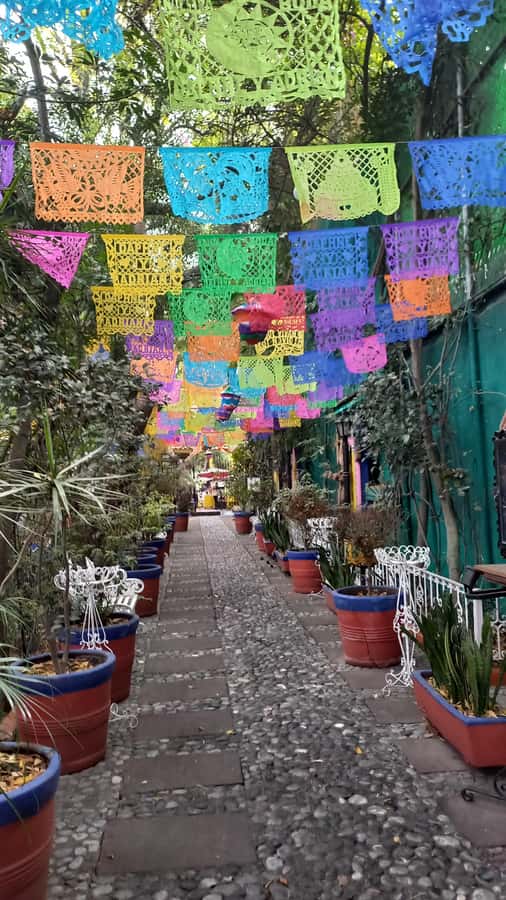
- Lesser-known streets and alleys, so you see the neighborhood beyond the main drag
- Main square and market time, where everyday Coyoacan shopping and snacking takes over
- A local guide in a small group (max 10), which keeps the experience flexible
- A history thread from pre-Hispanic times to the present, tied to what you are walking past
Stay south for more Coyoacan and Casa Azul
- Xochimilco, Coyoacan and Frida Kahlo with Optional Lunch
★ 4.5 · 7,320 reviews - CDMX: Xochimilco, Coyoacan, Frida Kahlo Museum & Murals Tour
★ 4.4 · 3,025 reviews - Frida Kahlo VIP [Museum Tickets Included] Bike, Markets & Churros
★ 5.0 · 1,072 reviews - Frida Kahlo VIP [Museum Tickets Included] Walk, Markets & Churros
★ 5.0 · 982 reviews
Why Coyoacan feels magical when you slow down
Coyoacan has a way of making the city feel less like a machine and more like a place where people linger. The charm is not just the architecture. It is the layering: religious landmarks, older town squares, and the rhythms of daily errands all sitting side by side.
This tour works because it treats Coyoacan like a living neighborhood, not a checklist. You start where the walking paths and gardens around Santa Catarina create a calm introduction, then you gradually widen out to the main avenue and the core squares. By the time you reach the market, you have enough context to notice what is old, what is adapted, and what is simply still in use.
And it is also practical. For about $19 per person and 2.5 hours, you are not paying just for photos. You get entrances (church and former convent, plus cultural centers), a churro stop, and a market visit. That mix is hard to beat for a neighborhood walk.
Meeting at El Olvidado and getting your bearings fast
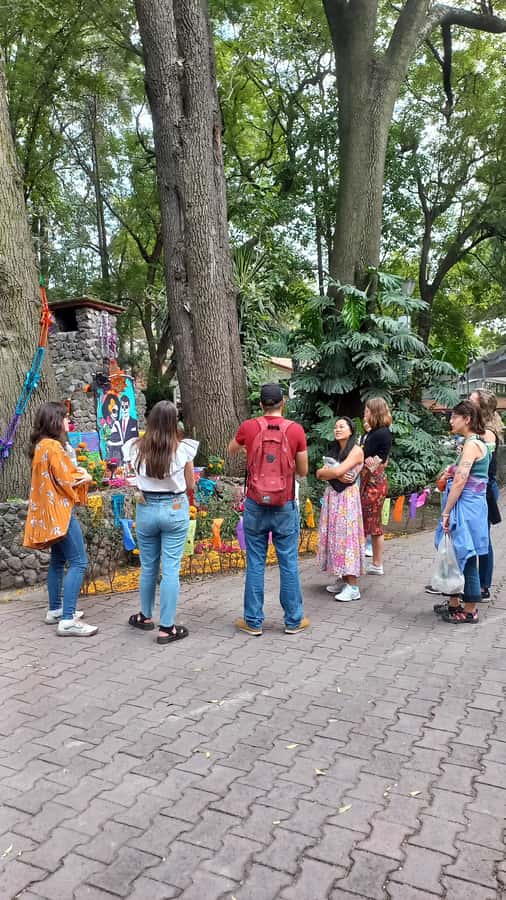
The meeting point is simple: you meet by the bench in the park in front of the café. It is right in the area of El Olvidado, so you are already in the neighborhood vibe before the walking starts.
Why I like this setup: it helps you settle in before the guide starts connecting locations. You are not racing to find the group on a distant street corner, and you can grab a quick drink or snack nearby if you arrive early.
This tour is designed for small groups, up to 10 people, with guides speaking English and Spanish. That matters because Coyoacan rewards questions. You get more back-and-forth than you would in a big crowd, especially when you want the story behind a church façade, an old building style, or why a certain plaza matters.
Santa Catarina Park and the lanes south of the center
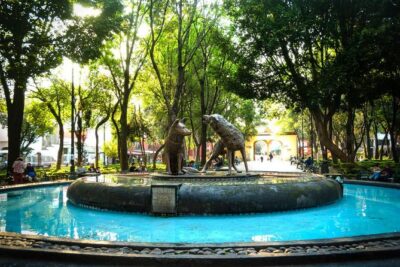
You begin around the squares and gardens near the church of Santa Catarina, then head into the hidden alleys to the south of Coyoacan. This first leg sets the tone: you are not immediately thrown into traffic-like energy. Instead, you get a quieter feel for the neighborhood’s internal shape.
What to watch for here is scale. Coyoacan’s character often shows up in small shifts, a turn that reveals a tucked-away corner, a change in building height, or a sudden view that makes the square feel like a room. In these lanes, your senses do the learning. The guide then gives you the historical spine to go with what you are seeing.
One small drawback to keep in mind: the pace is outdoors and built around walking through streets and alleys. Bring comfortable shoes and water, and you will enjoy the route more.
Open another chapter of the capital
- Historic Downtown Walking Tour★ 5.0 · 1,289 reviews
- Historic Center Food Tour in Mexico City★ 5.0 · 1,263 reviews
- Mexico City: Historic Downtown Walking Tour★ 4.8 · 1,039 reviews
- Walking Tour of the Historic Center of Mexico City★ 5.0 · 870 reviews
- Mexico City Historical Centre Food Tour with 7 Authentic Tastings★ 5.0 · 723 reviews
The main avenue walk, mansions, and the slow build to the core
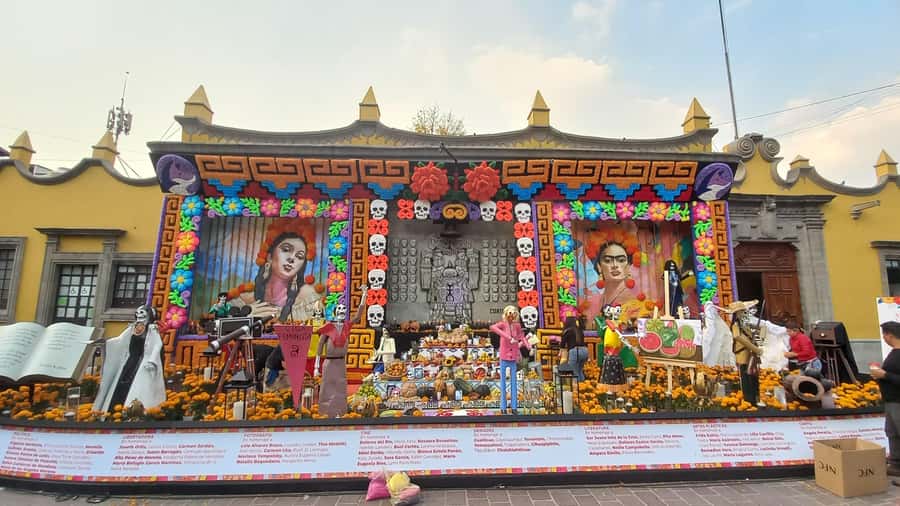
After the quieter lanes, you move toward the main avenue. This is the part where the neighborhood opens up visually. You will walk along the main street taking in the architecture and large mansions until you reach the main square.
This section is more than a transit move. It gives you a baseline for comparison. Once you later hit the churches and plazas, you will be able to notice what changes from block to block. That is especially useful if you care about how towns evolve without losing their identity.
Also, this part tends to be where you learn the guide’s style. The best guides on this route do more than list dates. They point out how daily life and historic identity overlap, and they help you connect today’s streets to longer timelines.
Parroquia San Juan Bautista Coyocán and the former convent stop
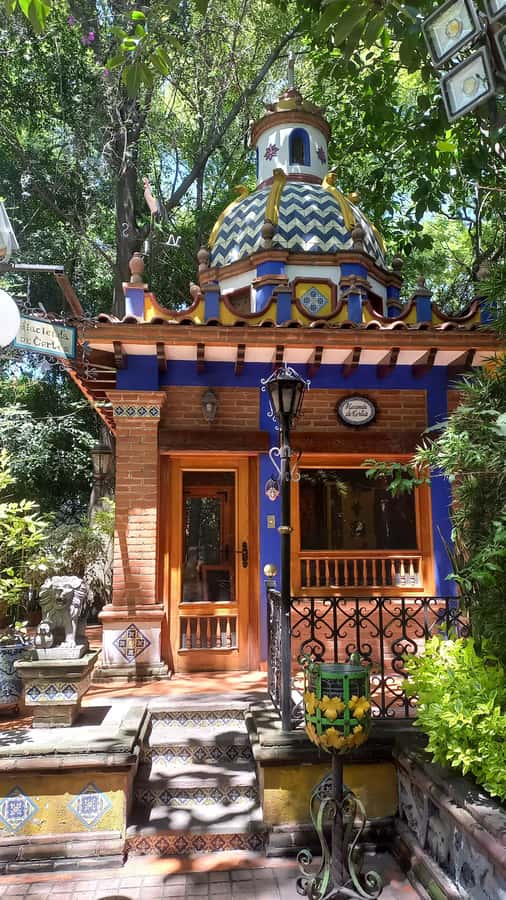
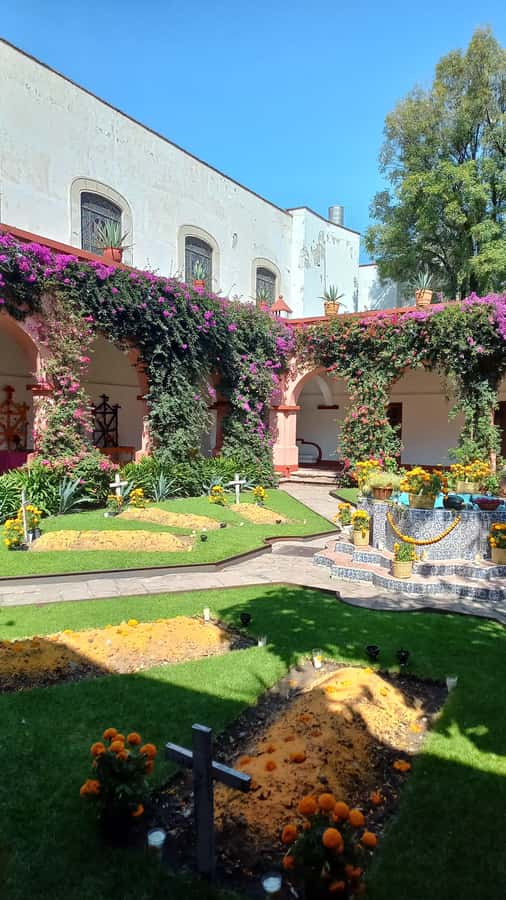
At the main square, you visit the Parroquia San Juan Bautista Coyocán and the former convent. This is one of the tour’s anchor moments because churches and convents often function as both religious and community landmarks.
What you get from this stop is perspective. You are not just looking at a pretty building. You are seeing how religious architecture has shaped public space in Coyoacan, especially in areas that became the neighborhood center over time. The former convent adds an extra layer, because it hints at how institutional life has changed and repurposed across centuries.
The tour includes entrance to the church and former convent, which is a big deal. If you are the type who likes to read what is carved into a doorway, notice how spaces are organized, or simply appreciate the scale of a place, the interior access makes the stop feel worth the time.
Plaza de la Conchita, older façades, and historic homes
Next comes Plaza de la Conchita. Here the vibe shifts again from the main square to a more intimate feel around older buildings. You will see old town buildings and visit the homes of important figures in Mexican history.
This stop is valuable because it turns “history” from a concept into something you can stand near. When you see where notable people lived, you start to understand that Coyoacan is not only a place of grand monuments. It also served as a setting for cultural and political life.
You may also find that the guide helps you read the neighborhood layout. Why plazas are placed where they are. How pedestrian space creates community. How the architecture reflects the eras that shaped it.
Practical note: you will want to keep your camera ready, but also keep your eyes up. In Coyoacan, the best details sometimes sit at eye level, not in the far distance.
Churros at the main square, then markets for real daily life
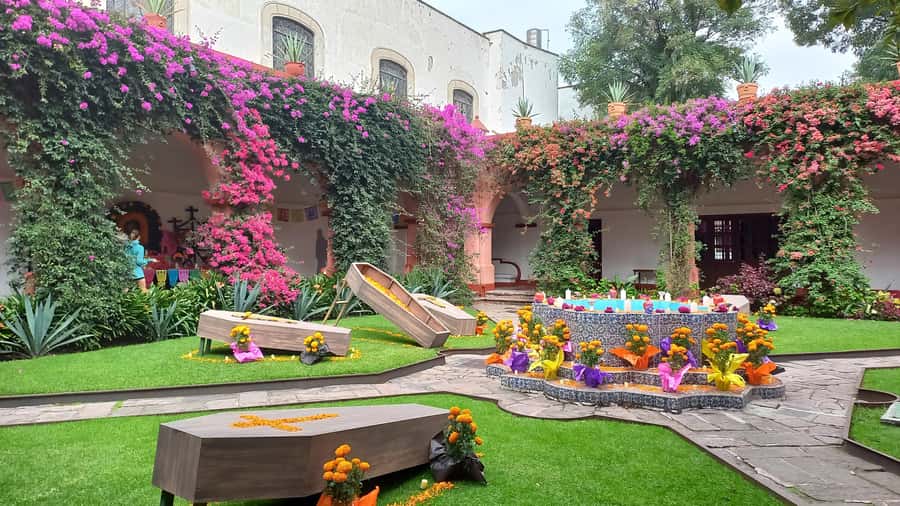
Then you reach the part of the tour I consider the payoff: after exploring the main square, you eat Coyoacan churros and then move into the neighborhood markets.
The churro stop is not just a sugary break. It is a culture marker. Eating in the main square area right after the church and convent time creates a smooth flow between past and present. You are tasting something familiar while you are still surrounded by the physical story the guide has been building.
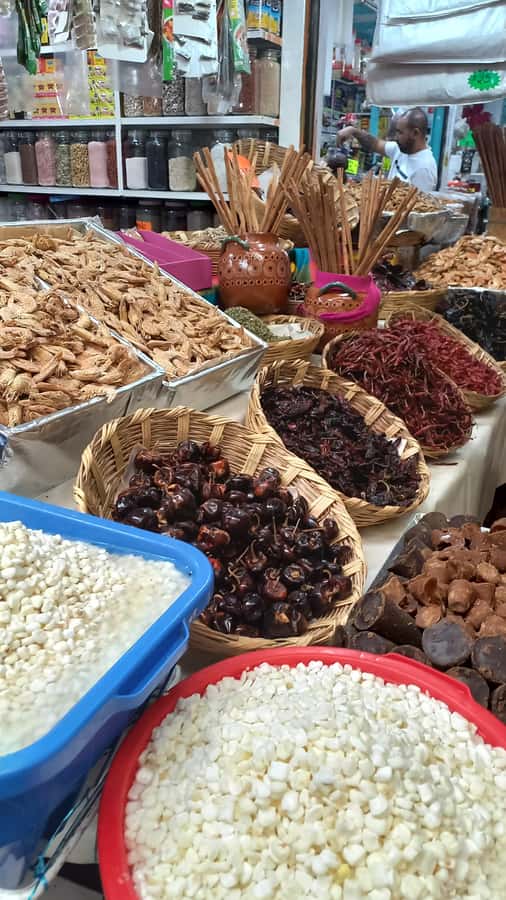
After churros, you explore the markets. The tour includes time at the Coyoacan Market, and specifically mentions both a food market visit and an arts and crafts market visit. This is where the neighborhood feels lived in. You will see what people buy, what gets made, and what still draws shoppers day to day.
If you like travel that mixes history with everyday routines, this market segment is exactly that. It is also where you can pick up small souvenirs without turning it into a shopping chore.
Mercado de Coyoacán as a fitting finish point
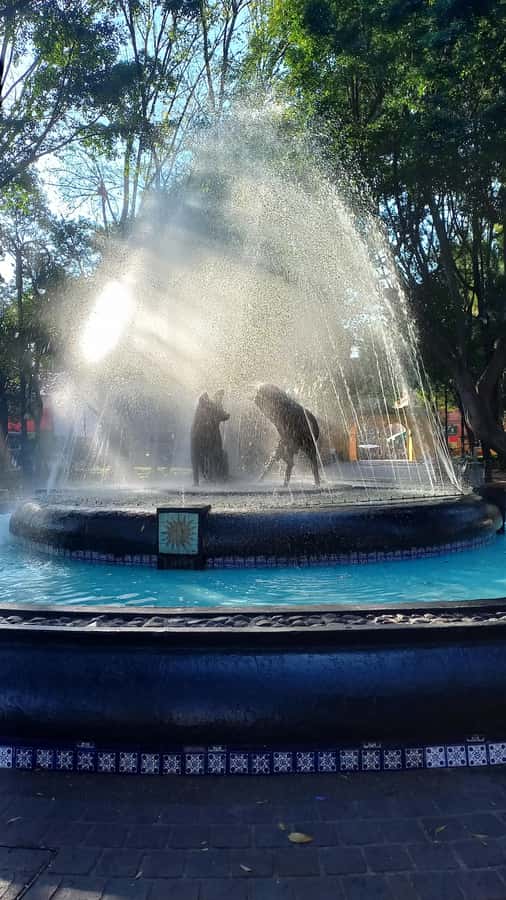
The tour finishes at Mercado de Coyoacán. For many walkers, this is the most convenient kind of ending because markets are also practical hubs. You are already in an area where it is easy to grab a quick bite, look around a bit longer on your own, and connect to the rest of your day.
I also like finishes like this because you end on atmosphere rather than on a hard reset. The last part stays connected to the neighborhood theme: religious centers, plazas, then the market where daily life continues.
And because the group is small, you are more likely to get a couple of guide recommendations at the end, based on what you focused on earlier, whether that is architecture, local history, or simply where to go next for snacks.
Price and time value, and how to plan your day
At $19 per person for 2.5 hours, this is a solid value if you want an organized route through Coyoacan without spending your day figuring out what to see. You get:
- Multiple guided stops across plazas and churches
- Entrance to the church and former convent
- Entrance to cultural centers
- Churros
- Market time, including food and arts and crafts areas
What makes it feel worth the money is the balance. The tour does not just point at landmarks. It pairs the landmarks with the neighborhood’s present-day behavior, especially with the market ending.
How to plan around the timing: since it is usually offered in the morning and afternoon, you can slot it between museum or neighborhood visits. If you plan to do Frida-related spots later, this tour helps you understand the wider context of the Coyoacan neighborhood itself, beyond the must-see headlines.
Who this tour is best for
This is the kind of tour I recommend if you like:
- Walking tours with real local pacing
- Seeing how squares and churches structure a neighborhood
- A guide who can connect what you see to pre-Hispanic to modern-day context
- A small group experience where you can ask questions and get attention
It is also friendly for a broad range of travelers because it is wheelchair accessible, and the group size is capped at 10 participants.
If you are traveling with kids, it might work well for ages who enjoy short stops and looking up at buildings, but keep in mind the tour is still a 2.5-hour walking route through streets and plazas.
Should you book this Coyoacan neighborhood tour?
I would book it if you want a guided walk that feels like Coyoacan is a place, not a museum. The combination of Santa Catarina and Juan Bautista church areas, time at Plaza de la Conchita, churros in the main square, and ending at Mercado de Coyoacán gives you a complete neighborhood arc in one morning or afternoon.
I would think twice only if you dislike walking and prefer long indoor stays. This is outdoors, street-to-street, with a history story delivered through what you see along the route.
One extra reason to feel good about booking: the guide talent comes through in the results, including standout mentions of Martin for connecting local details with larger Mexican history, and Natalia for a more personal, tailored approach.
FAQ
How long is the Coyoacán neighborhood tour?
The tour lasts 2.5 hours.
How much does the tour cost?
The price is $19 per person.
Where do we meet for the tour?
You will meet by the bench in the park in front of the café, near the starting area called El Olvidado.
What is included in the price?
It includes a 2.5-hour guided neighborhood walk, entrance to the church and former convent, entrance to cultural centers, special Coyoacan churros, and a visit to the market.
Are there languages available on the tour?
Yes, the tour is offered in English and Spanish.
Is the tour wheelchair accessible?
Yes, it is listed as wheelchair accessible.
What should I bring, and is alcohol allowed?
Bring comfortable shoes and water. Alcohol and drugs are not allowed.
Stories Under the Modern Streets


More Tour Reviews in Mexico City


Coyoacan Beyond the Blue House


More Mexico City plans worth opening
Frida Kahlo & Coyoacan Tours for the next day.
 ★ 4.5Xochimilco, Coyoacan and Frida Kahlo with Optional LunchFrom $347,320 reviews
 ★ 4.4Xochimilco, Coyoacan, Frida Kahlo Museum & Murals TourFrom $893,025 reviews
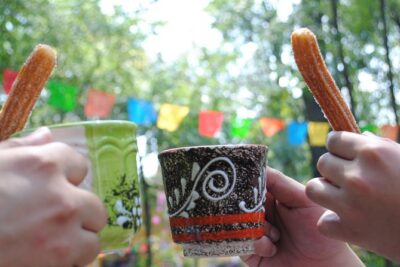 ★ 5.0Frida Kahlo VIP [Museum Tickets Included] Bike, Markets & ChurrosFrom $831,072 reviews
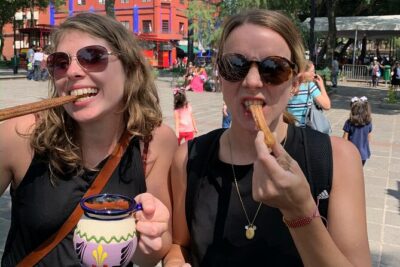 ★ 5.0Frida Kahlo VIP [Museum Tickets Included] Walk, Markets & ChurrosFrom $83982 reviews
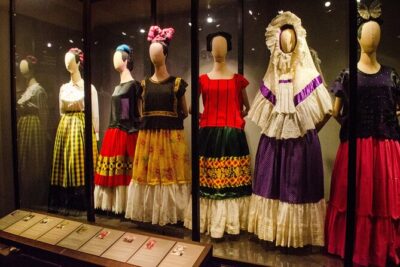 ★ 5.0EXCLUSIVE TOUR Frida Kahlo Museum – SMALL GROUPSFrom $86901 reviews
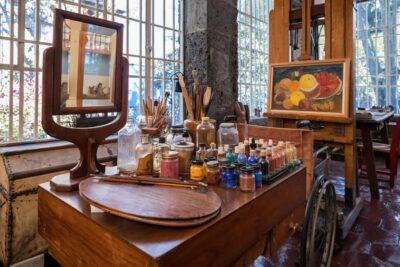 ★ 4.5Frida Kahlo Museum Entry Ticket w/Digital GuideFrom $34683 reviews
 ★ 5.0Private City Tour in Frida Kahlo, Coyoacan, and XochimilcoFrom $195626 reviews
 ★ 5.0PREMIUM Frida Kahlo Museum and Xochimilco (Small Groups)From $80549 reviews
This review also appears in