
REVIEW · HISTORICAL TOURS
Architecture and History of Mexico City – Small Groups
Mexico City clicks into focus fast. This small-group walk (max 6 people) follows the city’s evolution through standout buildings, with Raul guiding you through the stories behind what you see. You’ll love the way the tour connects eras, from pre-Spanish foundations to later artistic and political shifts, without making it feel like a lecture.
I especially like the views and sightlines you get, including balcony angles that help you “read” different eras stacked on top of each other. One possible drawback is that it’s still a walking tour with a moderate fitness requirement, so comfy shoes really matter.
Key Takeaways Before You Go
- Up to 6 people keeps the pace conversational, not rushed.
- Raul’s storytelling helps you connect architecture with historical change, not just dates.
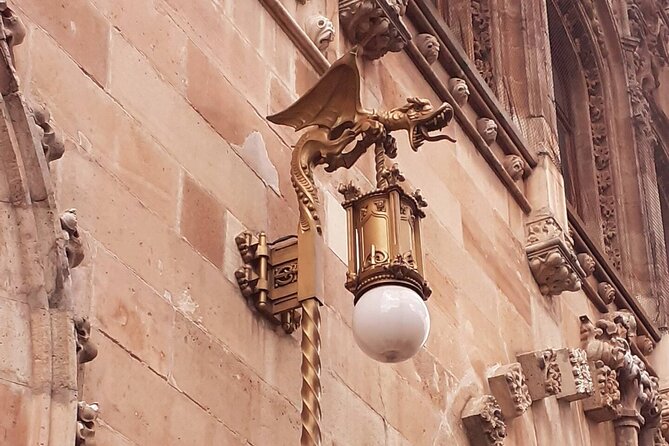
- Balconies at the House of Tiles let you study the city from a new angle.
- Most admissions are free, so you spend your money where it counts, on your time and attention.
- Zocalo wrap-up is a practical way to get recommendations for the rest of your trip.
Take a wider circuit through Mexico City
- Mexico City: Teotihuacan, Tlatelolco & Guadalupe Shrine Tour
★ 4.6 · 3,773 reviews - Teotihuacan Hot Air Balloon Flight from Mexico City / Volare
★ 5.0 · 3,262 reviews - Teotihuacan Private Tour from Mexico City
★ 5.0 · 1,890 reviews - Historic Center Food Tour in Mexico City
★ 5.0 · 1,263 reviews
Why This Downtown Architecture Walk Is a Smart First Move
If this is your first time in Mexico City’s Centro Histórico, you’ll get a huge payoff fast. The tour is built to help you notice patterns: what materials were used, how power changed what got built, and how each era left visual clues behind.
I like how it teaches you to look. You’re not just staring at pretty facades. You’re learning what to ask about as you walk, which makes other sights you plan later feel easier to understand.
Small-Group Format and Raul’s Style
The group size is capped at 6 travelers, which changes the whole experience. Questions don’t get lost, and the guide can adjust explanations to what your group is actually curious about.
Raul’s approach comes through in the way the tour is run. He’s warm and engaging, and he focuses on orientation, especially around the big shift points of the city before and after the Spanish period. That “get your bearings fast” feeling is exactly what you want on a short, high-impact walk.
Stop 1: Mirador Torre Latinoamericana, the City in Layers
Your walk starts at the Torre Latinoamericana mirador viewpoint. From here, you get that rare bird’s-eye context, where the city’s sprawl and the historic center’s density make sense in one glance.
What makes this stop valuable is the framing. The corner view is used to point out how Mexico City has evolved across time, so the rest of the tour doesn’t feel like random stops. Since the time is about 30 minutes and the admission is free, it’s also a low-stress kickoff.
Practical note: viewpoints can be windy and cool compared with street level, so bring a light layer if you run cold easily.
Open another chapter of the capital
- Historic Downtown Walking Tour★ 5.0 · 1,289 reviews
- Historic Center Food Tour in Mexico City★ 5.0 · 1,263 reviews
- Mexico City: Historic Downtown Walking Tour★ 4.8 · 1,039 reviews
- Walking Tour of the Historic Center of Mexico City★ 5.0 · 870 reviews
- Mexico City Historical Centre Food Tour with 7 Authentic Tastings★ 5.0 · 723 reviews
Stop 2: Atrium of the Templo de San Francisco
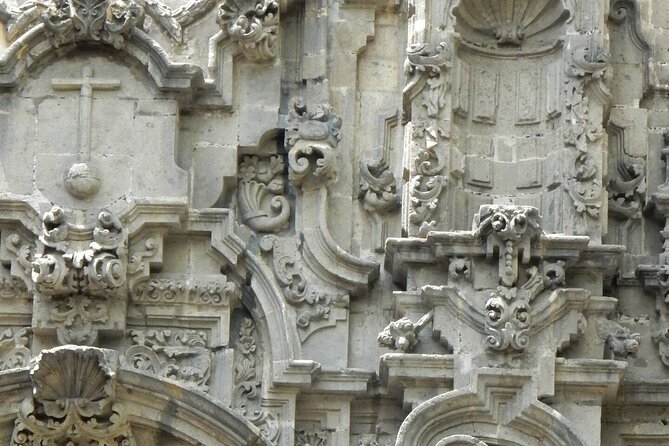
Next, you visit the atrium of the Temple of San Francisco, a key historic building in the center. This stop focuses on how structures were built, including the constructive materials that shaped what you see around you today.
I like that the guide doesn’t treat the building as a postcard. You get an explanation of the important historical processes that helped form modern Mexico, and it’s done in a way that helps you connect architecture to real change. It’s also a smart break from outdoor street corners, because you can slow down and really look.
The visit runs about 25 minutes, and admission here is free.
Stop 3: House of Tiles, Nearly 300 Years of Visual Clues
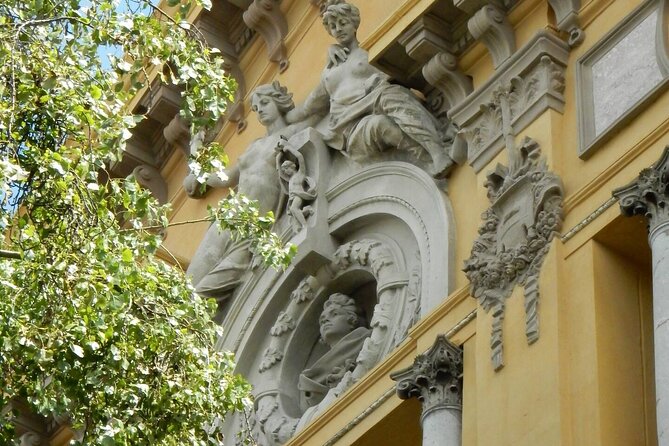
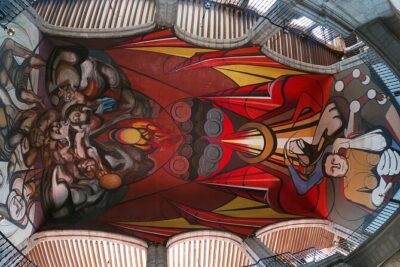
The House of Tiles is one of those places where the details do the talking. You’ll spend about 25 minutes looking at an important artwork inside the building, then using the balconies to see other structures around the center.
What you learn is more useful than you might expect. The tour explains the building’s evolution across almost 300 years, so the tiles and architecture aren’t just decorative. They become evidence of how taste, influence, and building styles changed over time.
This is also one of the most hands-on stops for learning how to “read” a city view. You’ll be looking outward, not only inside, which is great training for everything else you plan afterward.
Tip: plan to linger at the balcony rail if you can. It’s usually where the city starts to click into place.
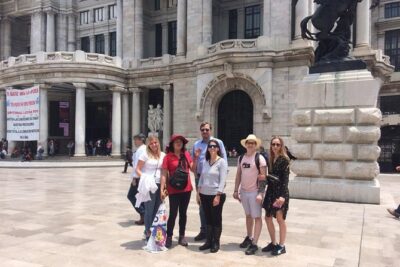
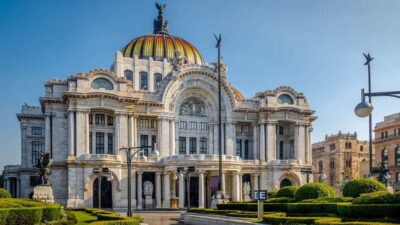
Stop 4: Palacio de Bellas Artes, Politics and Art in the Same Frame
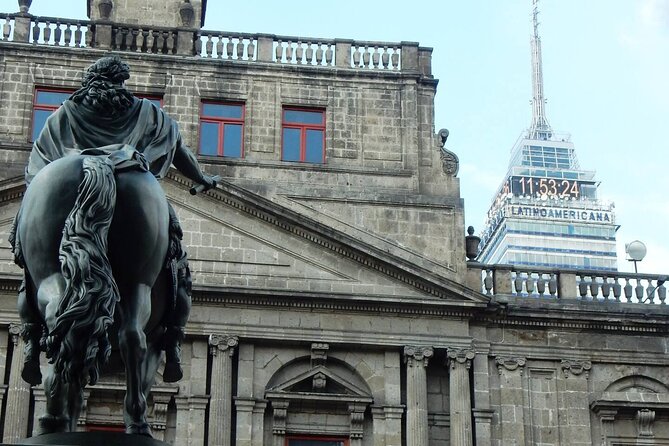
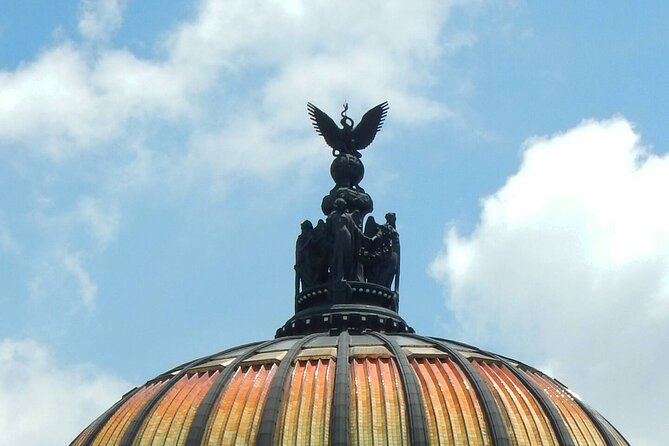
Bellas Artes is a big name, but the way this tour handles it is practical. You don’t treat it as a standalone monument. You discuss the historical, political, and artistic contexts that shaped this building and its neighbors.
Admission for this stop is not included, so you’ll want to check what you’re comfortable paying for if you decide to go inside on your own later. Even without that extra ticket, the outside conversation can still help you understand why the building looks the way it does and why the location matters.
This stop is timed at about 20 minutes, so it works as a turning point in the walk rather than a full museum-style visit.
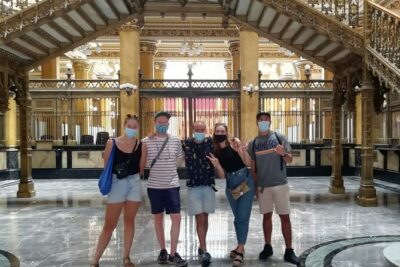
Stop 5: Palacio Postal, a Courthouse for Mail and Style
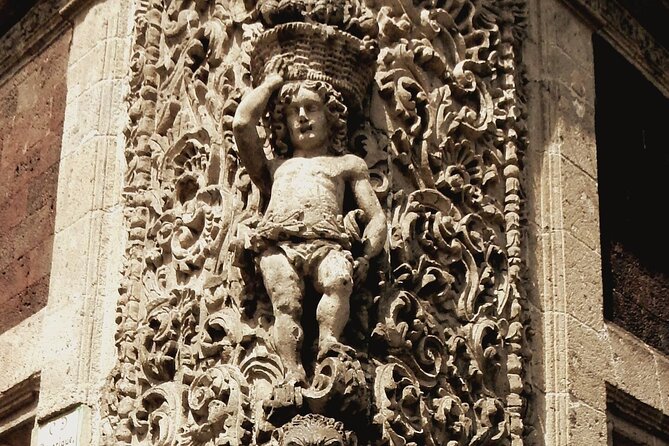
Then you move to the Palacio Postal, the historic post office from the early 20th century. The tour visit is about 20 minutes, and admission is free, with time inside depending on the day and time.
What I like about including a place like this is that it broadens your idea of what “history” looks like. Not every meaningful building is a temple or palace. Some are infrastructure, built to serve a growing city, and their design reflects what the era valued.
If you get time inside, focus on how the building feels: spacing, light, and how the interior supports movement. It teaches you to look at architecture as a system, not just a surface.
Stop 6: Plaza Tolsa, Eclectic Styles and a Royal Statue
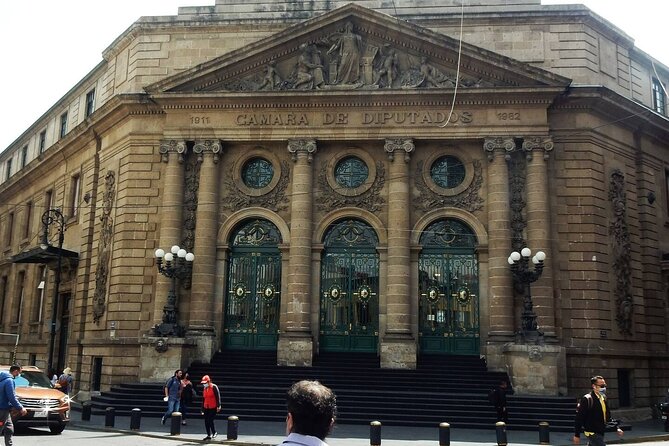
At Plaza Tolsa, you explore eclectic architecture around the statue of Charles IV of Spain. This stop is about 20 minutes and admission is free.
It’s a helpful moment because it reminds you that colonial influence and later city identity coexist in the same streets. You’re not just looking at buildings, you’re noticing how public space, monuments, and style choices work together.
A small caution: plaza stops can feel fast if the group is moving quickly. If you want to slow down, this is a good time to ask a question about what you’re seeing before the walk continues.
Stop 7: Museo del Templo Mayor, Archaeology Right in the City Center
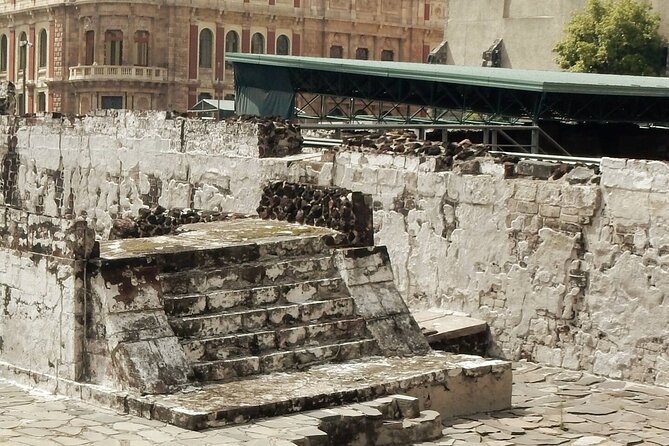
Next is the Museo del Templo Mayor, where you get an archaeological site in the heart of the city. This stop is about 20 minutes, and admission is free.
This is the kind of stop that changes how you view everything that came before it. You start connecting built form to older foundations, and you see how the city’s story isn’t only in colonial-era buildings.
Even with limited time, the experience helps you understand why the center is so layered. After this, you’ll be primed to recognize references in other museums and monuments you visit later.
Stop 8: Zocalo Finish, Put It All Together
The final stop is the Zocalo, where the walk wraps up and you get a chance to ask questions and get recommendations. The time here is about 20 minutes, and admission is included for this part.
I like that the Zocalo ending is not just a finish line. It’s a chance to take what you learned and decide what to do next. If you want to plan your afternoon or museum route, this is a great moment to ask for practical suggestions based on what you found most interesting.
What the Price Really Buys You ($83.59)
The tour price is $83.59 per person, and that number feels more reasonable when you see how the tour is structured. Most stops have free admission, and the guide organizes a tight timeline across major historic points without requiring private transport.
Here’s the value math that matters: you’re paying for orientation, interpretation, and time with a guide who connects architecture to history, not just for entry tickets. The bottled water included is a small perk, but it also signals a tour that expects you to be on the move.
The one ticket-related exception to keep in mind is Palacio de Bellas Artes, where admission is not included. If you want a full inside visit there, budget that extra cost separately.
Timing, Walking, and Getting Around
The tour lasts about 3 hours to 3 hours 30 minutes. It also includes allocated time for transportation and travel, so you’re not stuck trying to squeeze it into your day on guesswork.
Because it’s a walking route with a moderate fitness level requirement, you should come prepared for steady movement. I’d bring comfortable shoes you can walk in for a while, and I’d keep your phone charged for maps and quick reference photos.
Good news: it’s near public transportation, so getting to the start point is usually straightforward.
Quick Itinerary Snapshot (And What to Watch For)
- Torre Latinoamericana mirador: get the big-picture layers first, then everything later makes sense.
- San Francisco atrium: focus on materials and how the city’s built environment evolved.
- House of Tiles: use balcony angles, and pay attention to how the building changed over time.
- Bellas Artes: listen for the political and artistic context, and decide later if you want to add an inside visit.
- Palacio Postal: treat it like civic design, not just a pretty facade.
- Plaza Tolsa: notice how monuments and style mix colonial and later influences.
- Templo Mayor: connect archaeology to the street-level city story.
- Zocalo: finish by asking questions and getting recommendations.
Should You Book This Architecture and History Tour?
Book it if you want a guided way to understand Mexico City’s center without getting lost in details on your own. It’s especially useful on your first day because you learn how to look, and you can carry that skill into museums and monuments afterward.
Consider skipping or switching plans if you dislike walking or you want a lot of time inside major indoor sites. The stops are short by design, and at least one major building, Bellas Artes, does not include admission.
If you like architecture with stories, and you want an efficient route through the city’s most important layers, this is a strong choice.
FAQ
How long is the Architecture and History of Mexico City tour?
It lasts about 3 hours to 3 hours 30 minutes.
What is the group size for this tour?
The tour has a maximum of 6 travelers.
Is the tour offered in English?
Yes, it is offered in English.
Where does the tour start and end?
It starts at Torre Latinoamericana, Eje Central Lázaro Cárdenas 2, Centro Histórico de la Cdad. de México, Centro, Cuauhtémoc, 06000 Ciudad de México, CDMX, Mexico. It ends at Plaza de la Constitución S/N, Centro Histórico de la Cdad. de México, Cuauhtémoc, 06010 Ciudad de México, CDMX, Mexico, at the Zocalo.
Is admission included for all stops?
Admission is free for many stops, and Zocalo is included. Palacio de Bellas Artes is not included.
What tickets are used?
You use a mobile ticket.
Is bottled water included?
Yes, bottled water is included.
Is private transportation included?
No, private transportation is not included.
Is the tour physically demanding?
The tour requires a moderate physical fitness level.
What happens if the weather is poor?
This experience requires good weather. If it is canceled due to poor weather, you will be offered a different date or a full refund.
How far in advance should I book?
On average, it is booked about 25 days in advance.
Stories Under the Modern Streets






Mexico City in a Wider Frame




More Tour Reviews in Mexico City






More Mexico City plans worth opening




Historical Tours for the next day.
 ★ 5.0Historic Downtown Walking TourFrom $261,289 reviews
 ★ 5.0Historic Center Food Tour in Mexico CityFrom $1151,263 reviews
 ★ 4.8Historic Downtown Walking TourFrom $261,039 reviews
 ★ 5.0Walking Tour of the Historic Center of Mexico City870 reviews
 ★ 5.0Mexico City Historical Centre Food Tour with 7 Authentic TastingsFrom $65723 reviews
 ★ 5.0Walking Tour in Mexico City for Exploring their Cultural HeritageFrom $25245 reviews
 ★ 5.0Walking Tour – Impressive murals in Historical Center of Mexico CityFrom $51224 reviews
 ★ 4.5Guided walking tour through the most historic parts of the city.From $30172 reviews
This review also appears in