REVIEW · MEXICO CITY
The hidden archaeology in the CDMX
Mexico City keeps secrets under everyday streets. This 4-hour private English tour connects overlooked corners in the Centro Histórico to the bigger story of Mexico Tenochtitlán and the city’s dramatic shift during the Spanish conquest and indigenous alliances. I like how it stays practical and readable, with clear explanations instead of museum overload. I also love that the route hits both landmark areas and smaller historical spots that most people rush past.
One drawback to consider: it is not recommended for babies, and it runs as a walking itinerary with short stops and sightseeing from public space. Also, since the plan keeps things outside, you should expect viewpoints and explanations rather than full inside access.
Key points that make this tour worth your time
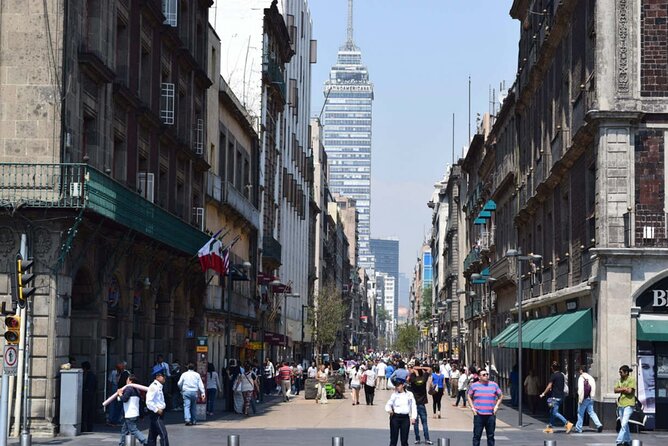
- Archaeology from the sidewalk: you see the layers of Mexico City without needing special entrances.
- A tight Tenochtitlán to conquest storyline: the Centro Histórico stop is built around imagining the older city and its fall.
- Archaeological windows at the SHCP former archbishop palace: a concrete way to spot what lies beneath.
- Templo Mayor focused on structure and sacred space: you get a mental map of how it worked.
- Free admission at every listed stop: the price is mostly for your guide and storytelling time.
- Private tour feel: only your group participates, which usually makes questions easier.
Before you settle on this one, put these Mexico City alternatives beside it:
- Teotihuacan, Guadalupe Shrine & Tlatelolco Day Tour with Lunch
★ 5.0 · 11,603 reviews - Xochimilco, Coyoacan and Frida Kahlo with Optional Lunch
★ 4.5 · 7,320 reviews - Balloon flight + Breakfast in cave + Pyramids + Pick up CDMX.
★ 5.0 · 6,335 reviews - Teotihuacan pyramids morning or afternoon without tourist traps
★ 5.0 · 6,186 reviews
Why Mexico City’s street level feels archaeological
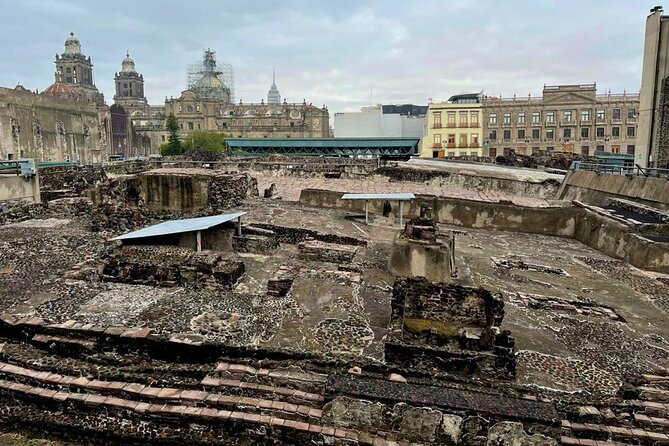
Mexico City’s history is not tucked away in one place. It’s right there under the modern blocks, in the way buildings, institutions, and public squares sit on top of older layers. This tour leans into that idea. You are not trying to force-fit a history lesson into a single museum visit. Instead, you walk a route in the historic center and let the guide connect what you see to what happened before.
The value is in the pacing and the clarity. You spend the bulk of the time in the Centro Histórico, then you build a picture with shorter stops. That structure matters because archaeology can feel abstract when it is all dates and names. Here, the sites are chosen to keep the story anchored in real places.
You also get a useful constraint: all stops are visited from outside. That means you can move without waiting in lines for ticketed entry at each location, and the tour still works as a true, city-walking experience.
Centro Histórico: imagining Tenochtitlán and the conquest in context
The heart of the tour is the first stop, where you spend about 1 hour 50 minutes exploring several archaeological and historical points around the Historic Center. The goal is simple: help you imagine what Mexico Tenochtitlán was like, then understand how the city changed when the Spanish conquerors arrived along with indigenous allies.
What I like most about this approach is that it reframes the Centro Histórico. Most people see it as a collection of famous landmarks. You get something more useful: a guided way to read the area like a timeline written across the streets.
Since you visit from outside, you are not treated to one single “main ruin.” Instead, you are guided to notice how the historic center as a whole fits into the larger story. That is a great match for first-timers, because it helps you get your bearings fast. It is also a smart way to travel if you want history but you do not want to spend the entire trip inside controlled spaces.
Practical note: this is the longest segment of the day, so it is where your energy should be highest. Plan for walking time even if each additional stop is short.
Hospital de Jesús Nazareno: a 10 minute history and a little magic
After the Centro walk, you shift to Hospital de Jesus Nazareno for about 10 minutes. The tour focuses on two things: the history of the hospital and why it is relevant, plus the magic that surrounds the site.
That “magic” line is more than marketing. In my experience, this kind of framing usually means the guide ties together the building’s role in the city with the stories people attach to it. You come away not just knowing what something is, but why it became meaningful enough to keep being talked about.
Because the stop is short, you will not get stuck in details. You get a quick, memorable stop that adds texture to the day and keeps the tour from feeling like only grand monuments and museum glass.
- Teotihuacan, Guadalupe Shrine & Tlatelolco Day Tour with Lunch★ 5.0 · 11,603 reviews
- Xochimilco, Coyoacan and Frida Kahlo with Optional Lunch★ 4.5 · 7,320 reviews
- Teotihuacan pyramids morning or afternoon without tourist traps★ 5.0 · 6,186 reviews
- Teotihuacan Early Access Guided Tour with optional Lunch★ 4.5 · 6,138 reviews
- Mexico City: Teotihuacan, Tlatelolco & Guadalupe Shrine Tour★ 4.6 · 3,773 reviews
Museum of the City of Mexico and the Zócalo: fast grounding points
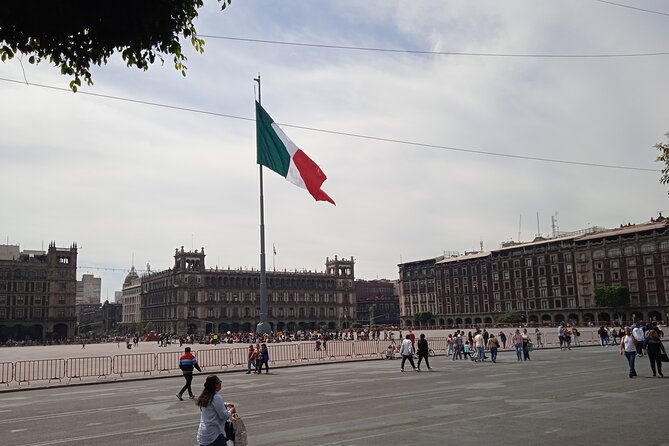
Then you hit two brief anchors, each designed to reset your mental map.
Museo de la Ciudad de Mexico takes about 10 minutes. The emphasis is on the building that houses the history of Mexico City. Even if you do not go deep into collections, just focusing on the building’s role helps you understand why Mexico City history is presented where it is.
Next comes Zócalo for around 20 minutes. You will see some of the most relevant details of the iconic square. This is not the kind of stop where you just stand and look. The value is that you get a guided reading of what matters in that space, which is especially helpful when the Zócalo is full of activity and your own instincts push you to move quickly.
If you tend to get overwhelmed in big public squares, these structured stops can save you. You are not wandering with no plan. You have a job to do: spot the key details and connect them to the bigger city story.
SHCP former archbishop palace area: finding archaeology in windows
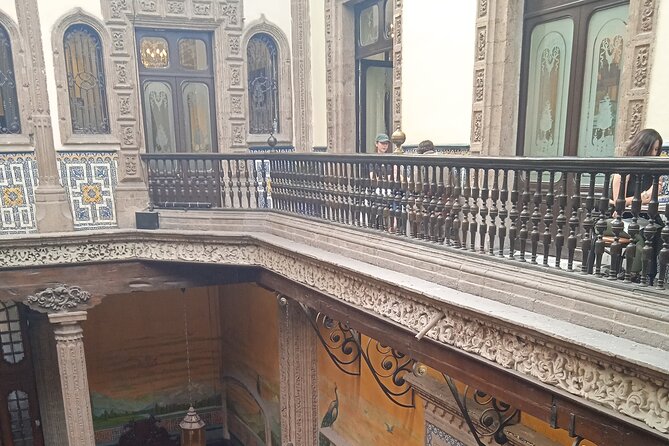
One of the more visually distinctive segments is Museo de Arte SHCP Antiguo Palacio del Arzobispado, where you spend about 20 minutes. The standout here is that you will see a series of archaeological windows in the area.
These windows are a big deal for a simple reason. They let you see archaeology without requiring a full excavation tour or a long museum detour. You get a chance to look for the traces of older layers, presented in a way that fits into city life. It is also the kind of detail that makes a tour feel specific, not generic.
This stop also helps you understand a key theme of the day. Hidden archaeology is not only about buried things. It is also about how cities choose to display the past while still living in the present. That is what these windows represent, and it makes the story feel tangible.
Tip for your own visit mindset: when you reach these areas, slow down for a moment and treat it like your own mini puzzle. Look at what is framed and ask yourself what kind of place would have existed underneath.
Museo del Templo Mayor: how sacred space worked
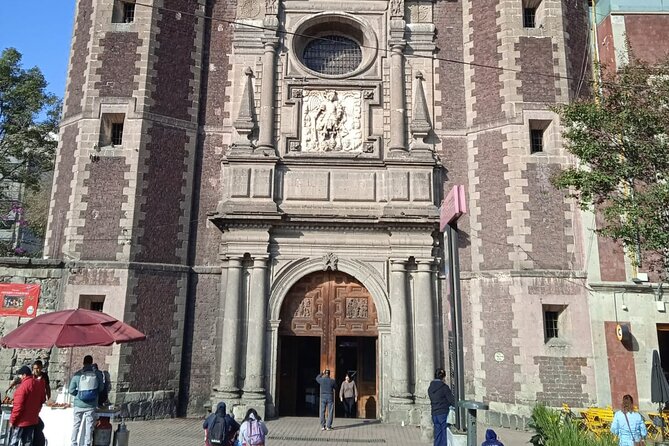
At about 30 minutes, Museo del Templo Mayor is the tour’s longest museum-themed stop. Here, the guide reveals how the sacred space of the Aztecs worked and what its structure was like.
This is one of the most educational parts of the itinerary because it moves beyond scenery. You are not just seeing “old stuff.” You are learning how a sacred space functioned, and that gives you a mental framework that changes how you interpret what you see in the wider area.
And because the tour includes outside viewing, you still benefit even if you are not planning to spend extra time inside on your own. The goal is understanding and structure, so you leave with a clearer sense of what mattered in the space and how it was organized.
This stop is also a good match for people who like interpretation. If you prefer explanations and “how it worked” answers over pure sightseeing photos, this is where you will likely feel the most satisfied.
Centro Cultural España en México: an old university story
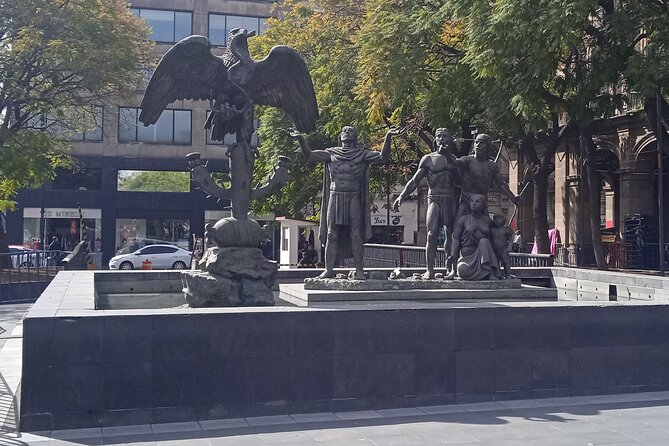
Next is Centro Cultural Espana en Mexico, with about 20 minutes. The tour theme here is visiting the old university of the Mexica elite.
Even though you are not going to a ruin-style site for this part, it still contributes to the day’s main idea: the city is layered with cultural roles. Education and elite learning shape societies as much as temples or public squares do. So, learning this context helps you see the Aztec world not as an architectural backdrop, but as a living culture with institutions.
If you like tours that connect history to how people lived, studied, and organized society, this stop gives you a different angle from the purely architectural segments.
House of Tiles: finish with beauty and detail
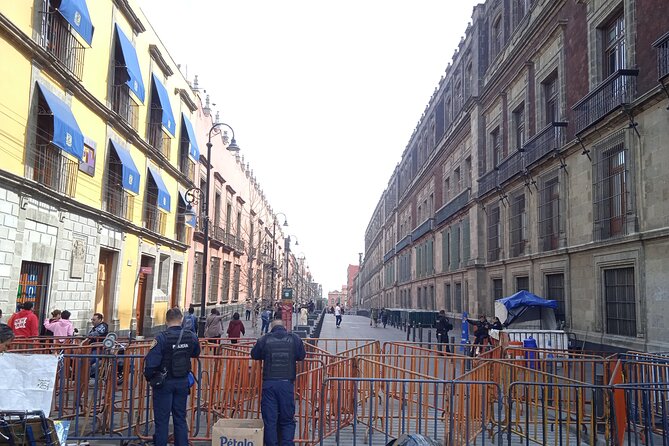
The final sightseeing stop is House of Tiles for about 15 minutes. It is described as one of the most beautiful houses in the historic center, and that is exactly the point of a final stop like this.
After learning about Tenochtitlán, conquest shifts, hospital history, sacred structure, and windows into archaeology, the House of Tiles offers something different: visual pleasure and craftsmanship. It is the kind of ending that keeps your day from feeling like homework.
Also, its location ties neatly into the tour’s conclusion. The experience ends in the Plaza del Palacio de Bellas Artes, so you can transition easily to a meal, a coffee, or a longer wander.
Price and time value for a focused 4-hour story
The tour costs $30.49 per person for about 4 hours. For that price, you are paying for a private guiding experience in English, plus a route that includes multiple free-admission stops.
Here is the value logic I think matters: since the listed stops are admission ticket free, your money goes toward interpretation, not entry fees. And because the day is structured around one long anchor in the Centro Histórico plus shorter, targeted stops, you get a coherent narrative instead of a scattered walk.
The private nature also matters. Only your group participates, which usually means less waiting around and more flexibility if you have questions. It is also just more relaxing than dealing with crowd logistics.
One more confidence builder: this tour has a 4.6 rating with 90% of people recommending it. That is not a guarantee of perfection, but it does suggest the experience works for most people who try it.
A realistic caution from what can go wrong: if a guide cancellation happens without notice, that is a major problem. You can reduce your risk by keeping your booking confirmation handy and making sure you have any last message details saved on your phone the day of the tour.
Who should book this Hidden Archaeology walk, and who should skip
I would book this if you want history with structure. You will like it if you enjoy being guided through a city and you want a clear story arc from the Aztec city to the conquest period.
It is especially suitable for:
- First-time visitors who want context around the Centro Histórico
- People who prefer outside viewing and explanations over long museum sessions
- Travelers who like archaeological details that you can actually spot, like the archaeological windows
I would be cautious if you:
- Have a baby or need baby-friendly pacing, since it is not recommended for babies
- Want long indoor museum time, because the plan keeps visits from outside
If you are the type who plans to spend extra time in museums on your own, this tour can still work well. It acts like a guide for your city reading, then you choose where to go deeper afterward.
Should you book this Hidden Archaeology in CDMX tour?
Yes, with the right expectations. This is not a “ruins-only” adventure and it is not a deep dive into one museum. It is a smart, city-based story with free-admission stops and a guide-led way to connect modern Mexico City to the older world beneath it.
Book it if you want:
- A coherent history narrative across several key places
- Archaeology you can see from the street level, including windows into the past
- A tour length that fits into a normal sightseeing day, around 4 hours
Skip or consider alternatives if you:
- Need baby-friendly accessibility or longer rest breaks
- Want mostly indoor, hands-on museum experiences
If you do book, show up ready for walking and bring patience for the fact that you are seeing history through a living city. That is also the charm. You leave with Mexico City feeling less like a blur and more like a place with layers you can actually notice.
FAQ
How long is the tour?
It lasts about 4 hours.
Is this a private tour?
Yes. It is a private tour/activity, and only your group will participate.
What language is the tour offered in?
The tour is offered in English.
Where does the tour start?
The meeting point is José María Izazaga 129, Centro Histórico de la Cdad. de México, Centro, Cuauhtémoc, 06090 Ciudad de México, CDMX, Mexico.
Where does the tour end?
The tour ends in the Plaza del Palacio de Bellas Artes, at Palacio de Bellas Artes Av. Juarez S/N area.
Are admissions included, or do I pay at each stop?
The admission tickets for the listed stops are free.
Will we visit the sites inside or outside?
All sites are visited from outside.
Is the tour near public transportation?
Yes, it is near public transportation.
Is it recommended for families with babies?
No. It is not recommended for people with babies.
What is the cancellation policy?
You can cancel for a full refund up to 24 hours in advance of the experience’s start time. Free cancellation is available, and changes made less than 24 hours before the start time are not accepted.