
REVIEW · HISTORIC CENTER WALKING TOURS
Private Tour in the Historic Center of CDMX with Local Guide
Zocalo has gravity. This private Historic Center walk puts you face to face with Aztec roots, grand colonial landmarks, and a lot of art in just a few hours. I especially liked Hilary’s art-history explanations and the fact that several key stops have tickets included, so you are not always hunting for entry. The one drawback to plan for is the pace, you need moderate physical fitness for a steady walk through the Centro streets.
This is built for people who want the story behind the buildings, not just photos. You start at Zócalo Central Hotel and you finish at Palacio de Bellas Artes, so the whole route makes sense as a day’s spine through the neighborhood. It also helps that the tour is offered in English and it stays private, meaning it is just your group, not a crowd.
Here is what I would tell you before you go: bring comfortable shoes and expect a few quick-but-meaningful stops. Some entry points are ticketed (not all), so timing can still depend on what is happening on the day, like local events near major government buildings.
Key highlights that make this tour worth it
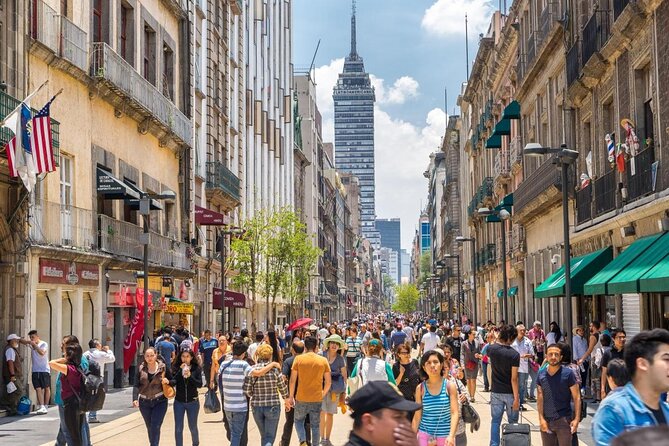
- Hilary-led storytelling focused on art, architecture, and how the layers of Mexico City connect
- Tickets included at major sites, including Rivera’s mural stop and several signature buildings
- Aztec Tenochtitlan context while you stand in the Historic Center’s most pivotal area
- Palacio de Bellas Artes and Palacio Postal for classic Mexico City architecture you can actually walk up to
- San Francisco de Asís for a 16th-century Franciscan complex with strong historical presence
- A smart, compact route that moves from Zócalo outward and then back toward the arts district
Take another turn around the Zocalo
- Historic Downtown Walking Tour
★ 5.0 · 1,289 reviews - Mexico City: Historic Downtown Walking Tour
★ 4.8 · 1,039 reviews - Walking Tour of the Historic Center of Mexico City
★ 5.0 · 870 reviews - Mexico City Historical Centre Food Tour with 7 Authentic Tastings
★ 5.0 · 723 reviews
Where the tour starts, and why Zócalo sets the tone
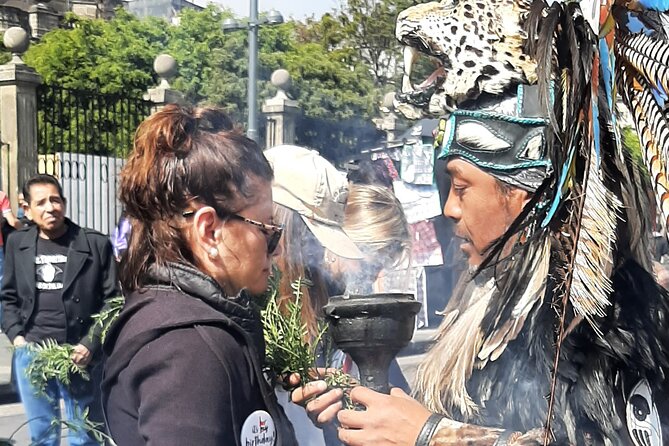
I like starting here because Zócalo is not just a square on a map. It is the center of the Centro, and it is the place where Mexico City’s power, religion, and public life keep bumping into each other.
You meet at Zócalo Central Hotel, Av. 5 de Mayo 61 in Cuauhtémoc. It is a practical start point, close to public transportation, so you can arrive without complicated logistics. From the beginning, Hilary’s approach is to give you the “why” first, so when you reach monuments, you already know what you are looking at.
Because this is a private tour, the walking rhythm can match your group. That matters in this area, where you may pause for photos, explanations, and quick transitions between stops. If you are not a fan of constant movement, just know the total time is about 3 to 4 hours and the itinerary is intentionally packed with highlights.
The Aztec temple stop: Tenochtitlan’s shadow still shapes everything
Before you jump into colonial and modern Mexico City, you start with the main Aztec temple site. The point is not to treat it like a distant chapter in a textbook. Standing here, you understand why the later city grew in the same orbit.
Hilary’s explanation connects the Aztec capital and the conquest story in a clear way. In one visit, she also pointed out how the conquest played out around the same central spaces you are walking through now. It is a useful reset, because it helps you stop seeing buildings as isolated objects and start seeing them as layers.
A good consideration: this is a short stop in a walking day. If you want extra time for ruins and longer reading, plan to do a follow-up visit after the tour. On a half-day format, you get the orientation and the storyline, not a full archaeological afternoon.
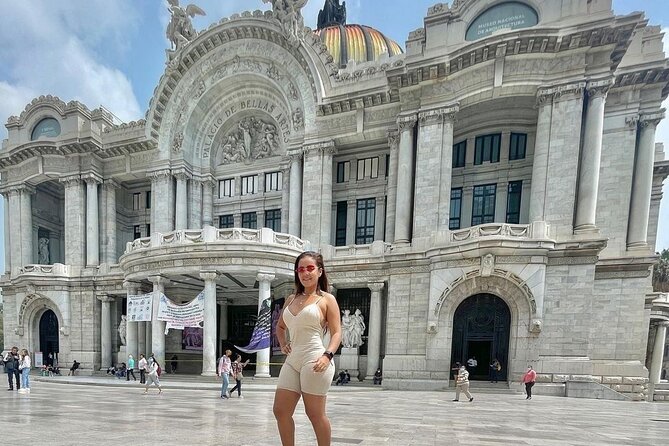
Palacio de Bellas Artes: a 30 minute dose of Mexico City architecture
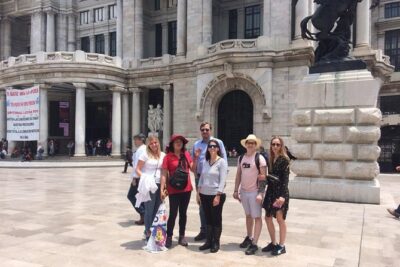
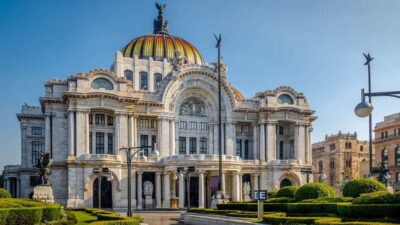
Next up is Palacio de Bellas Artes, one of Mexico City’s most recognizable buildings. I like this stop early because it gives you a visual marker for the arts side of the city, and it also frames the rest of the route as “history, then culture.”
You get about 30 minutes here, and the admission ticket is included. That included access is a real convenience, especially in the Historic Center where you do not want your day to hinge on finding the right line or the right ticket window.
What to watch for: Bellas Artes is all about style and presence, and it rewards a slower look than you might expect. Even in a limited time block, you can still notice how the building feels both formal and theatrical, with the kind of grandeur that makes it a natural backdrop for major civic moments.
The only drawback is time. Thirty minutes sounds like plenty until you are actually inside and you start caring about details. If your group is the type that likes to read everything on display, you may want to save extra museum time for later.
Shape another private day around your pace
- Private Tour: Teotihuacan and Guadalupe Shrine★ 5.0 · 938 reviews
- Private City Tour in Frida Kahlo, Coyoacan, and Xochimilco★ 5.0 · 626 reviews
- Mexico City Custom Private Tour with a Local, Highlights & Hidden Gems★ 5.0 · 582 reviews
- Teotihuacan Private Tour with Expert Guide & Cultural Insights★ 5.0 · 577 reviews
- 100% Private Tour in Teotihuacán Pyramids from Mexico City★ 5.0 · 449 reviews
Museo Vivo del Muralismo: Rivera’s murals explained like a story
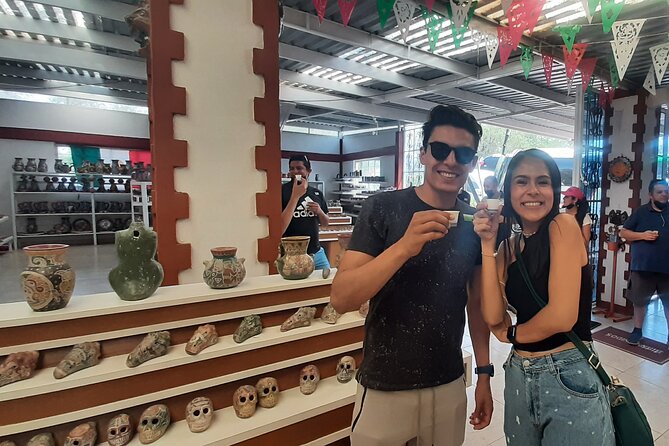
Then comes Museo Vivo del Muralismo, where you get about 40 minutes and the ticket is free. The focus here is explanation, specifically Diego Rivera’s murals and what they mean in context.
This stop is valuable because mural art in Mexico City is not decoration. It is public storytelling, tied to politics, identity, and the way artists interpret the nation. Hilary’s style, based on how people describe her, is the kind that makes art history feel usable, not academic for its own sake.
A practical tip: because this stop is about interpretation, you will get more out of it if you listen actively rather than treating it like a walk-through. If you are the type who likes to take notes or ask questions, this is a good moment to do it.
The time window is long enough to get the “what” and the “so what,” but still short enough that the whole tour keeps moving. If you want only one museum moment to feel longer, you could always plan a separate return to this area later.
Catedral Metropolitana de la Ciudad de México: why 1573 still matters
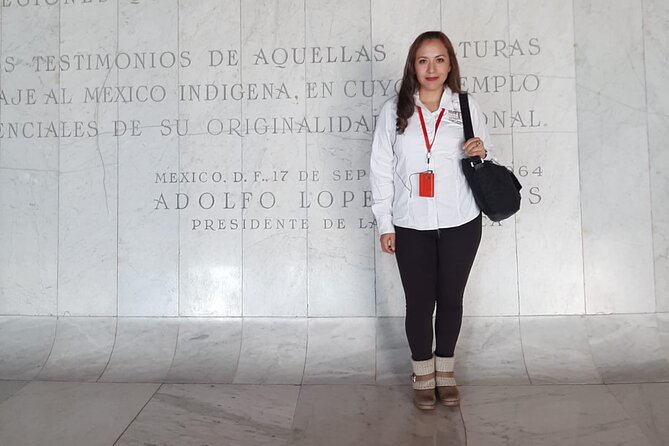
Catedral Metropolitana de la Ciudad de México is one of those places where you feel the scale immediately. You only get about 15 minutes here, but it is built for quick, high-impact orientation.
It is free entry on this tour, and it is also the seat of the archbishopric. That religious role is part of what makes the cathedral central to the city’s story, not just a pretty landmark.
Hilary’s explanations are especially helpful for the “construction difficulty” angle, which is the kind of detail you would otherwise miss if you are just looking up at the façade. Understanding how long and hard projects like this were helps you appreciate the cathedral as a long-term human effort, not an overnight miracle.
A consideration: 15 minutes is brief. If you want time for inside details, you may need to plan your own standalone visit later. For this tour, the goal is to anchor you in the cathedral’s significance and give you context you can carry forward.
The official presidential residence area: keep an eye on Palacio Nacional
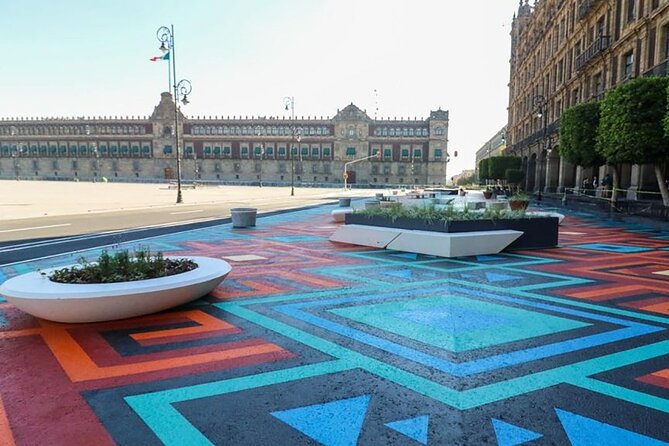
Between major sights, the route takes you past the official presidential residence area. One of my favorite parts of these “moving through the city” tours is that they can reflect real life, not only architecture.
On one visit, there was a large demonstration at Palacio Nacional, and Hilary explained it was a common event. That kind of comment matters because it changes your understanding, from assuming it is rare or extraordinary to realizing it is part of how the city functions.
You should also expect that this area can be active, and that can affect the flow of foot traffic. Nothing in the tour data guarantees quiet streets all day, so keep some flexibility in mind, especially for photo stops.
If you do not like crowds or you prefer calm, controlled museum environments, you might feel a little more “city energy” here. But if you like seeing how history and present-day life overlap, this segment lands well.
House of Tiles: a quick look at old wealth turned into modern dining
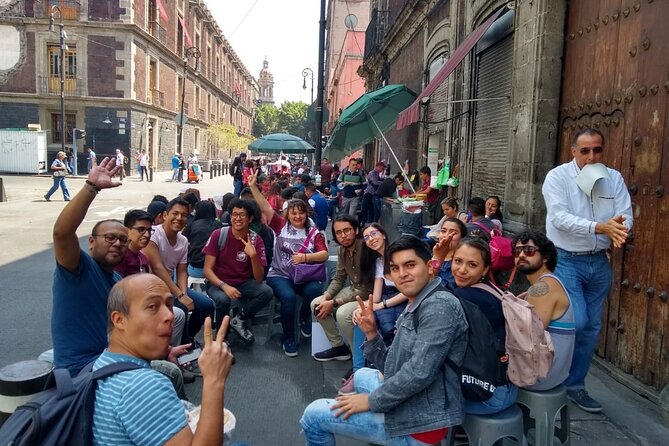
House of Tiles is next, with about 10 minutes on the agenda and free entry. It used to be the residence of the Counts of the Orizaba Valley during the 18th century, and it is now a restaurant.
I like this stop because it shows you how the Centro keeps repurposing old structures. The tile work is part of the visual appeal, but what really sticks with me is the idea that you can experience the past in a place that is still used every day.
The time is short, so do not treat this as your main “learn all the details” moment. Treat it as a contrast stop: you see how serious, monumental buildings relate to human-scale spaces like a house that became a place to eat.
If your group wants a longer break, you could time a snack around this area on your own after the tour. The tour itself keeps moving, and you will appreciate that momentum once you hit the next big site.
San Francisco de Asís: the Franciscan complex that slows you down
Templo y Exconvento San Francisco de Asis is one of the best payoffs on the route. You get about 30 minutes here, and the admission ticket is included.
This is a 16th-century Franciscan complex, the first convent of the Franciscan order. That matters because it makes the building a key early piece of how religious life took root in the city after the conquest, and how architecture was used to project stability and faith.
In a compact walking day, this is where you tend to feel the atmosphere shift. The included ticket helps you spend your mental energy on the place instead of the logistics. Hilary’s explanations also help you see patterns across what you have already visited, like how different eras chose different styles to communicate power.
A consideration: if you are prone to sensory overload, quieter stops might suit you better. Historic sites can still be filled with visitors. The good news is you have enough time here to step out of the main flow, look, and reset.
Zócalo again, closer to how the city actually breathes
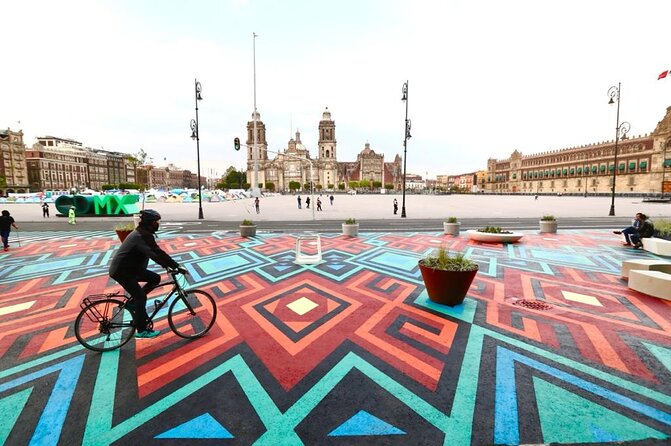
After San Francisco, you return to the heart of it all with a Zócalo segment of about 15 minutes, free entry. You are not here to repeat yourself. You are here to see how the plaza functions as a meeting point, a civic stage, and a hub of movement.
I like this second Zócalo moment because you now have context. The Aztec temple stop, the cathedral, and the presidential area all gave you the layers. Standing back in Zócalo makes those layers feel connected, not separate.
This is also a practical moment for quick photos, a water break, or a bathroom stop if you need one. Since the time is limited, it works best for quick resets instead of long explorations.
If you hate crowds, go with the expectation that Zócalo is one of the most active places in the Historic Center. You can still enjoy it, but it is not a quiet neighborhood square.
Palacio Postal: the working post office and Art Nouveau sparkle
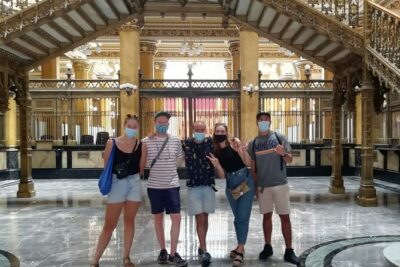
Next is Palacio Postal, with about 15 minutes and admission ticket included. This is a porphyriate building that still functions as a post office, and it is known as an Art Nouveau gem of the area.
I love places that keep working while still looking stunning. Even if you only spend a quarter hour here, you get the feeling that this is part of daily life, not just a museum façade.
What makes this stop feel different is the contrast. You have moved from churches and plazas into a civic service building. That broadens your understanding of the city’s priorities, from faith and government to communication and commerce.
Because the time is short, focus on the architecture and the central interior areas you can see quickly. If you want more, plan a separate visit when you are not on a schedule.
Museo Antiguo Palacio de Iturbide: rotating art in a former imperial home
The final stop is Museo Antiguo Palacio de Iturbide, about 15 minutes and free entry. This place has its own built-in storytelling because it was the residence of the first Mexican emperor, and today it hosts different art exhibitions.
I like ending here because it feels lighter than the heavier political and religious stops. It is still grounded in Mexico City’s layered past, but the experience becomes about art and present-day display rather than pure monument viewing.
Hilary’s balance shows up here too. By the time you reach this museum, you have the background to understand why an emperor’s residence now hosts art rather than authority. It turns the building into an ongoing conversation, not a closed chapter.
A possible drawback: 15 minutes means you might not catch the full exhibition. If you see something you really want to study, you will need a return visit. For a half-day tour, you get the highlight version.
Price and value: what $65 buys you in the Historic Center
This tour costs $65 per person for about 3 to 4 hours, offered in English. For me, the value comes from two things: you are paying for a private guide and you are not absorbing most of the ticket costs yourself.
Tickets and all fees and taxes are included for the places on the itinerary, including Rivera’s mural stop. Several other stops also have admission ticket included, which adds up fast in a museum and historic-site route.
The one cost you should expect is transportation, since it is not included. That is normal for walking tours, but it is worth planning for so you do not lose time figuring out how to connect after the tour ends at Palacio de Bellas Artes.
If you are traveling with a friend or two, this can feel like a smart way to buy time and clarity. Instead of spending your trip day bouncing between places with guesswork, you get a coherent route and explanations that tell you what matters most.
Who should book, and who might want a different style
I think this tour fits best if you want a guided walk through the Historic Center with strong art and architecture storytelling. It is also ideal if you are traveling in a small group and you prefer your own pace over joining a large group.
You should consider another option if your top priority is spending long hours inside buildings. Most stops are designed to be quick hits, with a couple of longer moments like the mural stop and Bellas Artes, but it still stays within a half-day window.
Also, because it is a walking tour with moderate fitness recommended, wear shoes that handle cobblestones and uneven sidewalks. You do not need to be an athlete, but you should be comfortable walking for the length of a typical city morning.
Should you book this private Historic Center tour?
Yes, I would book it if you want a focused, guide-led introduction to Mexico City’s core landmarks, with included tickets that make the day smoother. Hilary’s energy and the way she balances history with art details is a major reason this works, and it is the kind of tour where you leave understanding the city’s layers instead of just collecting stamps.
I would not book it only if you know you want a slow, deep museum day. This is a best-of route, and it moves. If you like variety and you want your feet on the ground while your guide ties the story together, it is a strong value at $65 per person.
FAQ
How long is the Private Tour in the Historic Center of CDMX?
The tour lasts about 3 to 4 hours.
How much does the tour cost?
It is priced at $65.00 per person.
Is this tour private?
Yes. It is a private tour/activity, so only your group participates.
Is the tour offered in English?
Yes, it is offered in English.
Are admission tickets included?
All fees and taxes are included. Tickets for the included places are also included, including tickets for Rivera’s murals. Some stops are listed as free entry as well.
Where do we meet, and where does the tour end?
You meet at Zócalo Central Hotel on Av. 5 de Mayo 61, Centro Histórico. The tour ends at Palacio de Bellas Artes, Av. Juarez S/N, Centro Histórico.
Is transportation included in the price?
No. Transportation is not included.
What if my plans change, can I cancel for free?
Free cancellation is available. You can cancel up to 24 hours in advance for a full refund.
More Tour Reviews in Mexico City






Private Routes Built Around Your Day



More Streets Around the Centro Historico





More Mexico City plans worth opening



Historic Center Walking Tours for the next day.
 ★ 5.0Historic Downtown Walking TourFrom $261,289 reviews
 ★ 5.0Historic Center Food Tour in Mexico CityFrom $1151,263 reviews
 ★ 4.8Historic Downtown Walking TourFrom $261,039 reviews
 ★ 5.0Walking Tour of the Historic Center of Mexico City870 reviews
 ★ 5.0Mexico City Historical Centre Food Tour with 7 Authentic TastingsFrom $65723 reviews
 ★ 4.9Authentic Downtown Food TourFrom $115260 reviews
 ★ 5.0Culinary Secrets of the Centro HistóricoFrom $140257 reviews
 ★ 5.0Walking Tour – Impressive murals in Historical Center of Mexico CityFrom $51224 reviews
This review also appears in