
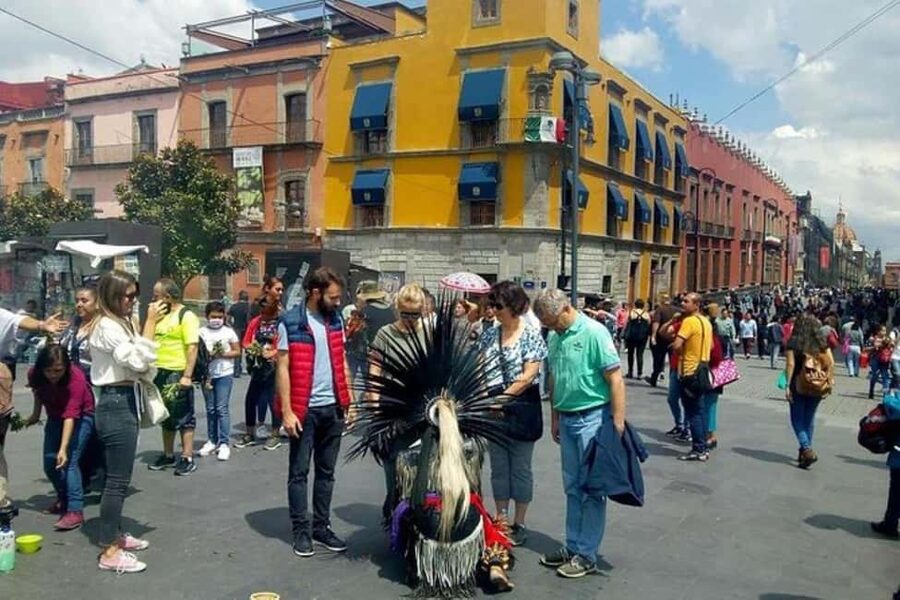
REVIEW · HISTORIC CENTER WALKING TOURS
Mexico City: 10 Wonders of the Historic Center
10 wonders, zero guesswork. In just 3 hours, this route stitches together Mexico City’s layered past right where you’re standing. I especially love how the stops connect Indigenous and Spanish influences into one clear storyline, and I like that you get real food moments, not just photos. The main thing to consider is that this is a walking-focused tour, so if you move slowly, you’ll want to plan your pace from the start.
You’ll start at the Diego Rivera Mural Museum, then glide through the oldest park in the Americas, iconic halls of art and design, and a cathedral that dominates the skyline. You also get a guide who narrates the bigger picture in English or Spanish, with a small group capped at 15 people.
If you’re visiting for the first time, this is a good way to get your bearings fast. Just be ready for quick photo stops at several famous buildings, and confirm with your guide how you’ll handle slow walking before you begin.
Key things I’d plan around
- Alameda Central (oldest park in the Americas): you get a breather between big landmarks.
- Diego Rivera’s mural start: the tour opens with a clear art-history anchor.
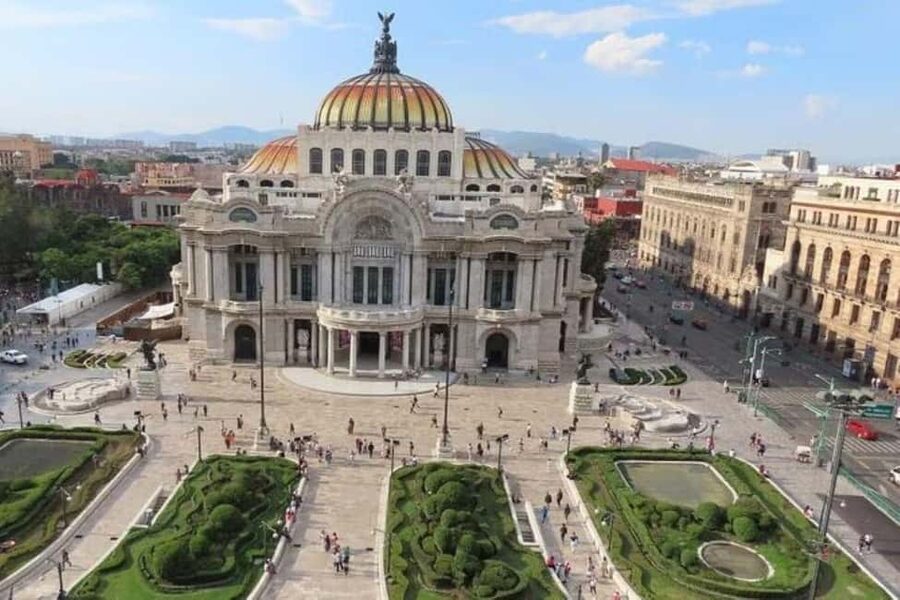
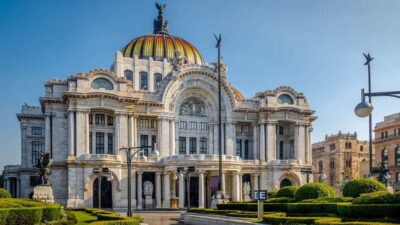
- Palace of Fine Arts and Palacio Postal: you’ll see two different “grand” styles in a short span.
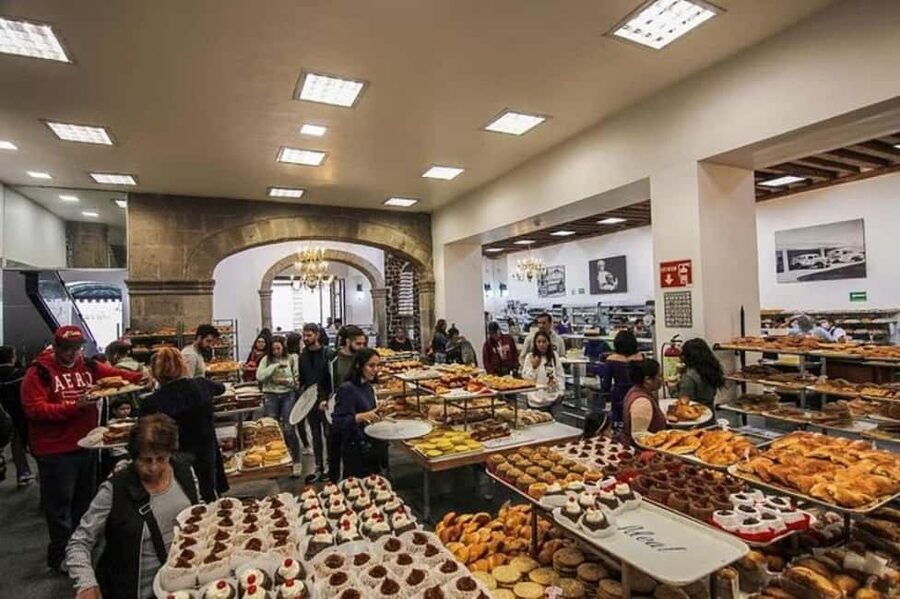
- Bread and sweets stops: you’ll actually taste local favorites, not only snack-sized samples.
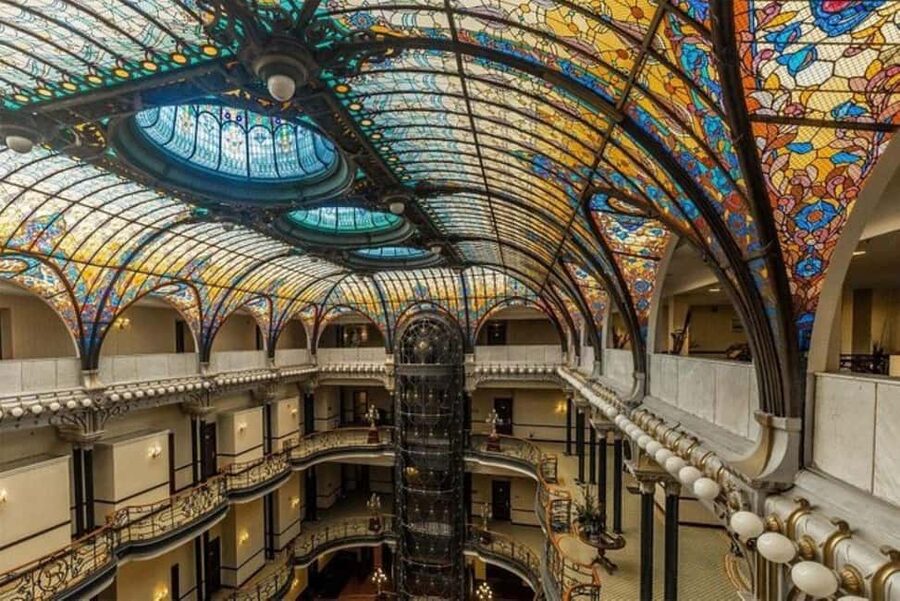
- Gran Hotel de México’s Tiffany-style ceiling: a standout interior moment if you like decorative detail.
- Templo Mayor ruins at the end: the narration lands when you can look down and picture the Aztec layers.
Take another turn around the Zocalo
- Historic Downtown Walking Tour
★ 5.0 · 1,289 reviews - Mexico City: Historic Downtown Walking Tour
★ 4.8 · 1,039 reviews - Walking Tour of the Historic Center of Mexico City
★ 5.0 · 870 reviews - Mexico City Historical Centre Food Tour with 7 Authentic Tastings
★ 5.0 · 723 reviews
The Historic Center, in three hours: why this route works
Mexico City’s Historic Center can feel like a lot, fast. Big plazas. Big churches. Big museums. This tour’s strength is that it doesn’t try to teach everything. It picks 10 essential waypoints and connects them with a story you can follow on foot.
You’ll walk through the city’s “layers”: Indigenous Mexico, colonial power, and then the 20th-century Mexico City that still influences how the streets look today. That blend is the point. It’s not just pretty scenery. It’s why you’ll recognize the city’s themes after you leave.
The route also balances heavy architecture with lighter moments. Alameda Central gives you a pause. Food stops break the sightseeing rhythm. And by the time you reach the Templo Mayor ruins, the history you heard earlier makes the ground under you feel meaningful, not random.
Meeting at GZ + P Arquitectos, and what the 3-hour pace really means
Your tour starts at GZ + P Arquitectos, in the Historic Center area. From there, you’re on a steady walking loop that lasts about 3 hours total.
That timing matters because the tour is designed around a “see it, learn it, move on” format. Several stops are short (often around 10 to 15 minutes), including major exterior photo moments at buildings like the Palace of Fine Arts and the Postal Palace. You’ll feel the pace most at the transitions between locations.
This is also one reason to ask yourself a simple question before booking: can you handle short bursts of walking with occasional pauses? If your mobility is limited or you need a slow pace, it’s smart to bring it up early. One lesson from real-world experiences is that unclear pacing can turn a guided history walk into a stress test.
Practical tip: wear comfy shoes. Bring water. And if you’re traveling with a stroller or wheelchair, the tour notes wheelchair-accessible surfaces and wheelchair accessibility, so you can usually plan your route confidently.
Diego Rivera Mural Museum: start with art that explains the city
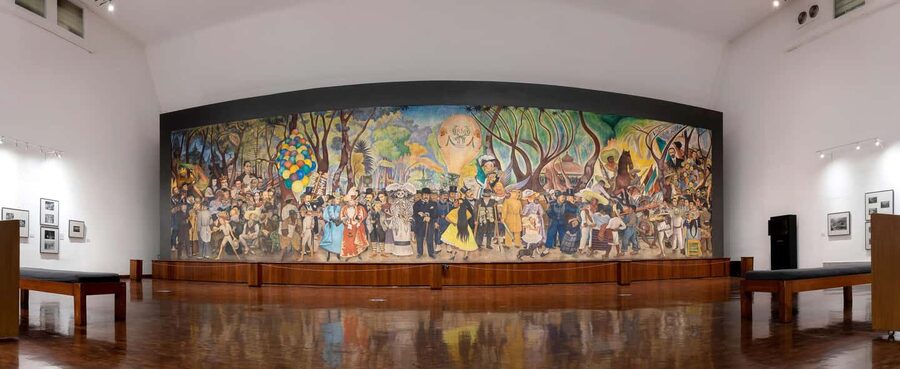
The tour begins at the Diego Rivera Mural Museum, where you’ll admire the mural Dream of a Sunday Afternoon in the Alameda Central.
This is a smart opener because it’s not just “look at a painting.” It’s a way to meet Mexico City through everyday life. Rivera’s work links culture, public space, and the rhythm of city living, all in one image. By the time you walk out into the real Alameda Central, you’ll have a visual reference for what the mural is pointing at.
You’ll spend about 30 minutes here, which is long enough to take it in without feeling rushed. If you like art that connects to social history, this is where the tour starts to feel personal.
One more practical benefit: a museum start gives you momentum. Instead of sprinting into churches first thing, you ease into the day with something that sets a tone.
Take a wider circuit through Mexico City
- Mexico City: Teotihuacan, Tlatelolco & Guadalupe Shrine Tour★ 4.6 · 3,773 reviews
- Teotihuacan Hot Air Balloon Flight from Mexico City / Volare★ 5.0 · 3,262 reviews
- Teotihuacan Private Tour from Mexico City★ 5.0 · 1,890 reviews
- Historic Center Food Tour in Mexico City★ 5.0 · 1,263 reviews
- The best tour to Teotihuacán from Mexico City★ 5.0 · 1,236 reviews
Alameda Central, the oldest park stop you’ll actually enjoy
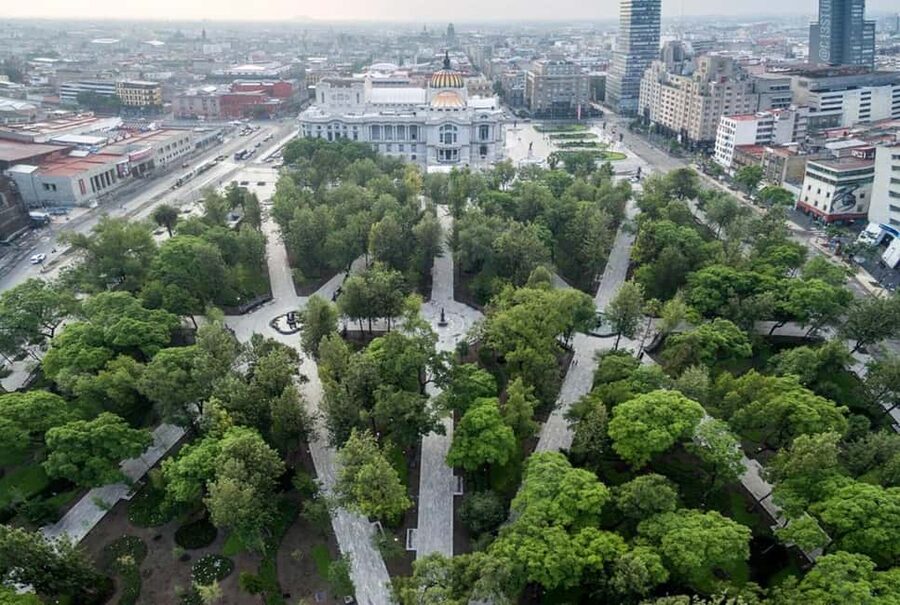
Next up is Alameda Central, the oldest park in the Americas. You’ll have a short walk time here, around 15 minutes, and the key is that it acts like a reset button.
Parks in historic centers often get treated as filler, but this one is part of the story. You can feel the connection between public space and civic life. And because the park sits among major cultural landmarks, it helps you orient yourself. You’ll start recognizing where the big buildings sit in relation to the streets.
If you’re the type who likes a break before your feet revolt, this stop is your friend. Use it to rehydrate, check your bearings, and refocus before the grand interiors and towering facades begin.
Palace of Fine Arts and the Postal Palace: quick photo stops, big visual payoff
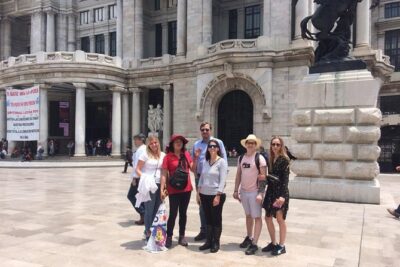
You’ll make a photo stop at the Palace of Fine Arts (with a brief time window), and then you’ll see the Palacio de Correos de México, also known for its striking architecture.
Here’s the value: these are two landmarks that look “famous” from far away, but the details reward closer attention even if you only have a few minutes. You’ll want to glance up and scan for design elements that show the city’s ambition and craft.
A practical note: because these are photo stops, you should be ready for quick timing. If you want more time to photograph, you might need to choose a spot where you can get your shots fast, then keep moving with the group.
Still, for many first-timers, this is the perfect balance. You get the wow factor without spending half a day on one building.
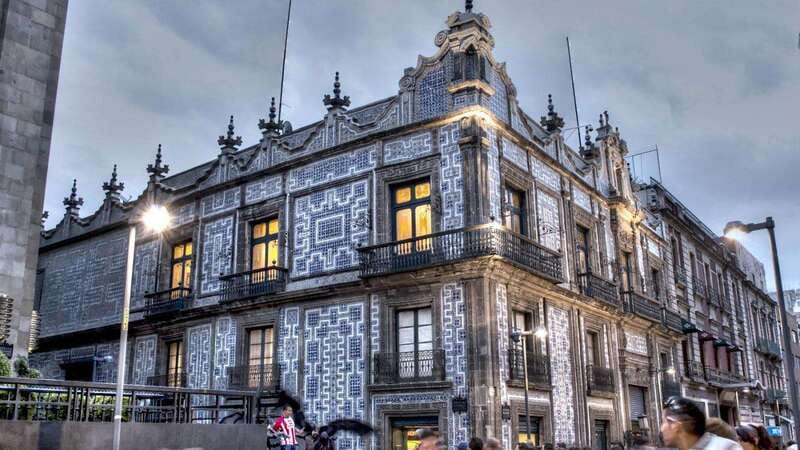
Casa de los Azulejos: glazed tiles and that postcard feel
Then comes Casa de los Azulejos, famous for its tiled facade. You’ll get a photo stop here as well, so think of it as a quick hit of beauty.
The reason this stop fits the tour is simple: it’s a visual signature of colonial-era decorative style. The tiles make the building feel layered and reflective, like the Historic Center’s style is written into the walls.
If you’re the kind of traveler who likes to notice surface details, this is worth your attention even with limited time. Use your minutes to look at how the light hits the tiles, and take a couple of shots from slightly different angles if possible.
Ideal Bakery and Dulcería de Celaya: bread and sweets as history on your tongue
Food is one of this tour’s strongest anchors. You’ll stop at Ideal Bakery to taste traditional bread, and you’ll also visit Dulcería de Celaya for sweets.
This is not only about sugar. It’s about how everyday Mexico City food fits into the historic streetscape. When you eat at the right moment, the tour stops feeling like a checklist and starts feeling like a lived-in city.
The tour structure supports this. You’re not just handed snacks and told to keep walking. You taste traditional bread and sweets as you move from monument to monument, which helps the story land.
If you want an easy win, plan to arrive hungry. And if you’re sensitive to sugar, just go slow and focus on what you can enjoy without overdoing it.
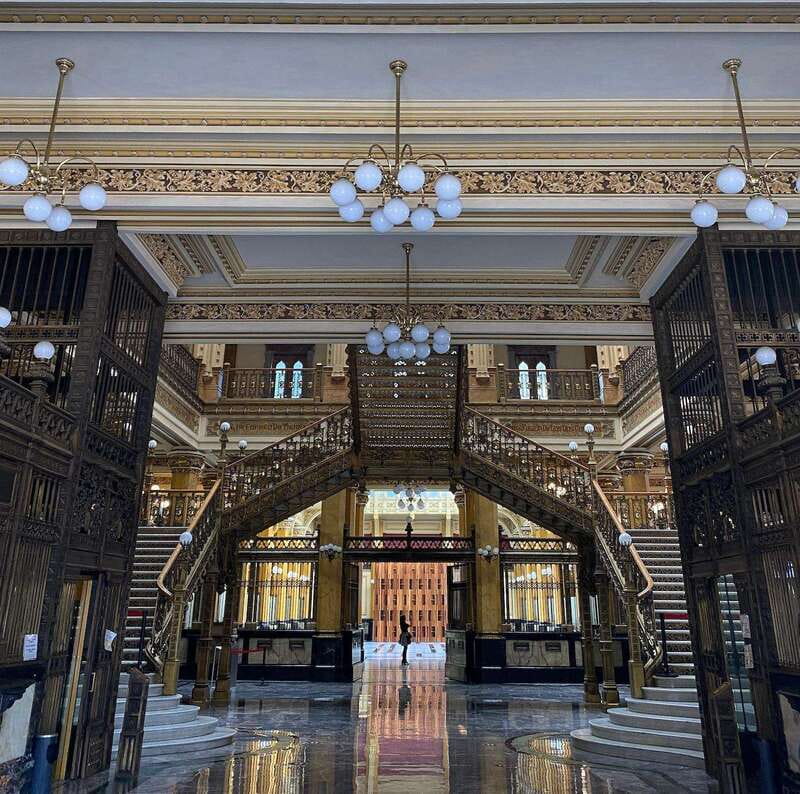
Gran Hotel de México: that famous Tiffany-style stained glass ceiling
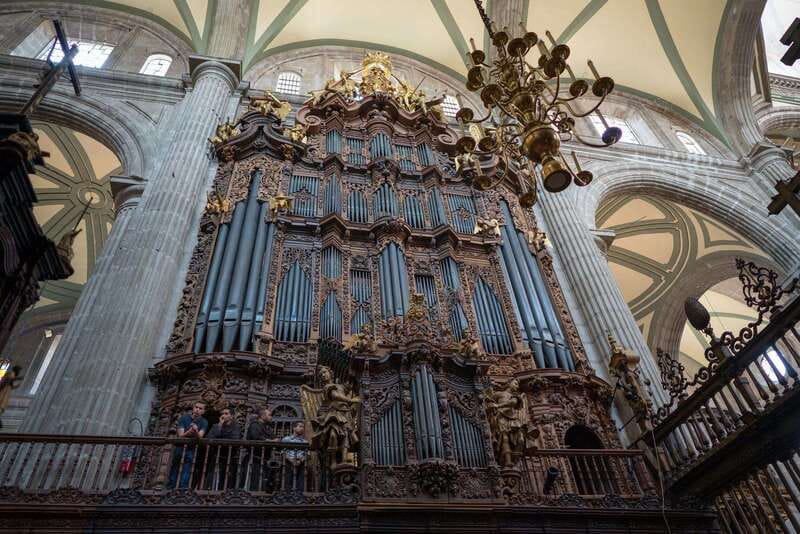
One of the more eye-catching interior moments is the Gran Hotel de México, especially its Tiffany-styled stained glass ceiling.
Even if you’re not a “look at ceilings” person, you’ll understand why this stop gets attention. Stained glass changes the light. You can feel that shift when you look up, and it turns a short pause into a memorable scene.
Because the tour timing is tight, be ready to move with the group once you’ve seen what you came for. If you spend too long trying to capture every detail, you may end up rushing the rest of the route.
Still, this is one of those stops that makes the tour feel more than just outdoor sightseeing. It gives you a change of pace and a place to slow your eyes for a moment.
Metropolitan Cathedral: scale you can feel from the ground
Next is the Catedral Metropolitana de México, which is one of the largest in Latin America.
You’ll have a short visit here, and that’s enough to appreciate its scale and presence. This isn’t a subtle building. It’s the kind of place that communicates power through size, symmetry, and the way it dominates the plaza around it.
In a 3-hour tour, you’re not going to read every panel or study every chapel. Instead, the value is getting the big picture so you know what you’re looking at and why it matters. The guide’s narration is especially useful here, since the cathedral’s role in the city’s story goes beyond its appearance.
Practical tip: bring a moment of patience. Churches can be visually overwhelming at first. Look for one thing at a time: the facade, then the interior focus, then step back and take the whole space in.
Templo Mayor ruins: the Aztec layer under your feet
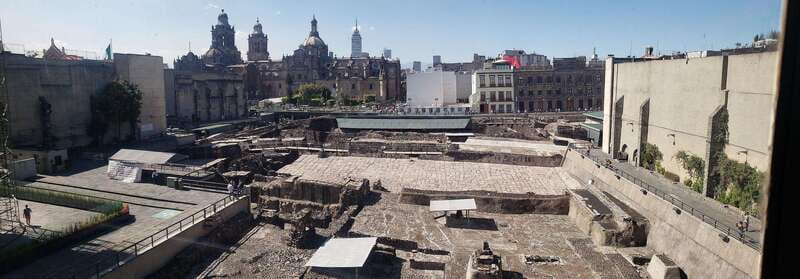
The tour ends at Templo Mayor, including the museum and ruins. You’ll enjoy traditional Mexican food here and get a panoramic photo view, plus narration about the Aztec remains beneath your feet.
This is the emotional payoff of the whole route. Earlier stops gave you the framework. Here, the city’s earlier identity becomes physical and visible in a way you can’t ignore.
Even with a short visit, the key is the shift in perspective. You stop thinking of history as something stored in books and start thinking of it as something built into the ground. That’s why the final narration matters. It reframes what you’ve already seen across the Historic Center.
And yes, the food helps. Eating near the ruins ties the day together. It turns the ending into a celebration, not just a finish line.
Lunch and included tickets: where the $78 value shows up
The price is $78 per person, for about 3 hours. What makes that number feel reasonable is what you’re getting for it: an English or Spanish live guide, entry tickets, fees and taxes, and lunch included. Since private transportation is not included, you’re paying for the experience and access, not for being driven around the city.
So the best value question is this: do you want a guided route that saves you the trouble of figuring out which buildings are worth your time, plus handling admissions and a planned food stop? If yes, $78 starts to look like a practical buy, especially for a first visit.
If you’re the type who prefers wandering completely on your own, you could spend less. But you would also lose the structure and the story that makes the landmarks connect.
Group size is capped at 15 travelers, which helps keep things from turning into a chaotic stampede. A smaller group usually means your guide can actually manage timing and keep the narrative moving.
Who this tour fits best, and who should reconsider
This experience fits well if you want:
- a fast, organized way to see the core of the Historic Center
- a guide-led history story with food stops included
- a mix of art, architecture, and ruins in one half-day
It may be less ideal if:
- you need very long pauses between stops
- you struggle with consistent walking for a 3-hour span
- you dislike rushed photo moments at major exteriors
There’s also a “guide experience” factor. One name that’s been praised is Miguel, noted for deep history knowledge and engaging storytelling. That kind of guide can make the whole route feel fun and coherent.
On the flip side, there have been negative experiences tied to unclear pacing, lateness, and a guide not staying fully on track. I can’t predict which guide you’ll get. But you can manage the risk by setting expectations at the start about timing and pace, especially if you have any mobility needs.
Should you book Mexico City: 10 Wonders of the Historic Center?
I’d book this tour if it matches your travel style. It’s efficient, well-structured, and it includes the stuff that usually costs extra or adds hassle: entry tickets, lunch, and guided storytelling.
You should also book if you like your sightseeing with a food payoff, since the bread and sweets stops (Ideal Bakery, Dulcería de Celaya, and the meal near Templo Mayor) help the day feel human, not mechanical.
Skip or rethink if you want lots of slow time in museums, or if you can’t handle a walking loop. In that case, consider whether you need a slower, more flexible format.
Bottom line: this is a strong “first taste” of Mexico City’s Historic Center, especially if you want the highlights without spending your morning planning.
FAQ
How long is the tour?
The tour lasts about 3 hours.
Where does the tour start?
The starting location is GZ + P Arquitectos.
How much does it cost?
The price is $78 per person.
What is included in the price?
It includes all fees and taxes, a guide, lunch, and entry tickets.
Is transportation included?
No, private transportation is not included.
What language is the tour guide?
The live tour guide is available in English and Spanish.
How big is the group?
The tour has a maximum of 15 travelers.
What is the cancellation policy?
You can cancel up to 24 hours in advance for a full refund.
Mexico City in a Wider Frame




More Tour Reviews in Mexico City






More Streets Around the Centro Historico




More Mexico City plans worth opening




Historic Center Walking Tours for the next day.
 ★ 5.0Historic Downtown Walking TourFrom $261,289 reviews
 ★ 5.0Historic Center Food Tour in Mexico CityFrom $1151,263 reviews
 ★ 4.8Historic Downtown Walking TourFrom $261,039 reviews
 ★ 5.0Walking Tour of the Historic Center of Mexico City870 reviews
 ★ 5.0Mexico City Historical Centre Food Tour with 7 Authentic TastingsFrom $65723 reviews
 ★ 4.9Authentic Downtown Food TourFrom $115260 reviews
 ★ 5.0Culinary Secrets of the Centro HistóricoFrom $140257 reviews
 ★ 5.0Walking Tour – Impressive murals in Historical Center of Mexico CityFrom $51224 reviews
This review also appears in