
REVIEW · FRIDA KAHLO & COYOACAN TOURS
La Catrina & Muralism: Diego Rivera’s Legacy & Frida Kahlo
Diego Rivera’s murals turn everyday streets into big ideas. This 3-hour tour connects muralism, La Catrina, and the Rivera-Frida story in an easy, guided walk.
I especially love how the guide explains symbolism you would miss on your own, the sort of details that make a mural feel personal instead of just impressive. I also like the way the route hits key stops linked to Rivera’s rise and the cultural impact that still shows up today.
One watch-out: it is mostly walking, and you cannot bring luggage or large bags. If you hate being on your feet for a solid stretch, plan lighter and wear comfortable shoes.
Key moments you will love
- Colegio de San Ildefonso start: where the mural story gets its “how it all began” context
- Museo Vivo del Muralismo: a guided look at murals as social messages, not just decoration
- La Catrina explained: the Day of the Dead symbol and why it travels beyond Mexico
- Rivera and Frida connection: you’ll hear where their romance began and how it fed the art
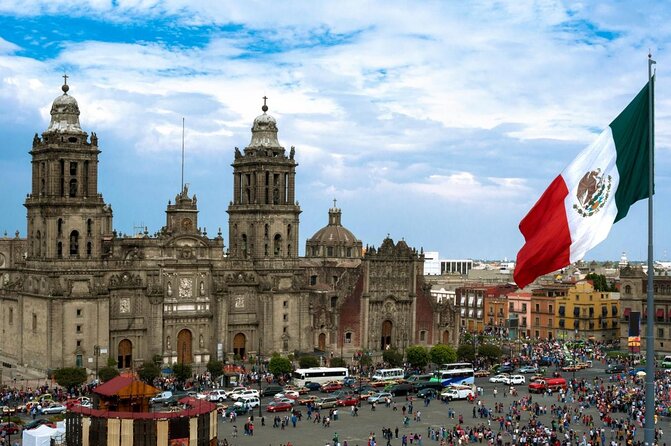
- Palacio de Bellas Artes finale: a strong Mexico City finish after murals and meaning
Stay south for more Coyoacan and Casa Azul
- Xochimilco, Coyoacan and Frida Kahlo with Optional Lunch
★ 4.5 · 7,320 reviews - CDMX: Xochimilco, Coyoacan, Frida Kahlo Museum & Murals Tour
★ 4.4 · 3,025 reviews - Frida Kahlo VIP [Museum Tickets Included] Bike, Markets & Churros
★ 5.0 · 1,072 reviews - Frida Kahlo VIP [Museum Tickets Included] Walk, Markets & Churros
★ 5.0 · 982 reviews
Why Rivera, Frida, and La Catrina belong together
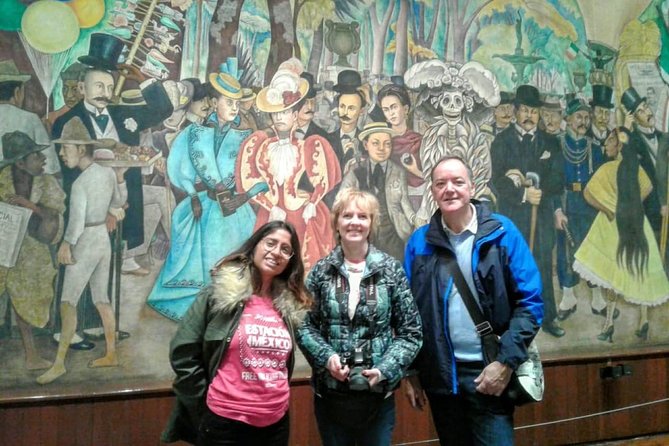
This tour works because it links three things that are usually separated in guidebooks: the art movement (muralism), the two biggest names (Diego Rivera and Frida Kahlo), and the icon (La Catrina).
Muralism is not just painting on walls. It is art meant for public life, often with social critique, history, and national identity packed in. And La Catrina is the same idea in a different costume. She is the Day of the Dead figure that helps people talk about memory, loss, and tradition in a way that is both respectful and openly theatrical.
You will leave with a clearer sense of why Rivera’s murals became cultural touchstones, and why Frida’s story is still part of Mexico’s visual language today.
Meeting at Colegio de San Ildefonso, with the right kind of momentum
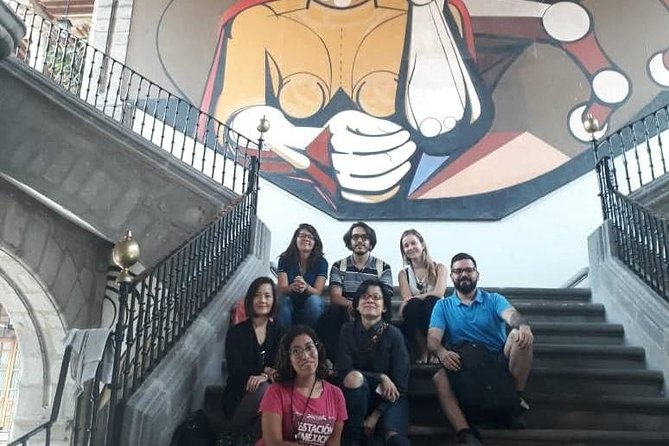
The day starts in front of the entrance of Colegio de San Ildefonso. Look for the guides in pink shirts and umbrellas. It is a good setup because you can spot your group fast, then walk in while your brain is still fresh for art history.
This matters more than it sounds. Starting at a place tied to the origins of muralism gives you a framework before you see the famous works. Instead of treating each mural like a standalone masterpiece, you start connecting themes, techniques, and the artists’ intentions.
Your guide is the difference-maker here. In the groups I followed online, guides like Sam and Jesús got praised for explaining the symbolism under the paint, clearly and without making you feel like you need a museum degree.
Former College of San Ildefonso: the story behind the walls
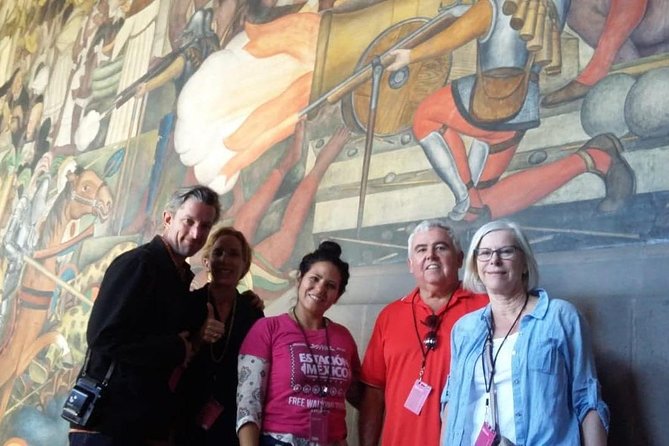
At Colegio de San Ildefonso, you get a guided visit that sets up Rivera’s artistic vision and the broader push behind muralism. Think of it as the “why” before the “wow.”
You will also hear about the Mexico City and national identity context that muralists were fighting for. These murals were not created in a vacuum, and the guide’s job is to show you what pressures and ideas shaped what you see.
A good moment to watch for: how the guide teaches you to read murals. You start noticing recurring symbols and the sense of narrative flow, not just faces and figures. That is where the tour becomes more than sightseeing.
Read another wall painted across the capital
- CDMX: Xochimilco, Coyoacan, Frida Kahlo Museum & Murals Tour★ 4.4 · 3,025 reviews
- Mexico City; ART NACO : Murals & Street Art Bike Tour★ 5.0 · 284 reviews
- EXCLUSIVE TOUR Casa Estudio Frida Kahlo-Diego Rivera Small Groups★ 5.0 · 237 reviews
- Walking Tour – Impressive murals in Historical Center of Mexico City★ 5.0 · 224 reviews
- La Catrina & Muralism: Diego Rivera’s Legacy & Frida Kahlo★ 4.5 · 197 reviews
Museo Vivo del Muralismo: learning the language of murals
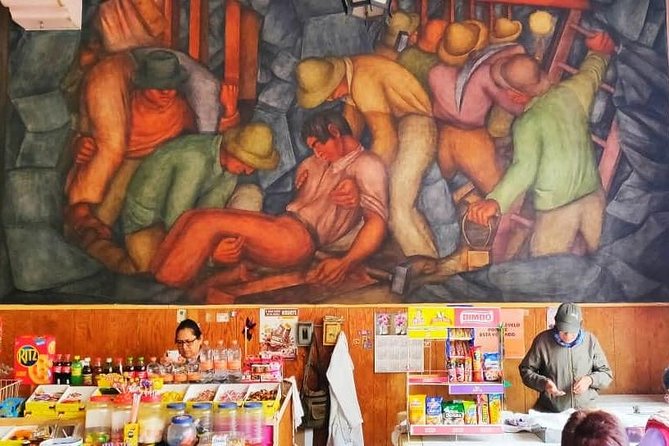
Next up is Museo Vivo del Muralismo, a guided tour focused on how muralism works as a public art form. This is where you shift from “I like murals” to “I can interpret murals.”
You can expect explanations of the historical context and the stories behind murals, plus the techniques and decisions artists used to make large-scale art communicate clearly. The goal is simple: help you see murals as a mix of beauty, tradition, and social critique, not as propaganda or decoration.
This stop also helps you understand why muralism mattered internationally over time. Public art like this is meant to be seen, discussed, and remembered. When it is done well, it becomes part of how a country tells its own stories.
If you are traveling with kids, this is a strong stop. In one family experience, the guide was described as patient and enthusiastic, and the kids stayed engaged because explanations were paced and inclusive. That kind of approach really helps here, because mural symbolism can get complicated fast if the guide rushes.
A short public transport segment, and why it makes the route make sense
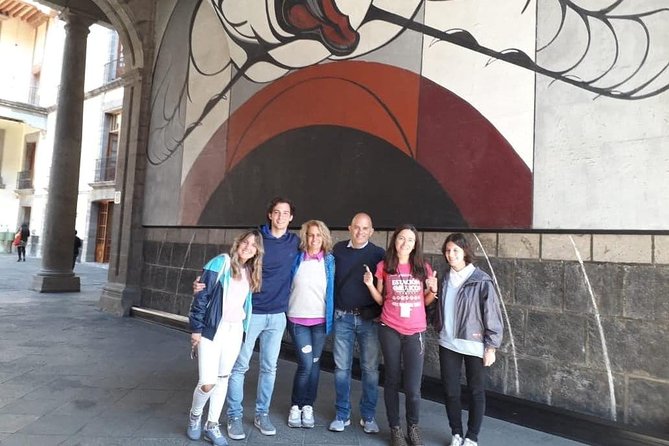
You then take public transport for about 20 minutes. This is a practical detail, but it is also a gift: it breaks the walk and keeps the day efficient without turning it into a car-only tour.
Plan for a quick transit window. Bring sunscreen if it is bright, and keep your water situation simple since meals and drinks are not included. This segment is short enough that you can reset, but long enough that you are not stuck in one neighborhood bubble the whole time.
If you like your tours with a bit of real-world movement, this part feels normal instead of staged.
Diego Rivera Mural Museum: where art history turns personal
The Diego Rivera Mural Museum is a big reason people choose this experience. Here, you get guided time to connect Rivera’s legacy to the murals you are seeing and the cultural identity muralism helped shape.
What you will appreciate is how the guide links technique and story. You are not just hearing names and dates. You are being shown how the work communicates, how it reflects the period, and how it still resonates.
One highlight tied to Frida Kahlo: you may get pointed to an amphitheater area connected with where Diego Rivera met Frida Kahlo. That kind of location detail adds a human layer to what could be a purely academic museum stop.
In a separate family-friendly experience, the guide also helped connect art and history so everything felt linked, not like three separate visits stitched together.
Palace of Fine Arts and Palacio de Bellas Artes: finishing at Mexico City’s art heart
The day ends at Palacio de Bellas Artes, after a guided visit connected with the Palace of Fine Arts area. This is a smart finish. It gives you a payoff space, a grand setting where the arts feel like the main event.
After hours of murals and symbols, you can step back and see how Mexican art continues to evolve in form. Muralism is public and wall-based. Bellas Artes is formal and performance-oriented. Ending here makes the contrast feel like a conversation instead of a mismatch.
It also helps you reset your eyes. If the murals have your brain working in symbol-reading mode, this final stop lets you look more freely, appreciate scale, and reflect on what you learned.
La Catrina: the Day of the Dead icon you will finally understand
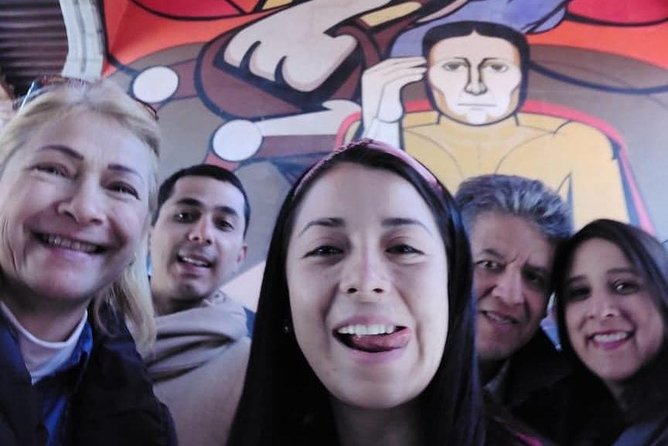
La Catrina is part of the tour in a very specific way, and it is worth your attention. The guide explains La Catrina as an iconic depiction tied to Day of the Dead symbolism, and you learn why the image is recognized internationally.
The bigger takeaway is this: La Catrina is not just a costume. It is a visual language for thinking about memory and mortality through ritual and humor. When you see how muralism artists used public imagery to carry meaning, La Catrina stops feeling like a random figure and starts feeling like a continuation of the same idea.
You may also hear how La Catrina shows up in films and Mexico City’s famous Day of the Dead parade. That connection is useful because it shows how a mural-era image can become modern pop culture without losing its roots.
If you are visiting Mexico City around late October to early November, this part can make your festival experience more meaningful. Even if you are not, you will still walk away with context for the icon you will spot elsewhere.
Rivera and Frida: how the romance story fits the murals
One of the tour’s strengths is that it treats the Rivera-Frida story as more than gossip. You get the relationship context, including where their romance began, and you learn how that passion and turbulence inspired much of Rivera’s work.
This is also why a local guide matters. Guides can point out how emotional and political themes show up in visual choices, how figures and scenes carry meaning, and how the art reflects the reality of the people behind it.
If you like your art history human, not just factual, this tour delivers. You get the story, then you connect the dots between that story and what the murals are doing on the wall.
Price and value: what $58 gets you in real terms
At $58 per person for 3 hours, the price is fair if you look at the day like an art education, not just a walk between photo spots.
You are paying for guided visits at multiple sites, including the birthplace context for muralism, a dedicated mural museum experience, and time tied to major Mexico City art landmarks. You also get La Catrina explanation and the Rivera-Frida story woven into the stops.
The value gets even better because you are not just looking at one mural. You are building a framework for how to read murals, and that makes your future museum time stronger too. If you already love Mexican art, this tour can save you time later because it gives you a mental map.
Main trade-off: you are not getting meals and drinks. Plan for snacks on your own if your schedule needs it.
Logistics you should plan for before you go
Here’s how to make the tour feel smooth instead of stressful:
- Bring comfortable shoes. The experience involves walking and it is better if your feet are happy.
- Wear sunscreen if it is sunny, since you start outside and move between stops.
- Leave luggage or large bags behind. Not allowed includes food, flash photography, bags, and baby carriages, so travel light.
Also, there is a public transport segment, about 20 minutes, so your tour rhythm will include waiting and riding time. If you hate group pacing, this could feel a bit structured, but most people find it manageable given the short overall duration.
On language: guides offer Spanish and English. If you are comfortable with either, you are in good shape.
Who should book this tour (and who might want to skip it)
Book it if you want a guided route that connects muralism to real people, real symbolism, and real cultural identity. I also think it is a great “first art day” for first-time Mexico City visitors because it gives you context quickly.
It is also a strong family option if your kids can handle museum-like explanations for a few hours. One family experience specifically highlighted that kids ages 12 and 10 felt included, and that the guide stayed patient and enthusiastic while keeping the information understandable.
You might skip it if you want lots of free time to wander on your own, or if you dislike walking and want a mostly seated experience. This is a guided art story with stops, not a do-your-own-pace museum day.
Should you book La Catrina & Muralism?
If you are curious about why Mexican murals are more than decoration, this tour is a smart choice. The $58 price feels justified when you factor in multiple guided museum stops, the La Catrina symbolism lesson, and the Rivera-Frida relationship context that ties the whole experience together.
I would book it if you want to leave with clearer “how to read murals” skills, not just photos. And I’d especially recommend it if you want a structured start to your Mexico City art time, with a memorable Day of the Dead icon woven in.
FAQ
Where does the tour start?
The guides wait in front of the entrance of Colegio de San Ildefonso. You can look for them wearing pink shirts and using umbrellas.
How long is the La Catrina & Muralism tour?
The tour lasts 3 hours.
How much does the tour cost?
It costs $58 per person.
What languages are the guides?
The live tour guide offers Spanish and English.
Is the tour wheelchair accessible?
Yes, the tour is listed as wheelchair accessible.
What is included in the tour price?
Included are visits to the birthplace of muralism, guided exploration of Diego Rivera’s history and artistic vision, insight into Diego Rivera and Frida Kahlo’s relationship, guided tours at the mural-related stops, and learning about La Catrina.
Are meals and drinks included?
No, meals and drinks are not included.
What should I bring?
Bring comfortable shoes and sunscreen.
What is not allowed during the tour?
Luggage or large bags are not allowed. Food, flash photography, bags, and baby carriages are also not allowed.
Is there free cancellation?
Yes, you can cancel up to 24 hours in advance for a full refund.
More Tour Reviews in Mexico City



Murals Across the Capital




Coyoacan Beyond the Blue House



More Mexico City plans worth opening



Frida Kahlo & Coyoacan Tours for the next day.
 ★ 4.5Xochimilco, Coyoacan and Frida Kahlo with Optional LunchFrom $347,320 reviews
 ★ 4.4Xochimilco, Coyoacan, Frida Kahlo Museum & Murals TourFrom $893,025 reviews
 ★ 5.0Frida Kahlo VIP [Museum Tickets Included] Bike, Markets & ChurrosFrom $831,072 reviews
 ★ 5.0Frida Kahlo VIP [Museum Tickets Included] Walk, Markets & ChurrosFrom $83982 reviews
 ★ 5.0EXCLUSIVE TOUR Frida Kahlo Museum – SMALL GROUPSFrom $86901 reviews
 ★ 4.5Frida Kahlo Museum Entry Ticket w/Digital GuideFrom $34683 reviews
 ★ 5.0Private City Tour in Frida Kahlo, Coyoacan, and XochimilcoFrom $195626 reviews
 ★ 5.0PREMIUM Frida Kahlo Museum and Xochimilco (Small Groups)From $80549 reviews
This review also appears in