
REVIEW · HISTORIC CENTER WALKING TOURS
Half-Day Small-Group Historical Center Mexico City Tour
Bikes roll, history speaks. This small-group historical center ride mixes bike time, real street-level context, and major landmarks like the Zocalo and Templo Mayor area. You cover ground efficiently, then stop to understand what you’re seeing instead of just passing it.
I love the max 10 people setup with two guides, which keeps the pace human and the questions flowing. I also really like that you start with an orientation at Bazar Fusion, plus a snack and a chance to settle into riding before you hit the busier streets.
One consideration: the tour’s sights are mostly short stops, and Templo Mayor is viewed from outside only. If you want a full museum experience at every stop, you may want to add time on your own after the ride.
Key highlights to know before you go
- Two-guide, max-10 format for tighter attention and safer-feeling biking
- Bazar Fusion orientation first, including a snack and biking tips for Mexico City streets
- Plaza Tlaxcoaque mural stop for quick local flavor beyond the big-ticket monuments
- Rivera mural visit in La Alameda, with museum entry included
- Zocalo and Revolution monuments explained on the ride, not just photographed from a distance
Take another turn around the Zocalo
- Historic Downtown Walking Tour
★ 5.0 · 1,289 reviews - Mexico City: Historic Downtown Walking Tour
★ 4.8 · 1,039 reviews - Walking Tour of the Historic Center of Mexico City
★ 5.0 · 870 reviews - Mexico City Historical Centre Food Tour with 7 Authentic Tastings
★ 5.0 · 723 reviews
Why this bike tour works so well in Mexico City
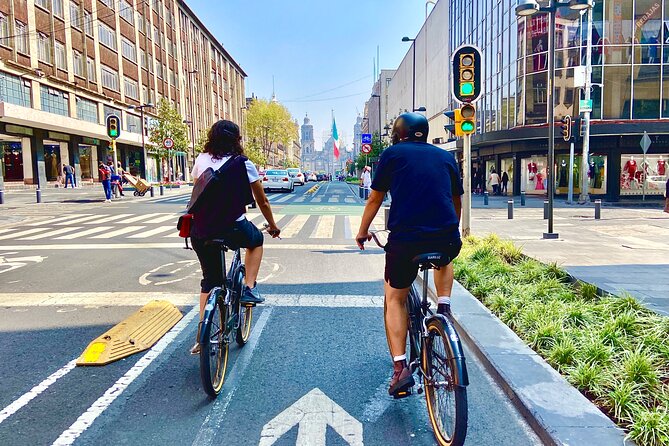
Mexico City is huge, and Centro Historico can feel like information overload on foot. This tour solves that problem by moving you by bicycle, so you get location context and historical storytelling without spending the whole day waiting or wandering.
The best part is the balance between scale and detail. You get big anchors like the Zocalo, then smaller stops where guides point out things most people miss, like a mural at Plaza Tlaxcoaque or architectural cues in older church buildings. That mix is how the city starts making sense fast.
Start point near Juarez, then a simple plan for riding
The tour meets at Londres 37, Juárez, Cuauhtémoc, and it runs for about 4 hours starting at 9:00 am. You end back at the same meeting point, which makes logistics easy on your travel day.
Bikes are provided, and helmets are optional but included. You do not need to bring equipment, which is a big deal in a city where you may not want to carry extra gear around all morning.
One small but smart detail is the early focus on how to bike in Mexico City. At the first stop, Bazar Fusion, you get an intro to what you’ll see and how to ride through the flow of streets. This matters because confidence on a bike comes from knowing the rhythm of the route, not from hoping for the best.
Stop-by-stop: from Bazar Fusion to Plaza Tlaxcoaque
Take a wider circuit through Mexico City
- Mexico City: Teotihuacan, Tlatelolco & Guadalupe Shrine Tour★ 4.6 · 3,773 reviews
- Teotihuacan Hot Air Balloon Flight from Mexico City / Volare★ 5.0 · 3,262 reviews
- Teotihuacan Private Tour from Mexico City★ 5.0 · 1,890 reviews
- Historic Center Food Tour in Mexico City★ 5.0 · 1,263 reviews
- The best tour to Teotihuacán from Mexico City★ 5.0 · 1,236 reviews
Bazar Fusion, snack plus riding orientation
The ride kicks off at Bazar Fusion, where you’ll be welcomed with a snack and given a roadmap for what’s ahead. You also get practical guidance on driving a bicycle in Mexico City, which is the difference between biking as an activity and biking as transportation.
This stop sets the tone. By the time you roll away, you’re not just thinking about pedals, you’re thinking about landmarks and why they matter.
Plaza Tlaxcoaque, quick history and a street mural
Next you pause at Calle Tlaxcoaque, stopping in Plaza Tlaxcoaque for about 15 minutes. The guides explain the history tied to this area and you also check a street mural up close.
This is a good example of why the tour feels more grounded than a checklist. A big plaza can be a photo stop, but a mural turns it into a living conversation between neighborhoods and time.
Regina Coeli to the Zocalo: architecture and the city’s center
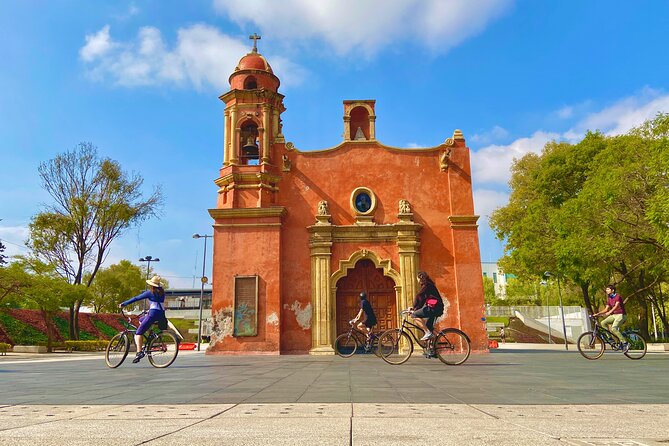
Regina Coeli Parish, convent church architecture
At Regina Coeli Parish, you get around 30 minutes. This is a Roman Catholic parish church that was originally part of a convent in the historic center, and the guides focus on architecture and local importance.
If you like old buildings, this stop is where you’ll slow down mentally. You’re not asked to be a scholar, but you are guided to notice structure and intent, which makes the scene stick in your memory later.
Zocalo, the heart of Mexico City
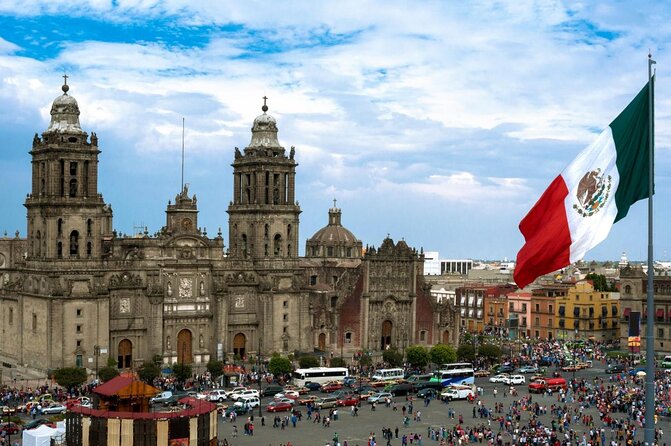
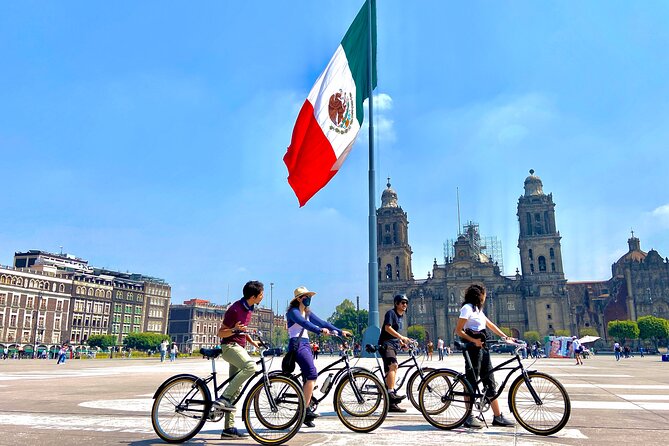
Then comes the Zocalo, visited for roughly 15 minutes. This is one of those places where the scale is obvious, so the value here is interpretation.
The guides connect the space with the layered history tied to it, so you’ll understand why this plaza holds so much meaning to locals. You also benefit from seeing it as part of a larger route, rather than as a single isolated “must-see.”
Templo Mayor from outside: why it still feels powerful
The tour visits Museo del Templo Mayor for about 15 minutes, but from the outside only. Admission for this stop is not included, and it’s not a full museum visit on the ride.
Still, it’s worth the stop. The site is described as the literal center of the Aztec empire, and only part is visible today because the rest sits under the colonial-era buildings surrounding it. Even viewed externally, the idea hits you: layers of Mexico City history are physically stacked.
One practical note for you: if you end up wanting more at Templo Mayor, this tour gives you the orientation. It’s a strong teaser, then you can decide whether to return for a deeper look later.
La Alameda and the Museo Mural Diego Rivera
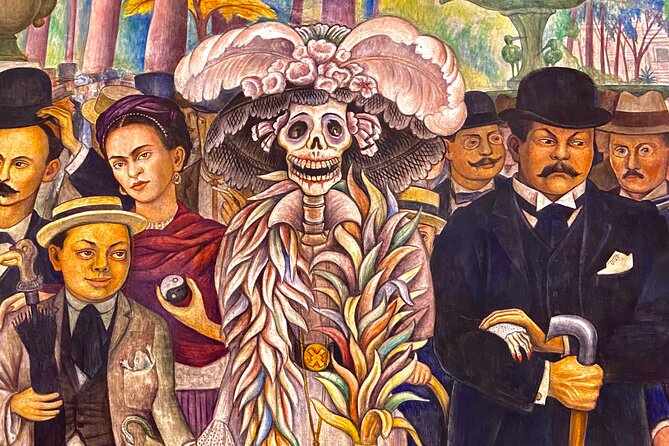
This is one of the most rewarding stops on the route. You reach Museo Mural Diego Rivera, spend about 40 minutes, and the museum admission is included.
Diego Rivera’s mural here tells the story of Mexico in the context of La Alameda, the park where the museum is located. The guides are strong on muralism, which makes a difference because murals can look like art first and history second. With coaching, you read symbols and themes instead of just admiring the surface.
Also, this is a natural break in the tour rhythm. The biking pauses here, and the stop feels less like “another photo point” and more like a designed cultural experience.
Passing Bellas Artes, then stopping for the Revolution monument
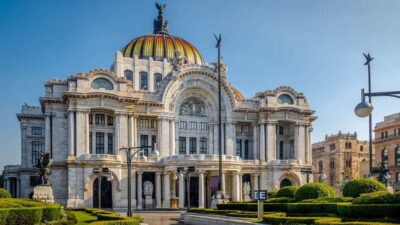
Palacio de Bellas Artes, a quick architecture lesson
You pass by Palacio de Bellas Artes for around 5 minutes. The discussion focuses on architecture and how the Mexican Revolution interfered with its construction. Admission is not included, and you’re not going inside.
This is good if your goal is broad coverage. It’s less ideal if you want time to tour the building itself, so treat it as a guided pointer toward something you might explore later.
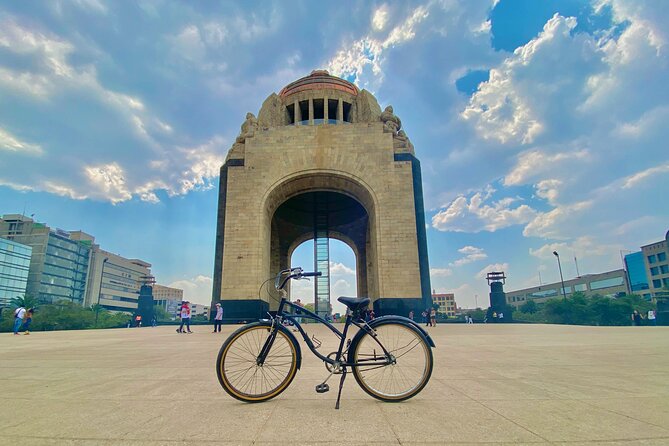
Monumento y Museo de la Revolucion, explained in the middle
Next comes Monumento y Museo de la Revolucion. You drive past it, then there’s a 20-minute stop where the guides explain the Mexican Revolution. Admission is not included.
This stop works well because it combines scale with meaning. You’re in the right place to understand why the monument stands so prominently, and you get historical context right when you’re looking at it, not after the fact.
Safety and attention: why the guides matter
A big theme from the experience is how the team handles the real-world challenge of biking in Centro. Multiple guides show up in the story of this tour, including Velia, Valentino, Augustine, Valentin, Isaac, Miranda, and Amistad.
The most important practical takeaway for you: the guides operate as a pair. One of them manages the flow and helps keep the group together while another leads explanations and helps coordinate movement. That matters when streets get crowded or when you need to cross through traffic patterns.
Some names pop up repeatedly in the accounts of smooth, confidence-building rides, including Amistad, who’s described as protective in the street and good at handling the moment-to-moment needs of the group. You do not have to fear biking, but you should bring a calm, cooperative mindset.
One more human detail that stands out: the team has a track record of checking in on guests in tough moments. In one case, they helped a rider feel better after illness by staying attentive and offering help until they were steady again. That kind of care makes the tour feel like it’s run by people who see travelers as real people, not just a headcount.
Food and lunch on this half-day route
The tour includes lunch plus a welcome snack at the start. Even if you keep your expectations modest, the way food fits into the morning is the point: you’re learning history while also getting a taste of daily life.
From the experience accounts tied to this tour style, the food angle tends to focus on local, not tourist-only. There are mentions of street-food-style sampling and a pastry stop that felt unusually good, like it was connected to wholesale-level freshness.
You’ll likely appreciate this most if you like your history to come with real-world texture. You’re not just learning about buildings, you’re also learning how people eat and move around the neighborhood around those buildings.
How much walking you should plan for
This is a biking tour first. Most time is spent riding between short stops, with each stop typically lasting around 5 to 40 minutes.
That said, you should be prepared to stand and look closely for short bursts. You’ll also want to keep a little flexibility for your group’s pace, since small-group tours can slow down when someone has a good question.
The tour notes ask for moderate physical fitness. That’s a polite way of saying you should feel comfortable with several hours of active biking and short periods on your feet.
Who should book, and who might want a different plan
This tour is a great fit for you if:
- You want a first-time-friendly way to understand Centro Historico without getting lost
- You like combining cycling with guided history
- You prefer a small group where you can actually interact, not just follow a headset
It might not be the best choice if:
- You want long museum time, because some stops are brief and Templo Mayor is outside only
- You expect every big monument to involve an extended visit, since Palacio de Bellas Artes is a pass-by
If you’re traveling with teens or a mixed group, the small size and two-guide setup tends to work well because explanations can be paced for different interests.
Should you book this Mexico City historical bike tour?
Yes, if you want a high-return half day that turns Centro into something you can understand, not just photograph. The structure is made for momentum: you ride, you stop, you learn, you eat, then you ride again. That rhythm is exactly what helps the city stick in your head.
I also like the value logic here. You get bicycle use, optional helmets included, and lunch, plus guided context at multiple stops that many people would see separately. And because it caps at 10 travelers with two guides, you’re not paying for generic group commentary.
Book it with eyes open about what it is not. It’s not a slow, deep museum day, and it doesn’t replace going inside Templo Mayor or Bellas Artes on another visit. But as an introduction and an efficient historical primer, it’s strong.
If you’re in Mexico City for a short trip or you want to hit the big Centro highlights while also learning what you’re looking at, this is a smart pick.
FAQ
What is the duration and start time?
The tour runs for about 4 hours and starts at 9:00 am.
Where does the tour meet?
The meeting point is Londres 37, Juárez, Cuauhtémoc, 06600 Ciudad de México, CDMX, Mexico. The tour ends back at the meeting point.
Do I need to bring a bike or helmet?
No. The tour includes use of a bicycle, and optional helmets are included. You should bring yourself ready to ride.
Is lunch included?
Yes. Lunch is included, along with a snack at the start.
Which stops require extra admission or are outside only?
Museo del Templo Mayor admission is not included, and you only check the temple from outside. Museo Mural Diego Rivera has admission included. Other stops listed are free, and Palacio de Bellas Artes and Monumento y Museo de la Revolucion are not included.
Is free cancellation available?
Yes, you can cancel for a full refund up to 24 hours in advance of the start time. Cancel later than that, and the paid amount is not refunded.
More Tours in Mexico City

More Tour Reviews in Mexico City



More Streets Around the Centro Historico





More Mexico City plans worth opening

Historic Center Walking Tours for the next day.
 ★ 5.0Historic Downtown Walking TourFrom $261,289 reviews
 ★ 5.0Historic Center Food Tour in Mexico CityFrom $1151,263 reviews
 ★ 4.8Historic Downtown Walking TourFrom $261,039 reviews
 ★ 5.0Walking Tour of the Historic Center of Mexico City870 reviews
 ★ 5.0Mexico City Historical Centre Food Tour with 7 Authentic TastingsFrom $65723 reviews
 ★ 4.9Authentic Downtown Food TourFrom $115260 reviews
 ★ 5.0Culinary Secrets of the Centro HistóricoFrom $140257 reviews
 ★ 5.0Walking Tour – Impressive murals in Historical Center of Mexico CityFrom $51224 reviews
This review also appears in