
REVIEW · MURALS & STREET ART TOURS
2 Hours of Mexican Muralism with an Art Lover
Murals in two and a half hours is smart. This Mexican muralism tour strings together three major art stops, so you get the story of the movement without wasting time. I especially like the chance to ask questions, because your guide (José) is energetic and clearly loves the subject. The second big plus is the way the tour moves from the famous muralists to the murals themselves. One thing to plan for, though, is that museum entrances are not included for Palacio de Bellas Artes and Antiguo Colegio de San Ildefonso, with an additional MX$150 per person cost.
You also get a tight, central-day route through some of Mexico City’s most important landmarks. Expect time at Palacio de Bellas Artes, then a pass by baroque palace fronts and church facades, and then the central plaza area where you visit the government palace, the cathedral, and the archaeological windows of ancient Mexico-Tenochtitlan. Finally, you wrap with Museo Vivo del Muralismo, where Diego Rivera’s work takes over the space.
With a maximum group size of 15 and the option of a mobile ticket, it feels structured, not hectic. The pacing is built for art lovers who want context fast, plus enough time to actually look at what’s on the walls.
Key highlights worth knowing
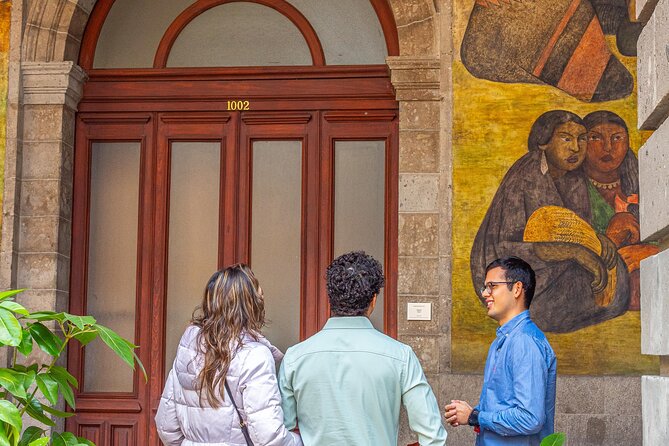
- José’s storytelling for real art-and-history connections: You get context behind Mexican muralism, not just names on a wall.
- Three mural-focused stops in one route: Palacio de Bellas Artes, Antiguo Colegio de San Ildefonso, and Museo Vivo del Muralismo.
- Big mural names, not just one artist: Rivera, Siqueiros, Orozco, and others appear in the stops.
- Tenochtitlan in the middle of the walk: Archaeological windows are part of the central plaza experience.
- Museo Vivo includes admission: The final stop is free, which helps your budget.
Read another wall painted across the capital
- CDMX: Xochimilco, Coyoacan, Frida Kahlo Museum & Murals Tour
★ 4.4 · 3,025 reviews - Mexico City; ART NACO : Murals & Street Art Bike Tour
★ 5.0 · 284 reviews - EXCLUSIVE TOUR Casa Estudio Frida Kahlo-Diego Rivera Small Groups
★ 5.0 · 237 reviews - Walking Tour – Impressive murals in Historical Center of Mexico City
★ 5.0 · 224 reviews
A concentrated run at Mexico City’s muralist giants
This tour is built for people who like art, but also like to understand why it exists. Mexican muralism is not only about paintings. It is about public space, national identity, and the push and pull of politics, culture, and modern Mexico. In 2 hours 30 minutes, you get a guided thread that connects the movement’s early rise to the murals you can still see today.
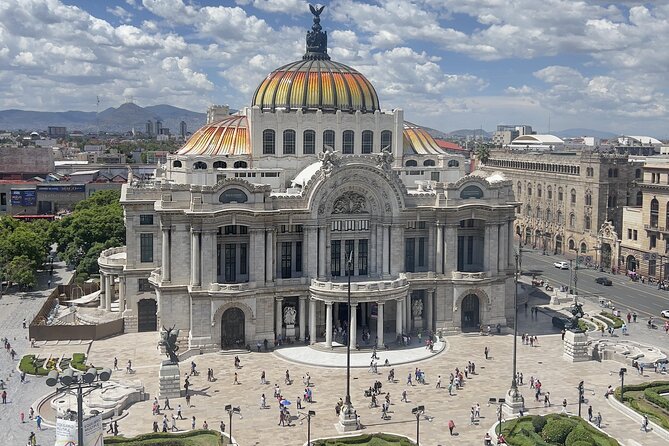
The format is also practical. You start at Museo del Palacio de Bellas Artes in Centro, then you keep moving through the central historic core, and you finish at the entrance of Museo Vivo del Muralismo. That matters because Mexico City can swallow hours when you zigzag across neighborhoods.
And because the group is capped at 15, your guide can handle questions without the usual time crunch. You are still in a tour setting, but it does not feel like being herded.
Palacio de Bellas Artes: Rivera, Siqueiros, Orozco, and the movement explained
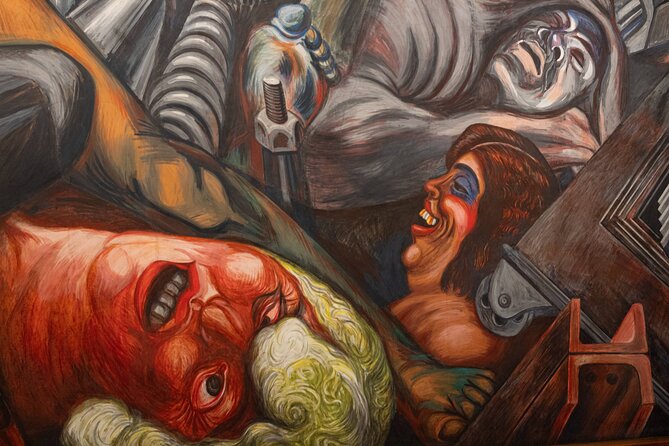
Your first stop is Palacio de Bellas Artes, with about 1 hour on site. This is where the tour sets the foundation. You will see works tied to the era of Mexican muralism and learn the history of the muralist movement as it took shape in the 20th century.
What I like about this approach is that it starts with the bigger picture. You are not only looking at murals. You are learning how muralists gained visibility, why they chose public spaces, and how their themes matched the major changes unfolding in Mexico at the time.
The museum is also a strong place to anchor the names you will hear throughout the day. You will focus on artists connected with the muralist era, including Rivera, Siqueiros, Orozco, Camarena, and Tamayo. That lineup gives you a quick map of who mattered and what styles and messages showed up in different bodies of work.
One practical note: admission is not included here. Budget for the museum fee on the day, since the tour’s included value is centered on the guide and the route, not on paying every entrance.
Baroque palace fronts and church facades: why the route matters
Between major stops, you get a look at the surrounding urban fabric. You will see baroque style palace facades in Mexico City and facades of some churches. This might sound like filler, but it is not.
Mexican muralism happened in the context of an older city. Artists were painting for a modern public, inside a place layered with earlier architecture and symbols. Seeing the baroque fronts and church faces helps you understand the contrast the muralists were working with, even if you only notice it in small details like materials, proportions, and how the streets shape what people see.
In other words, this stretch helps you read the city while you are learning to read the murals. It is the kind of added texture that makes the tour feel more like a real walk through history.
Keep these Mexico City options within reach:
- 2 Hours and 30 Minutes Salsa Night in México City★ 5.0 · 18 reviews
- 2 hours Lucha Libre Show (mexican wrestling) with transport★ 5.0 · 14 reviews
- Express Historic Center the must in two hours★ 5.0 · 6 reviews
- CDMX Historic Center Walking Tour (2 hours)★ 5.0 · 6 reviews
Central plaza in Mexico City: government palace, cathedral, and Tenochtitlan windows
Next you head to a central plaza area where the tour spotlights major civic and religious landmarks. You visit the government palace, the cathedral, and the archaeological windows of ancient Mexico-Tenochtitlan.
This is one of the most meaningful parts of the route because it connects three time periods that often feel separate when you travel. You get the colonial-era visual weight around the cathedral and government buildings, then you get literal archaeological glimpses below, tied to Tenochtitlan. Even if you only spend a short amount of time here, these windows are a reminder that Mexico City is layered, not replaced.
For muralism fans, this stop also makes the art easier to interpret. Many mural themes circle back to origin stories, identity, and national mythmaking. Standing in the central core, with the archaeological windows in your line of sight, gives those themes a physical reference point.
Antiguo Colegio de San Ildefonso: Clemente Orozco and the movement’s early spark
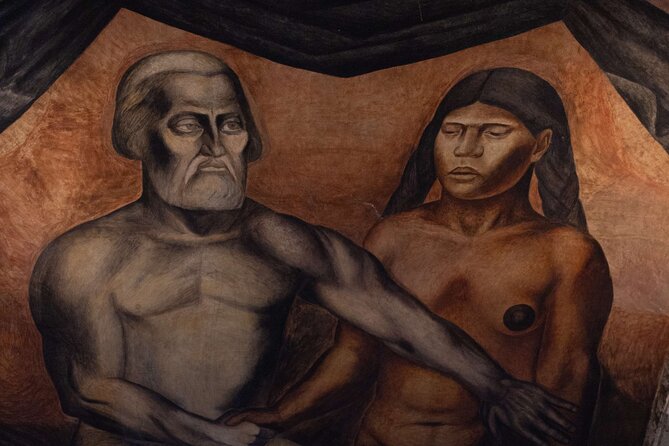
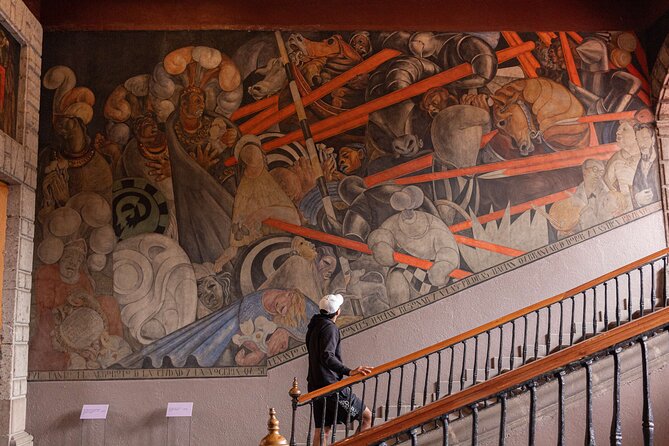
After the central plaza, the tour moves to Antiguo Colegio de San Ildefonso for about 45 minutes. This is an excellent stop if you want to understand how muralism grew into a movement in the early 20th century.
Here you focus on the early work of Clemente Orozco, and you learn about the birth of the muralist movement in that era. That word birth matters. It helps you treat muralism not as a style choice, but as a social shift. You are trying to see why muralists were driven to paint at public scale, and why their messages resonated.
The setting also supports the learning. A former educational space makes it easier to think about muralism as teaching, persuasion, and public communication. Even with a short visit, the guide’s framing helps you look at what is there with purpose, not just as pretty art.
As with the first museum stop, admission for this part is not included.
Museo Vivo del Muralismo: Rivera’s 248 murals and the three-floor layout
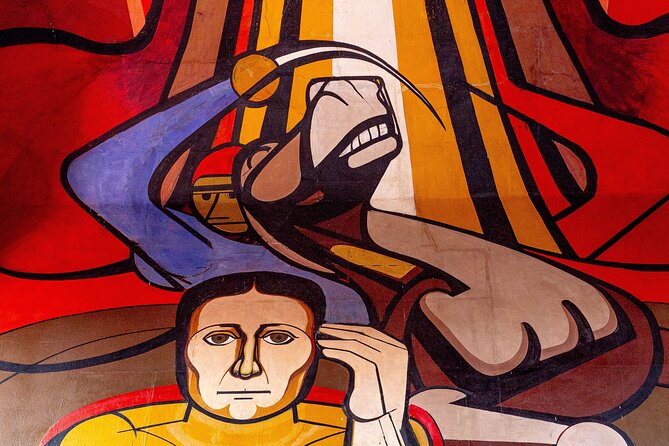
The final stop is Museo Vivo del Muralismo, with about 45 minutes and free admission. This is where the tour shifts from context to direct visual immersion.
The museum is centered on Diego Rivera. You will learn in this precinct, and you will also see the murals and related works. The complex has three floors, plus several temporary rooms featuring easel art, mural works, ceramics, and pre-Hispanic drawings. It is a good mix if you like more than just mural panels.
One detail worth noting: there are 248 murals in total connected to Rivera’s work across the museum’s scope. Even if you cannot possibly see every single piece in a short visit, that number explains why the tour ends here. This is where you can spend your final minutes absorbing the scale and variety of what Rivera built.
I like ending with a museum that is included at no extra cost. It feels fair after the earlier paid entrances, and it also gives you a clear finish line. You will finish the tour at the entrance of the living museum, which makes it easy to continue exploring on your own.
Price and value: what $53.74 buys you in real terms
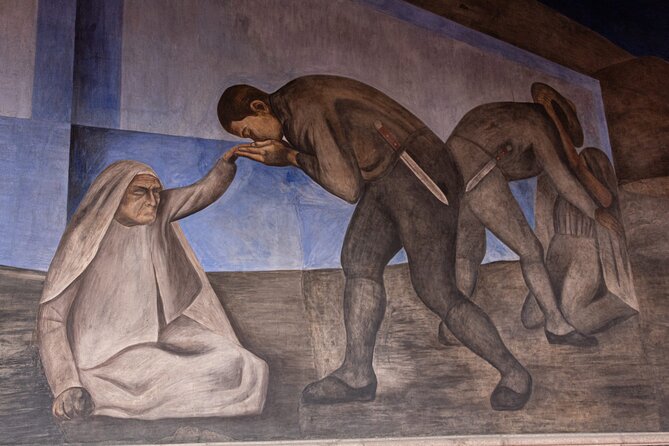
At $53.74 per person, you are paying for a guided route with a bilingual guide, plus structured time at three major mural sites. What you are not paying for is the museum admissions at two of the stops. The tour lists MX$150 per person for entrance to Palacio de Bellas Artes and Antiguo Colegio de San Ildefonso, while Museo Vivo del Muralismo is free.
So the value question becomes: is it worth it to pay for guidance and logistics, rather than trying to piece together three museums solo?
For most art lovers, yes, because Mexican muralism is easier to understand with a translator who can connect the dots between artwork, time period, and politics. Also, doing this route without a guide can be slower, especially when you want to hit the key mural-focused spaces efficiently. A group max of 15 travelers helps here, because you typically get quicker question-and-answer time.
If you are the type who likes reading labels and researching on your own before you arrive, you might feel the guide is less critical. But if you want the big picture fast and you like asking questions as you go, this pricing usually makes sense.
Group size, timing, and how not to feel rushed
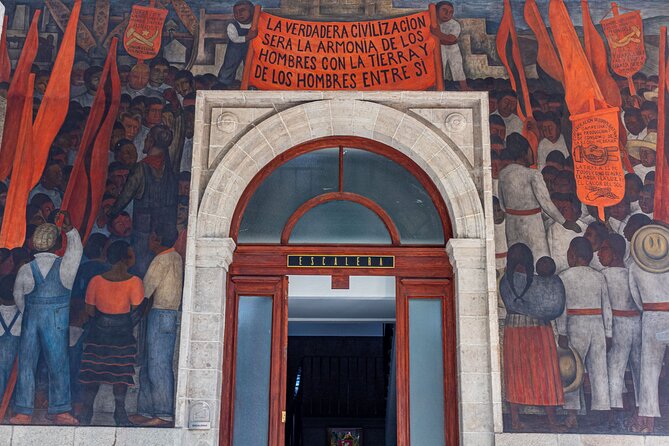
The tour is listed at 2 hours 30 minutes (approx.). You also get the schedule split: 1 hour at Palacio de Bellas Artes, 45 minutes at Antiguo Colegio de San Ildefonso, and 45 minutes at Museo Vivo del Muralismo, plus time for the central plaza stop and the walk-by architectural views.
That pacing is what you should expect. It is not a long, sit-down museum day. It is a curated route that assumes you want to look, learn, and move.
One nice practical factor is that the tour says it is near public transportation, which helps if you are combining it with other Centro Histórico sights. And because this experience uses a mobile ticket, you should have less to manage at the start.
If you want to linger for personal viewing time, set that expectation before you book. Treat the guide as your framework, then plan to come back later if a particular museum grabs you.
Best fit for art lovers, history buffs, and curious city walkers
This tour fits you best if you fall into one of these categories:
- You like Mexican muralism and want context for why it matters.
- You want a fast route through the city center, with stops tied to muralists such as Rivera and Orozco.
- You enjoy learning how art and politics intersect, since the guide style highlighted in the experience centers on more than just visuals.
It is also a solid choice if you travel with an art-minded partner or family member who wants one guided day that is both educational and efficient.
If you are very sensitive to crowds or you need long, silent museum time, you might prefer a longer self-guided visit. This is a structured experience with a guided tempo.
Should you book this Mexican muralism tour?
Yes, if your goal is to understand Mexican muralism in a short window and see the key names in real museum settings. The route is focused, the guide adds real connections between art, history, and the city, and you finish with a free, Rivera-centered museum stop.
I would book especially if you like tours where you can ask questions and get answers on the spot. Having José lead the experience, with that blend of art history and broader context, is the kind of thing that can make murals feel personal rather than distant.
Book it also if you are staying in or near Centro Histórico. The start point at Museo del Palacio de Bellas Artes is in a convenient walking-and-transit area, and the finish at Museo Vivo del Muralismo keeps you in the same general zone.
FAQ
FAQ
How long is the Mexican muralism tour?
It lasts about 2 hours 30 minutes.
Where does the tour start?
It starts at Museo del Palacio de Bellas Artes, Av. Juárez s/n esq, Eje Central Lázaro Cárdenas Col, Colonia Centro, Centro, Cuauhtémoc, 06050 Ciudad de México.
Where does the tour end?
It ends at the entrance of Museo Vivo del Muralismo, República de Argentina 28, Centro Histórico de la Cdad. de México, Centro, Cuauhtémoc, 06020 Ciudad de México.
What is included in the price?
A bilingual guide is included, along with a mobile ticket.
Is the tour offered in English?
Yes, it is offered in English.
Are museum entrance tickets included?
No. Entrance is not included for Palacio de Bellas Artes and Antiguo Colegio de San Ildefonso, listed as MX$150.00 per person. Museo Vivo del Muralismo is free.
Which stops are included in the itinerary?
The tour includes Palacio de Bellas Artes, Antiguo Colegio de San Ildefonso, and Museo Vivo del Muralismo, plus visits around the central plaza area.
What is the maximum group size?
The tour has a maximum of 15 travelers.
How far in advance do people usually book?
On average, it is booked 14 days in advance.
What is the cancellation policy?
You can cancel for free up to 24 hours in advance for a full refund.
More 2-Hour Experiences in Mexico City



More Tour Reviews in Mexico City




Murals Across the Capital



More Mexico City plans worth opening



Murals & Street Art Tours for the next day.
 ★ 4.4Xochimilco, Coyoacan, Frida Kahlo Museum & Murals TourFrom $893,025 reviews
 ★ 5.0Mexico City; ART NACO : Murals & Street Art Bike TourFrom $60284 reviews
 ★ 5.0EXCLUSIVE TOUR Casa Estudio Frida Kahlo-Diego Rivera Small GroupsFrom $50237 reviews
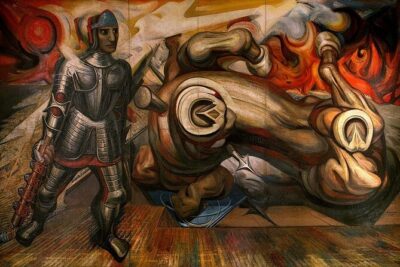 ★ 5.0Walking Tour – Impressive murals in Historical Center of Mexico CityFrom $51224 reviews
 ★ 4.5La Catrina & Muralism: Diego Rivera’s Legacy & Frida KahloFrom $66197 reviews
 ★ 5.0Muralist Art Semi Private Walking Tour in Mexico City DowntownFrom $58188 reviews
★ 4.7Art Naco, murals & street art bike tourFrom $52166 reviews
★ 5.0Muralist Art Semi Private Walking Tour in Mexico City DowntownFrom $58188 reviews
★ 4.7Art Naco, murals & street art bike tourFrom $52166 reviews
 ★ 4.9Iztapalapa: Cable Car Tour and Urban Art From the HeightsFrom $24124 reviews
This review also appears in